Shelter staff and potential adopters frequently rely on behavior evaluations to understand a dog's temperament. These tests, often involving exposure to food, toys, or simulated threats, aim to flag issues like reactivity. Yet scientific reviews reveal that the results may not reliably predict how a dog will behave in a real home. With high rates of false positives, the labels attached to dogs can sometimes do more harm than good. This article explores the evidence behind these assessments, why caution is warranted, and what it means for animal welfare decisions.
The Purpose and Common Practices of Shelter Behavior Evaluations
Behavior evaluations in animal shelters typically involve a series of structured tests designed to observe a dog's reactions in controlled scenarios. Staff might present food, handle the dog in certain ways, or introduce stimuli meant to mimic potential triggers like other animals or strangers. The goal is to identify signs of fear, aggression, or reactivity that could affect adoptability. These assessments help shelters manage safety risks and match dogs with suitable homes. However, the process is not standardized across all facilities, leading to variations in how tests are conducted and interpreted.
Proponents argue that such evaluations provide valuable insights when combined with other observations. Yet the evidence suggests that relying heavily on them can create an incomplete picture. For instance, a dog might react strongly in a stressful shelter environment but behave differently once settled in a calm home. This discrepancy highlights a key challenge: the artificial nature of testing conditions may not reflect everyday life. Editorial analysis here points to the need for humility in labeling dogs based on limited data, as overinterpreting test results can unnecessarily stigmatize animals who might thrive with the right adopter.
A systematic review of 17 peer-reviewed studies found that reliability measures for shelter dog behavior evaluations are largely absent. This includes inter-rater reliability, where different evaluators might score the same dog differently, as well as test-retest consistency over time. Without solid reliability, the foundation for any valid assessment crumbles. In practical terms, this means that one person's judgment of a dog as reactive could differ significantly from another's, introducing inconsistency into high-stakes decisions.
The review also notes that inter-shelter reliability has not been well demonstrated, meaning the same dog might receive varying labels depending on where it is evaluated. This variability raises questions about fairness and accuracy in the adoption process. From an editorial perspective, these gaps suggest that shelters should approach test results with skepticism rather than treating them as definitive. Useful reading questions include: How might differing evaluator perspectives affect a dog's chances? And what steps could improve consistency without over-relying on these tools?
Validity Concerns and False Positive Rates
No study in the reviewed literature demonstrated compelling evidence of construct validity for these evaluations in a broad sense. Validity here refers to whether the test truly measures what it claims to, such as future aggression or reactivity in a home setting. The mean false-positive rate in the studied populations was 35.1 percent, with an estimated mean of 63.8 percent for typical shelter populations. This implies that a substantial number of dogs flagged as problematic may not actually pose risks once adopted.
These high false-positive rates stem in part from the low prevalence of serious behaviors like biting in shelter dogs. As a result, even tests with reasonable sensitivity and specificity can produce misleading outcomes. The research cautions against using evaluations as the sole determinant for dogs that show concerning behavior only in provocative testing. An editorial implication is that over-caution based on tests alone could lead to unnecessary euthanasia or prolonged shelter stays, affecting animal welfare. A light-hearted analogy might compare it to a faulty smoke detector that alarms at burnt toast—useful in theory, but frustrating when it cries wolf too often.
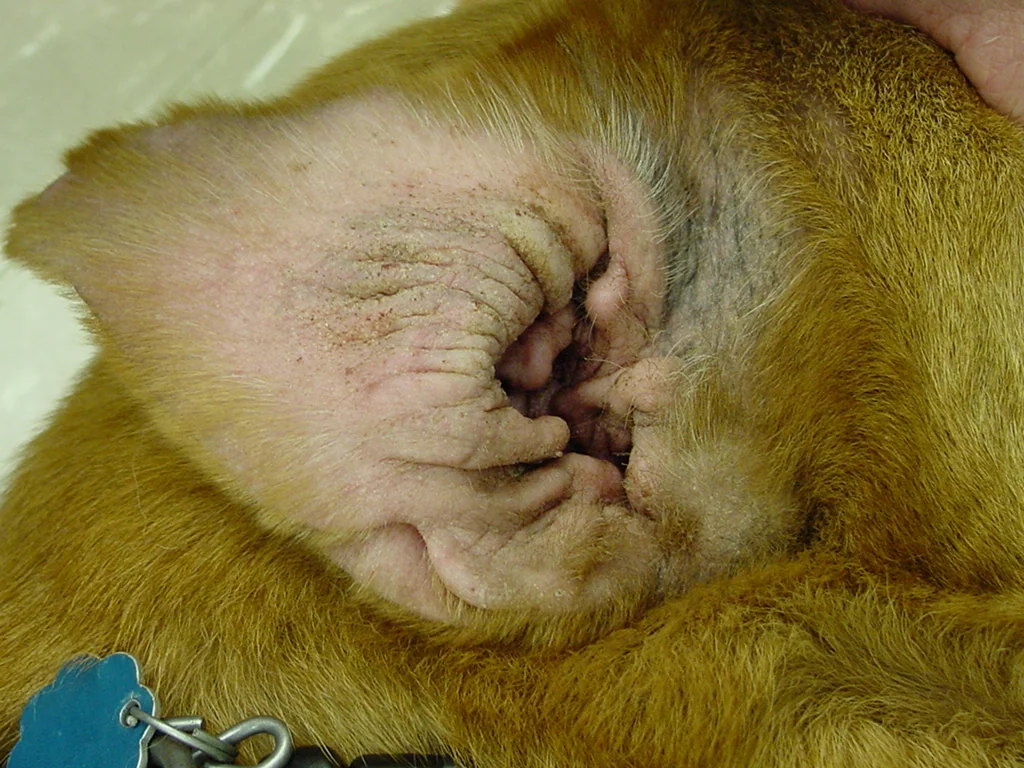
Chronic allergic otitis with secondary seborrheic change in a dog with atopic dermatitis self · CC BY-SA 3.0. Web size optimized; original linked.
Limitations in Predicting Real-World Behavior
Evidence indicates that behavior assessments have not proven highly accurate or precise at predicting aggression after adoption. A significant number of dogs that exhibit aggression during an assessment do not show the same behavior in a home environment. This mismatch is particularly evident with issues like food aggression, which often fails to translate beyond the shelter. The scientific thinking on their usefulness remains inconclusive, with uncertainty about whether any single source of information—tests, histories, or observations—is more predictive than others.
Authors of the studies emphasize that results from owned-dog research or controlled settings may not apply directly to shelter populations, where stress levels and prevalence rates differ. They recommend prioritizing behavioral histories, verified incidents, and observations in varied contexts over formal evaluations alone. For adopters, this underscores the value of meeting a dog in multiple settings and asking shelters for detailed background information. Reading questions to consider: If a test labels a dog reactive, what additional evidence should you seek? How can potential owners weigh the uncertainties without dismissing a good match?
Implications for Shelter Practices and Adopters
Given the evidence, experts argue for a moratorium on using formal behavior evaluations as the only factor determining a dog's fate, especially when issues appear solely during testing. Instead, decisions should incorporate multiple sources of information and avoid euthanasia based solely on assessment behavior unless the aggression is particularly severe. This approach could reduce false positives and improve outcomes for dogs that might otherwise be overlooked.
For shelters, the findings call for more training to minimize inconsistent administration and interpretation, even among experienced staff. Adopters benefit from understanding these limitations, approaching labels with curiosity rather than fear. An editorial opinion, clearly framed as such and without claiming firsthand experience, is that shelters could enhance transparency by sharing the full context of evaluations alongside their shortcomings. This might foster better human-animal matches and reduce the stigma around so-called reactive dogs. In a satirical invented scenario, imagine a shelter dog 'interviewing' its evaluator: 'I only growled at that fake hand because it looked like my old vacuum cleaner—does that make me unadoptable?' The humor highlights the absurdity of reducing complex canine personalities to a single test, reminding us to keep welfare at the forefront.
Shelter huskies in the Philippines Judgefloro · CC0 1.0. Web size optimized; original linked.
AI-assisted original writing. This feature was revised against source material and checked for unsupported claims. Follow the references below for evidence and its limits.



 Historical collection image