Technical publications and mission records show that dogs continued to fly in the years following Laika’s 1957 mission, revealing both the program’s demands and the animals’ capacity to adapt under extreme conditions.
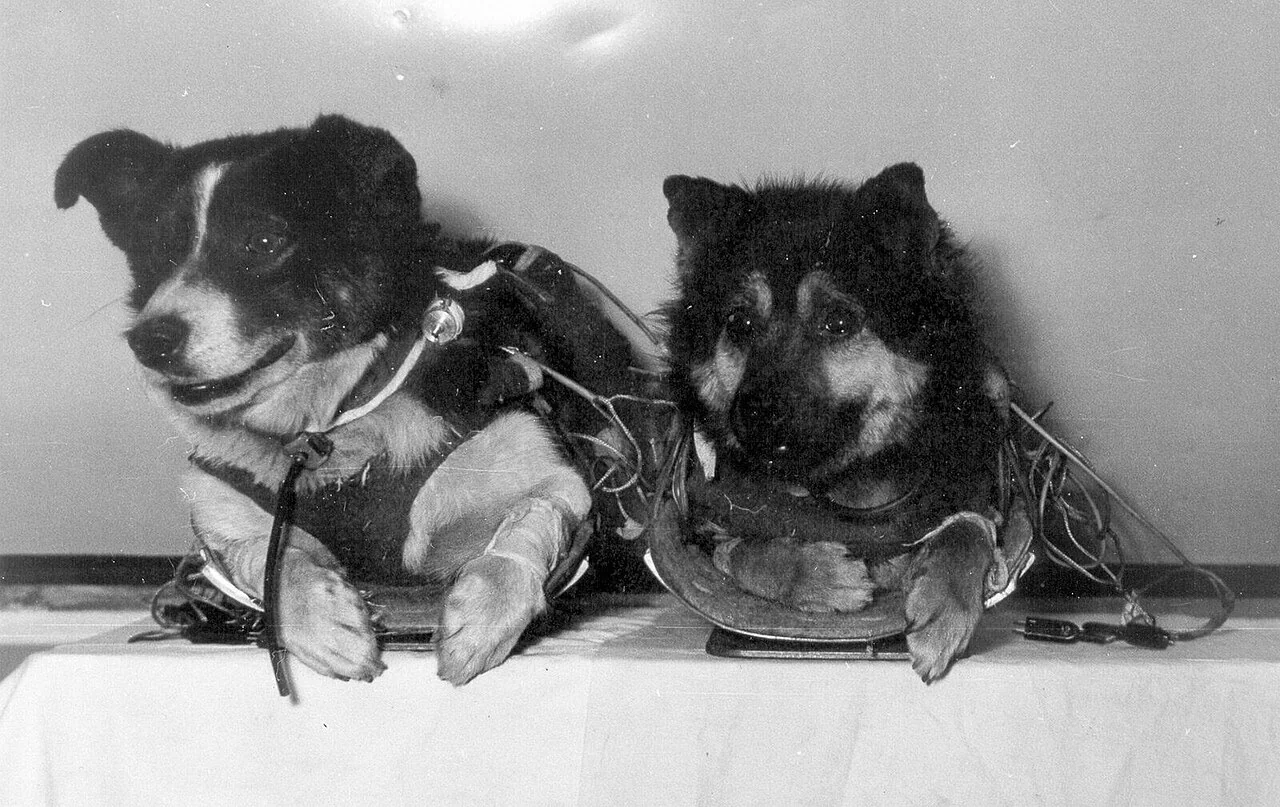
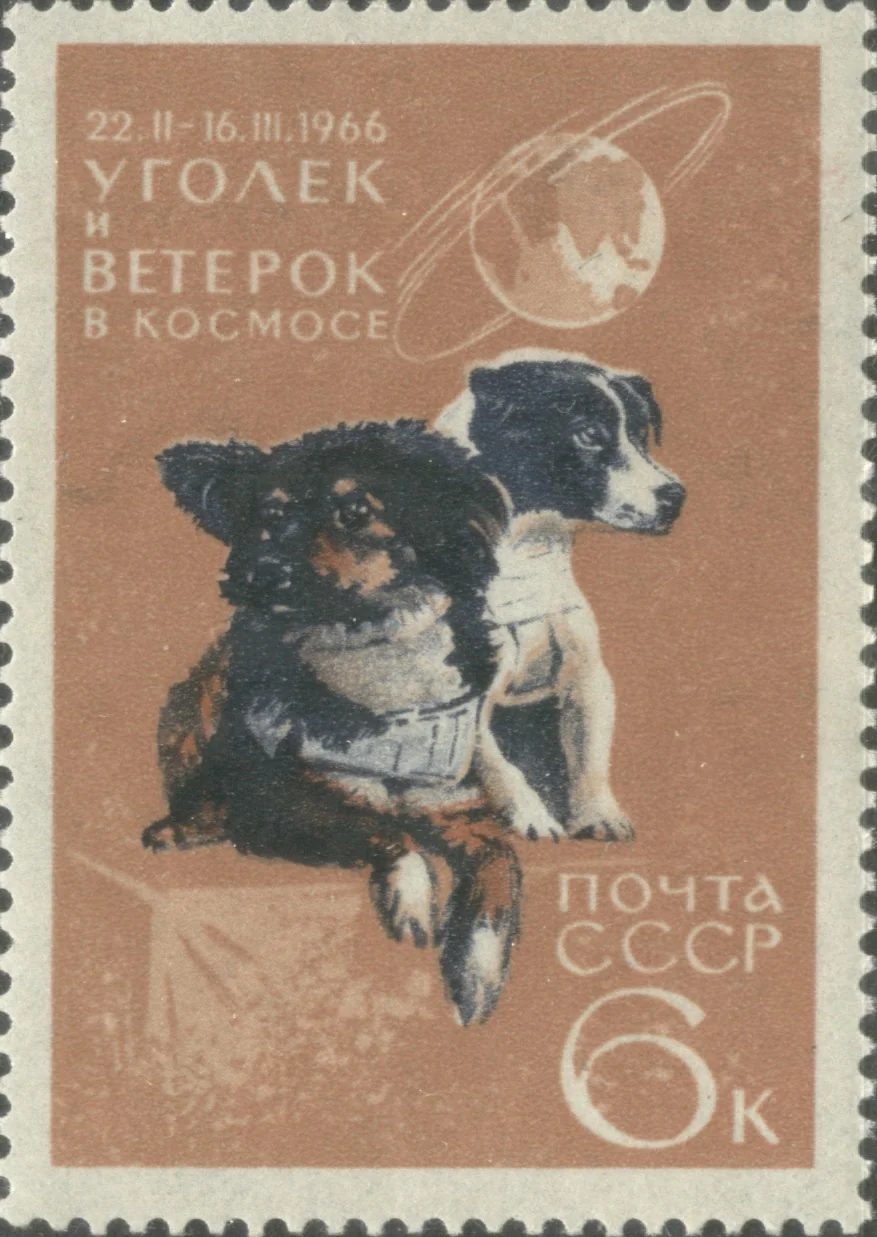
Veterok and Ugolyok, 1966 (historical photograph from the Museum of Cosmonautics) Музей космонавтики / Главархив Москвы · CC BY 4.0 · Web size optimized; source linked for the original.
Laika became the first dog in space in 1957, but she was far from the last. Evidence from technical publications and mission reports indicates that additional dogs were selected, trained, and sent into orbit in the years that followed. These later flights produced data on how living beings responded to prolonged weightlessness, re-entry stresses, and the return to Earth’s gravity. While many details remain opaque because of secrecy and incomplete records, the available sources describe careful documentation of the dogs’ physiology and behavior. The final known canine mission, Kosmos 110 in 1966, kept two dogs in orbit for 22 days and offered a window into both remarkable resilience and the physical costs of space travel. This article draws only on the cited source material to examine what those later flights involved and what questions they still raise.
Selection and Training Practices
Program records indicate that dogs were chosen and prepared with the aim of identifying animals able to withstand the stresses of flight while remaining physiologically and psychologically intact. Each dog received a “passport” that included a photograph along with documentation of biological processes, behavior, eating, sleeping, and social interactions. The emphasis was on endurance rather than trauma, although injury and death did occur in some cases. Technical publications that appeared after Laika’s flight and after Gagarin’s 1961 mission described aspects of this preparation, yet many areas stayed silent or difficult to interpret.
Because of renaming practices and archival gaps, the total number of dogs involved is hard to determine with precision. At least fifteen dogs are known to have flown more than once. Participant memoirs have shaped much of the available chronology, which remains contested. The evidence shows that training sought to prepare the animals for the physical and psychological pressures of launch, orbit, and recovery, but the exact methods and success rates are not fully detailed in the sources reviewed here.
Early space flights carried clear risks. High-altitude launches above 450 km proved deadly to four of the six dogs involved in those particular missions. Overall mortality was significant, although the precise total remains uncertain because of secrecy and incomplete archives. The program’s technical publications acknowledge these outcomes without presenting death as an intended goal.
These losses occurred alongside successful recoveries and repeated flights by some animals. The contrast highlights the unpredictable nature of the work. While the evidence confirms that trauma happened, it also shows that researchers documented the dogs’ responses in detail, seeking to understand how to reduce harm in future missions. The sources leave open the question of how many animals ultimately flew and how many survived.
The Record-Setting Kosmos 110 Mission
In 1966, two dogs named Veterok and Ugolyok completed the final known canine mission aboard Kosmos 110. They spent 22 days in orbit, the longest duration recorded for dogs in the program. Post-flight observations formed the basis of a detailed Soviet technical report later translated by NASA.
After landing, the dogs required 8 to 10 days before their coordination of movements returned to pre-flight levels. This slow recovery illustrated the lingering effects of prolonged weightlessness. The mission generated an enormous amount of data, yet the report noted that some results needed substantial further analysis before firm conclusions could be drawn.
1966 Soviet postage stamp depicting Ugolyok and Veterok aboard Kosmos 110; a real historical artifact showing the two dogs that completed the 22-day orbital mission. Почта СССР · Public domain. Web size optimized; original linked.
Observed Physiological Changes
Data from Kosmos 110 showed several bodily adjustments. An increased calcium content appeared in both urine and blood on the first day after landing. X-ray imaging revealed changes in the bones consistent with disrupted calcium exchange. These findings pointed to the skeletal stresses of extended time in orbit.
The cardiovascular system also adapted. Heart contraction rates decreased and then stabilized during flight. Upon return to gravity, however, some physiological indicators deteriorated compared with in-flight values, indicating that re-entry and readaptation imposed considerable stress. The evidence presents these shifts as measurable facts while underscoring that full interpretation required additional study.
Editorial Reflections and Lingering Questions
The surviving records portray the dogs as active participants whose bodies and behaviors shaped the program’s direction. Their documented resilience, seen in repeated flights and gradual recovery after 22 days in space, is striking. At the same time, the evidence of deaths and slow physiological restoration reminds us that these were living beings subjected to genuine hardship. A light-hearted image of dogs in spacesuits can easily obscure that reality; the sources keep the focus on measurable stress rather than romanticized adventure.
Several uncertainties remain. The exact total number of dogs used, the full chronology of flights, and the long-term outcomes for individual animals are all clouded by secrecy and reliance on memoirs. Readers might ask: How did the program weigh scientific gain against animal welfare? What ethical standards applied when archives were deliberately limited? These questions do not have clear answers in the cited source material, yet they follow directly from the documented risks and incomplete transparency. The dogs’ contributions helped open the path for human spaceflight, but the cost was borne on four paws.
Monument to Laika, Budapest, Hungary (modern documentary photograph) Laika ac from USA · CC BY-SA 2.0. Web size optimized; original linked.
AI-assisted original writing. This feature was revised against source material and checked for unsupported claims. Follow the references below for evidence and its limits.
Royal charters set rules for restraining dogs to protect game, while hunting manuals later recorded the calls and names used by those who followed hounds on the trail.
Evidence from Saqqara and Asyut shows that dogs and other canids were mummified in large numbers as votive offerings connected to the gods Anubis and Wepwawet.

 Historical collection image