What Large Genetic Studies Reveal About Inbreeding and Health in Dogs
Research on thousands of dogs shows that higher inbreeding levels often link to greater health problems, while mixed-breed dogs tend to carry fewer homozygous disease variants.
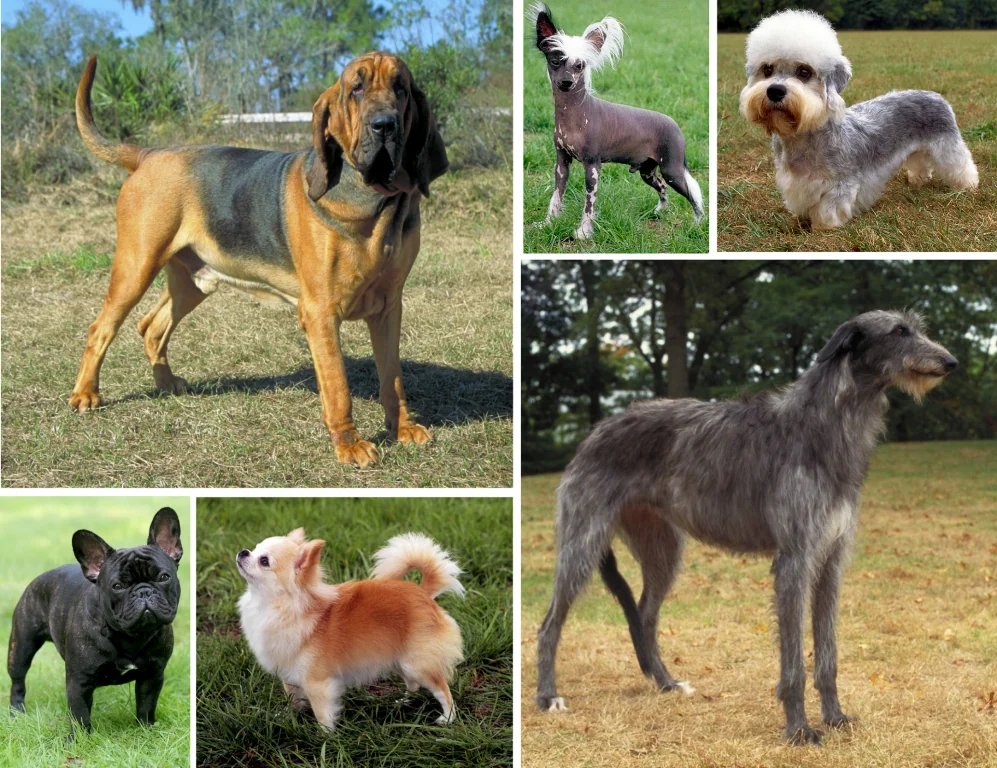
Montage showing the morphological variation of the dog across many breeds. Mary Bloom, American Kennel Club · CC0 1.0 · Web size optimized; source linked for the original.
Two sizable genetic studies offer a data-driven look at how inbreeding and breed structure affect dog health. One examined inbreeding coefficients across hundreds of breeds and tied them to differences in illness rates. The other compared disease-related genetic variants in purebred and mixed-breed dogs. The findings highlight real trade-offs in closed breeding systems without painting any single approach as a cure-all. This article walks through the key results, what they imply for breeders and owners, and questions worth asking when considering a dog's genetic background. Light humor helps: after all, even the most pampered purebred sometimes seems to have inherited both a championship pedigree and a lifetime supply of vet bills.
Measuring Inbreeding Across Breeds
Researchers genotyped 49,378 dogs representing 227 breeds and calculated an average adjusted inbreeding coefficient of 0.249. The 95% confidence interval ranged from 0.235 to 0.263. This number reflects the probability that two alleles at any given spot in the genome are identical by descent. Many breeds reached these levels after small founder populations, intense selection for appearance, population bottlenecks, and the introduction of closed stud books over the past century. The data make clear that closed registries can accelerate loss of genetic variation when numbers stay small.
Not every breed sits at the high end of the scale. Some recent cross-breeds and landrace types showed lower inbreeding. The pattern supports the idea that high inbreeding often traces back to limited founders or closed books or both. Maintaining consistent breed type without sliding into heavy inbreeding takes deliberate effort. The study authors note that genetic diversity can disappear quickly once a population closes, a reminder that pedigree paperwork alone does not guarantee long-term vitality.
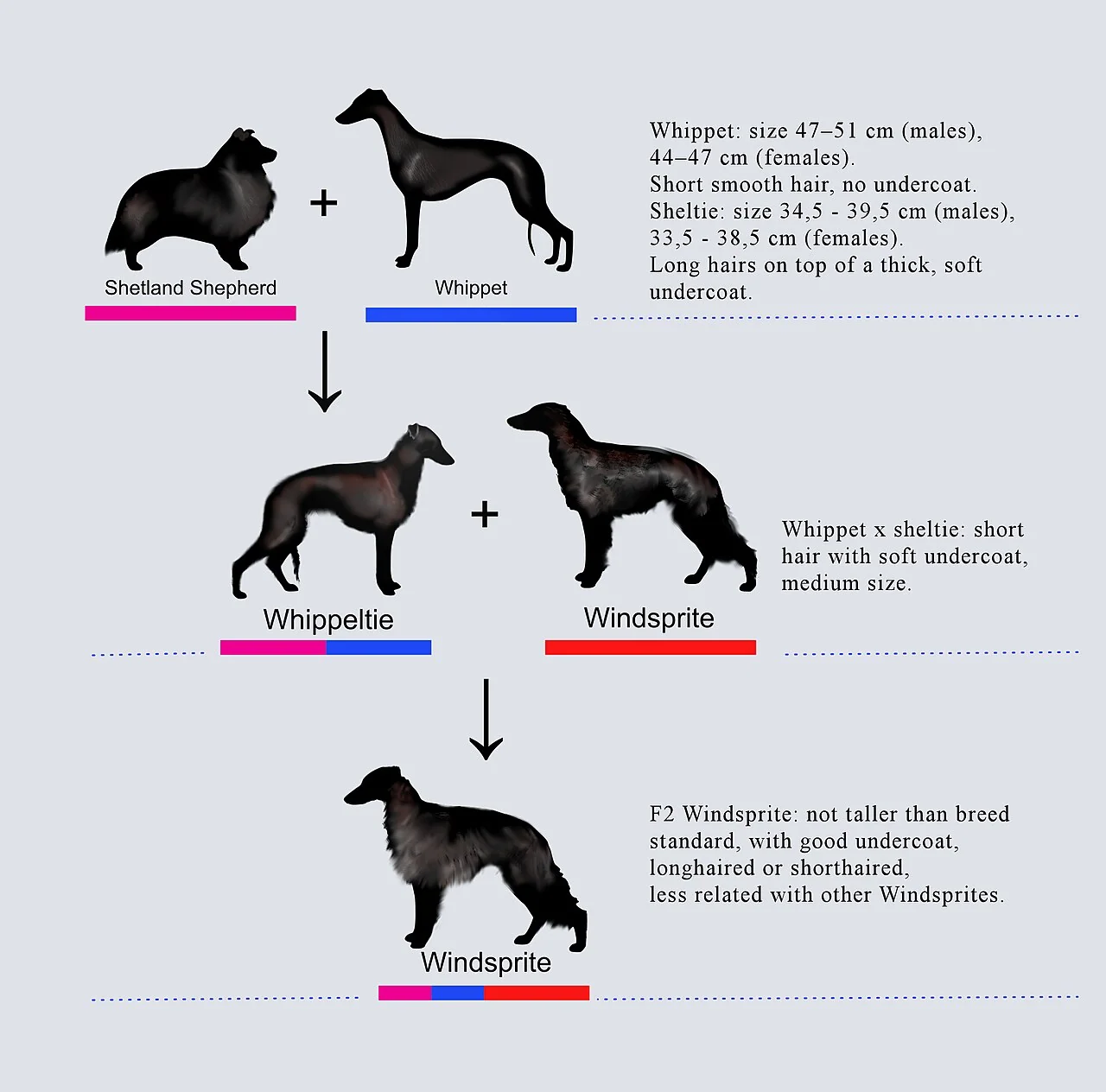
Example of intentional dog crossbreeding, meant to increase the gene pool of a rare breed while maintaining the type and characteristic features. Eerschay · CC BY-SA 4.0. Web size optimized; original linked.
Inbreeding Levels and Observed Health Differences
The same dataset revealed a statistically significant difference in morbidity between breeds with low versus high inbreeding. Using a statistical test, researchers reported H = 16.49 and P = 0.0004. Higher inbreeding correlated with increased overall illness reports. The result aligns with broader population-genetics expectations: when relatives mate across generations, harmful recessive alleles become more likely to pair up and express themselves.
Still, the study stops short of claiming that every high-inbreeding breed will suffer equally. Body size and morphology also play roles in health outcomes, and the paper cautions that outcrossing programs must be designed carefully. Simply adding one or two outside dogs may not meaningfully broaden the breed's overall gene pool if the newcomers are already closely related to the existing population. Responsible breeders therefore face a balancing act between preserving recognizable type and avoiding the health costs that can accompany tight genetic bottlenecks.
Disease Variants in Purebreds Versus Mixed Breeds
A second large screen tested more than 83,000 mixed-breed dogs and about 18,000 purebred dogs across 330 breeds for 152 known disease variants. Roughly two in five dogs carried at least one copy of a tested variant. Mixed-breed dogs were more likely to carry common recessive disease alleles than purebreds, yet purebreds showed higher rates of actually being homozygous—and therefore genetically affected—for those recessive disorders. The pattern offers DNA-based support for the concept of hybrid vigor at the carrier-status level.
Most of the disease variants appeared in both mixed-breed and purebred populations, although a few showed breed- or line-specific patterns. The study newly detected 22 variants in at least one additional breed. Importantly, the authors stress that clinical relevance still requires follow-up validation in each breed and context. Mixed-breed dogs are not free of disease alleles, but their wider genetic background can provide a useful window into how those alleles distribute across the larger canine population.
Mixed-breed dog outdoors Wilfredor · CC0 1.0. Web size optimized; original linked.
Implications for Breeders and Prospective Owners
For breeders, the combined evidence suggests that closed stud books deserve periodic review. When genetic diversity drops too low, health problems can rise even if every dog on paper looks perfect. Thoughtful outcrossing, done with good data and clear goals, may help some breeds without erasing their defining traits. The studies do not endorse any single program; they simply document what has happened when founder numbers stay small and registries remain closed.
Prospective owners might weigh these findings when choosing a dog. A mixed-breed shelter animal may on average carry fewer homozygous recessive disorders for the tested variants, yet every individual dog still needs health screening, responsible breeding history where available, and lifelong care. Purebred enthusiasts can use genetic testing to avoid pairing carriers of the same disorder. The data encourage curiosity rather than panic: knowing a breed's average inbreeding coefficient is one useful data point among many.
Questions to Ask and Editorial Perspective
Reading these studies raises practical questions. How low must inbreeding fall before measurable health gains appear across a breed? Can outcrossing maintain type while meaningfully expanding the gene pool, or does it simply delay the next bottleneck? What responsibility do registries have when evidence shows closed books accelerating diversity loss? The research cannot answer every question, but it supplies a factual baseline for discussion.
From an editorial viewpoint, the evidence supports cautious optimism rather than sweeping claims. Mixed-breed dogs offer a living illustration of broader genetic resilience for certain recessive conditions, yet they are not magically immune to health issues. Purebred breeding can produce healthy, predictable companions when guided by data instead of tradition alone. A bit of humor helps keep perspective: your dog's ancestors may have won ribbons or simply survived on the street, but both histories leave genetic marks. The most useful takeaway is to stay informed, test when possible, and remember that no breeding system is perfect. Owners ultimately vote with their choices, and the data suggest those choices matter.
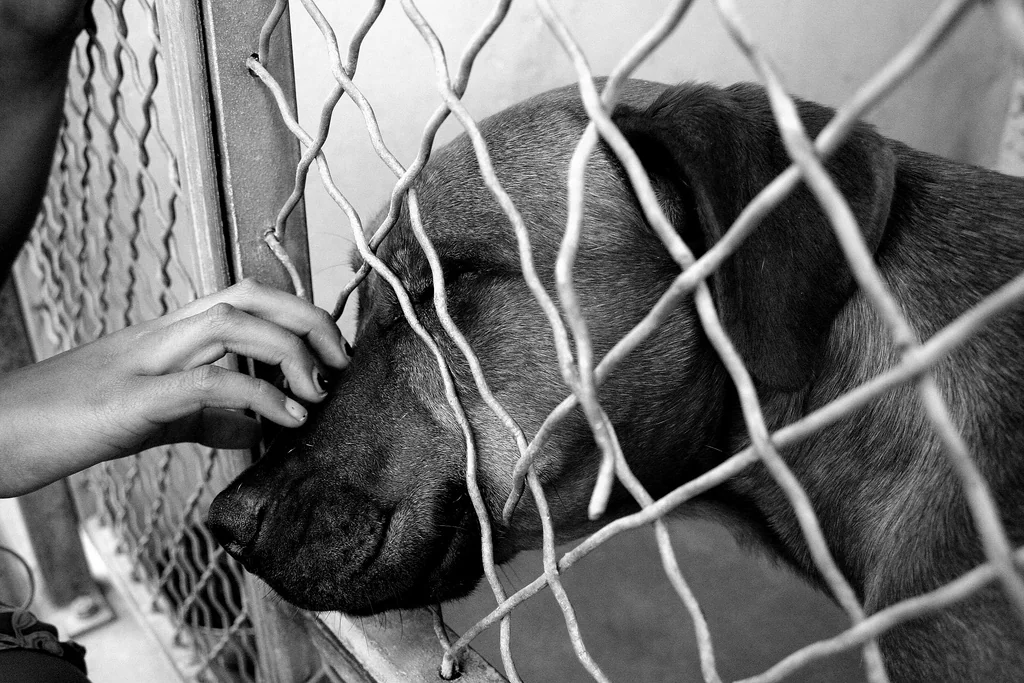
Dog at an animal shelter (documentary photograph, 2007) Erick Pleitez · CC BY 2.0. Web size optimized; original linked.
AI-assisted original writing. This feature was revised against source material and checked for unsupported claims. Follow the references below for evidence and its limits.

 Historical collection image