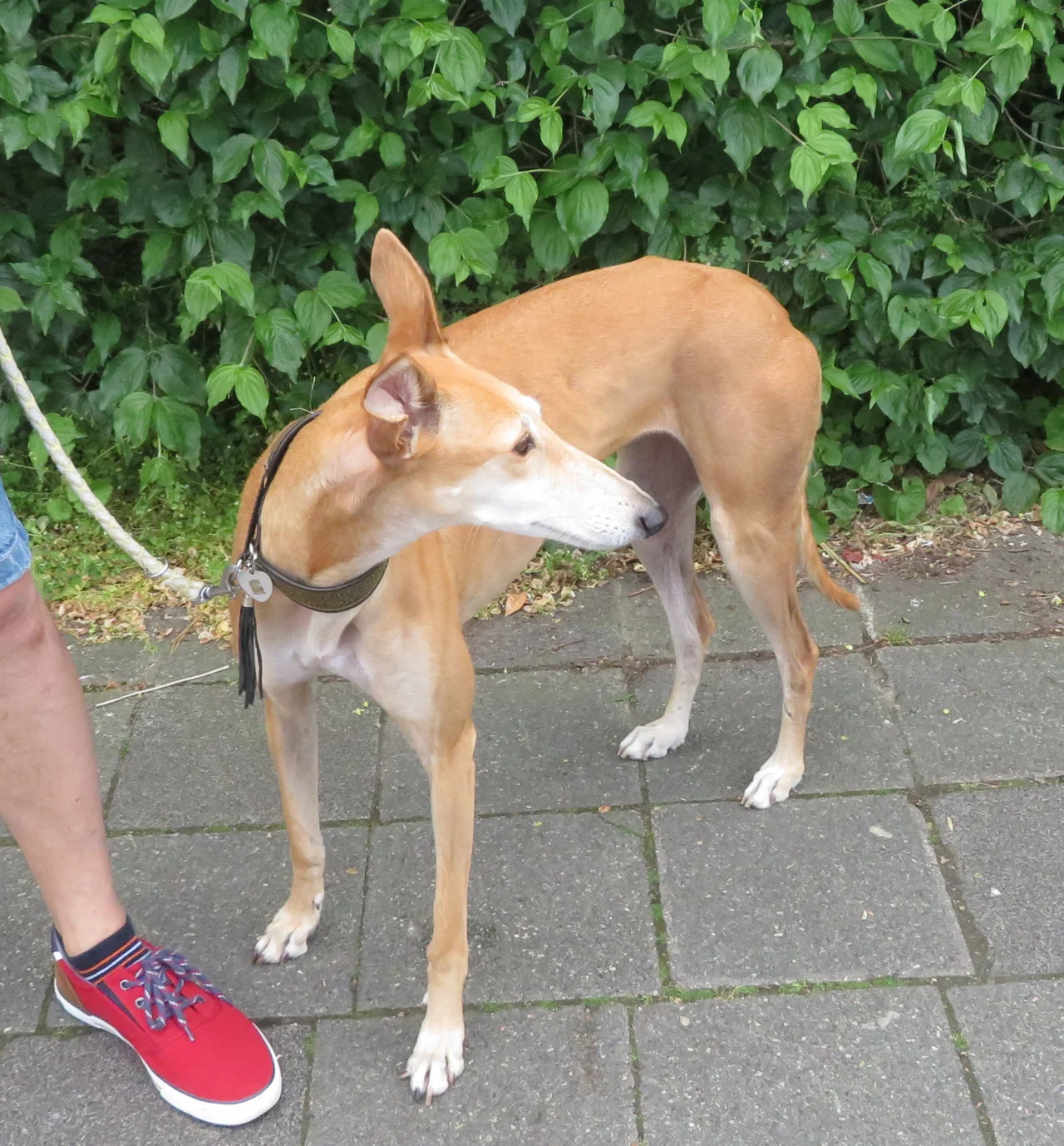
Galgo español showing calming signals by turning head and averting gaze, indicating discomfort (modern documentary photograph of stress behavior). Sciencia58 · CC0 1.0 · Web size optimized; source linked for the original.
Picture the golden retriever sprawled on the rug while a toddler tugs at its ears, both bathed in afternoon light. We have enshrined this tableau as the very picture of family harmony, yet many dogs endure such scenes with a quiet tightness that we mistake for affection. The gap between our sentimental assumptions and a dog's lived reality calls for gentler honesty. Rather than projecting our longing for seamless interspecies friendship onto every canine, we might learn to read the actual conversation happening in tail position, ear set, and averted gaze. Doing so would spare countless dogs low-grade misery and spare children the bewilderment of a sudden snap. The trade-off feels steep only until we imagine the richer, calmer households that could replace the tense ones.
The Cultural Myth That Dogs and Kids Are a Perfect Match
Greeting cards, holiday movies, and neighborhood lore all peddle the same reassuring fiction: every dog secretly yearns to star in a child's adventure story. We swapped working companions for emotional family members so thoroughly that we now expect our pets to absorb the chaos of growing humans without complaint. Yet imagine a household where a young boy stages daily pirate raids on the family spaniel. The dog might freeze, offer a half-hearted tail swish, then slink behind the sofa when no one intervenes. In that hypothetical scene, the adults interpret the retreat as shyness rather than a polite scream for breathing room.
This misreading matters because it quietly erodes the dog's sense of safety at home. When we treat every tail movement as universal delight, we blind ourselves to the possibility that some dogs simply prefer the company of calm adults or older, predictable children. The humane response is not to banish dogs from family life but to stop assuming universal compatibility. That single shift invites us to weigh a dog's comfort as seriously as we weigh a child's, creating space for relationships built on observable consent instead of inherited nostalgia.
Child with dog - Wrest Park - Bedfordshire, England. Daderot · Public domain. Web size optimized; original linked.
Reading the Signals Science Actually Gives Us
Suppose a beagle at a backyard birthday party begins licking its lips rapidly while a cluster of shrieking six-year-olds circles it. To an optimistic parent the behavior might look like anticipation of cake; to someone versed in canine body language it signals rising tension. Yawns that appear outside nap time, heads turned away as if suddenly fascinated by a distant tree, or bodies that go statue-still are all possible polite requests for relief. In a hypothetical living room, a Labrador might endure repeated hugging by freezing in place, only to later develop a habit of growling at any small hand that reaches toward its collar.
Individual personality, past experiences, and even momentary health shape these reactions far more reliably than any breed stereotype. A rescue greyhound could blossom under the gentle routines of a household with teenagers, while the same dog might wilt beside an unpredictable toddler. The thoughtful tradeoff here is trading blanket assumptions for patient observation. We lose the warm fantasy of the universally tolerant dog, yet we gain the chance to craft genuinely low-stress lives for animals who share our roofs. Learning this quieter vocabulary becomes an act of respect rather than a clinical chore.
Why Supervision Standards Must Tighten
Consider a sunlit park where a father scrolls through his phone while his four-year-old and the family terrier tumble together on the grass. In this familiar scenario the adult assumes that prior good behavior guarantees continued peace. Yet a sudden excited shriek or an accidental foot to the ribs could flip the script in an instant. Without an attentive referee nearby, small misunderstandings compound until a dog that has repeatedly signaled discomfort finally resorts to a snap. The child learns fear; the dog learns that its early warnings are useless.
Raising the bar to require adults within arm's reach during every dog-child interaction might feel like overkill to busy parents. Yet the alternative quietly trains dogs to endure chronic stress that can later bloom into anxiety or defensive habits. In exchange we trade a few moments of distracted screen time for safer memories and calmer pets. Public spaces could adopt similar expectations, turning every playground or café patio into a classroom where children learn that respect is not optional and dogs learn that their boundaries will be honored. The cultural adjustment stings only until the first peaceful, laughter-filled afternoon that no one has to spend worrying about what might go wrong.
Imagine a shelter volunteer describing a sweet-faced mixed breed to prospective parents: "He loves everyone." In the hypothetical that follows, the dog arrives home only to cower each time the three-year-old charges across the kitchen. Temperament evaluations that incorporate child-like noises, sudden movements, and gentle handling could give families clearer pictures before adoption day. Households with energetic young children might then be steered toward dogs who light up at the prospect of noisy play rather than those who merely tolerate it.
The tradeoff is real. Some dogs who score lower on child-tolerance tests may wait longer for homes or need specialized placements, yet they avoid the revolving door of returns that damages their trust in humans. Owners, in turn, trade the convenience of impulse adoption for the deeper satisfaction of a match that actually fits. Rescue organizations could emphasize honest behavioral histories instead of marketing every animal as universally kid-friendly. The result might be fewer heartbroken families and fewer dogs who learn to fear the very children they were supposed to adore.
Toward a More Honest Companionship
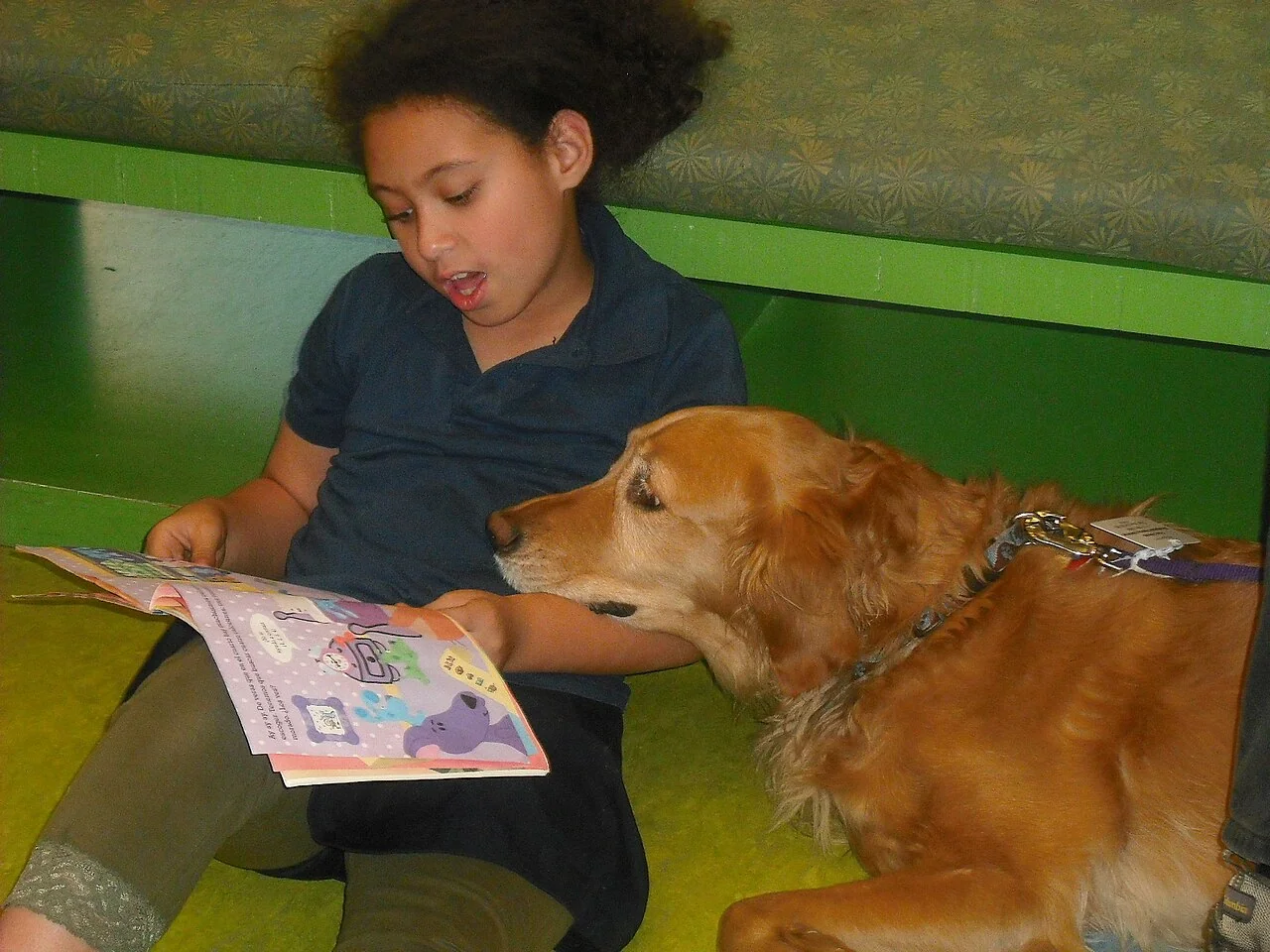
None of these cautions should dim the luminous possibility of a dog and child who truly delight in one another. Picture a girl reading aloud on the porch while her elderly mutt rests his head on her knee, both breathing easily because the adults nearby notice when either party shows signs of wanting space. Such scenes remain worth celebrating precisely because they are not automatic. By refusing to treat them as the default, we clear room for relationships founded on mutual understanding rather than projection.
Parents might begin teaching children to invite rather than demand interaction, offering a closed fist for sniffing and stepping back when the dog turns away. Dog guardians could prioritize training that emphasizes choice over compliance, creating homes where saying "no thank you" never escalates to conflict. The reward is companionship stripped of rose-colored myths and grounded instead in attentive presence. In the end, living well with dogs asks us to love them for who they actually are, not for the childhood fantasies we once pinned to their fur. When we meet them there, with clear eyes and ready hands, both species discover a quieter, more durable joy.
Girl reading with a dog (modern documentary photograph). San Jose Library · CC BY-SA 2.0. Web size optimized; original linked.
AI-assisted original writing. This feature was revised against source material and checked for unsupported claims. An editorial perspective; interpretations are distinguished from factual reporting.
Sources & further reading
This article is labeled opinion and offers an editorial perspective.
Focusing on certain breeds distracts from the real drivers of dog bites: negligent ownership and missed opportunities for early socialization that affect every kind of pup.
Urban planners rarely pause to consider how their straight paths and echoing plazas feel through a dog's nose, ears, and eyes, yet a few gentle adjustments could transform shared spaces into places where both species truly thrive together.
Strict enforcement on suburban paths and trails quietly shields our canine companions from injury, escape, and tense encounters that off-leash freedom too often invites.

 Photograph