Strict enforcement on suburban paths and trails quietly shields our canine companions from injury, escape, and tense encounters that off-leash freedom too often invites.
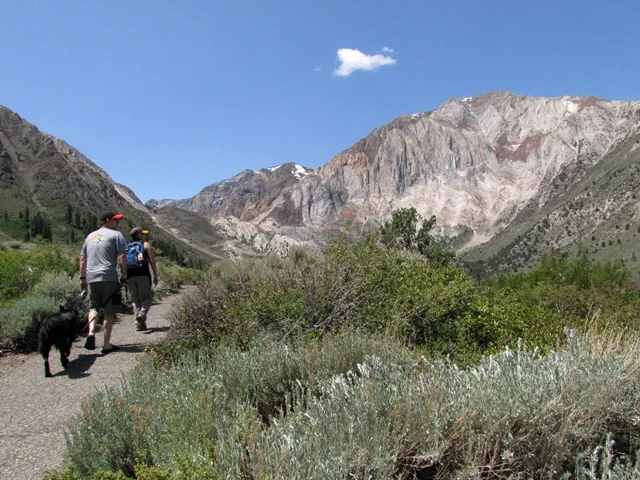
Documentary photograph of a family walking their leashed dog near Convict Lake, Inyo National Forest. Region 5 Photography · CC BY 2.0 · Web size optimized; source linked for the original.
We picture our dogs as boundless spirits racing through tall grass, ears flapping, eyes bright with pure possibility. That image pulls at the heart. Yet in the everyday reality of shared suburban trails, the leash often emerges as the quiet guardian of that very joy. Rather than a restraint, it becomes a thoughtful boundary that lets dogs remain dogs without paying the hidden costs of unchecked freedom. The argument here is gentle but firm: consistent leash laws safeguard our companions first, sparing them collisions, disappearances, and wildlife misadventures that off-leash idealism can invite. The trade-off feels small once we imagine the alternatives.
The Everyday Risks That Lurk Off Leash
Imagine a golden retriever named Max bounding ahead on a winding park path one crisp autumn afternoon. In the space of a few heartbeats he spots a scampering squirrel and accelerates, unaware that around the bend waits a tiny elderly poodle on a flexi-lead. The collision is cartoonish in theory, heartbreaking in practice: a twisted leg, a startled yelp, and an emergency trip to the vet where X-rays reveal a hairline fracture. Even the most attentive owner might not close the gap in time. A leash shortens that terrifying gap to nothing.
Consider too the sudden urge that seizes many dogs when a distant deer vanishes into the underbrush. One hypothetical springer spaniel, usually reliable at home, catches the scent and disappears over a ridge before her person can react. Hours turn into a frantic search through neighborhoods at twilight, posters taped to lampposts, hope fraying with each passing car. A leash does not erase curiosity; it simply keeps the adventure within shouting distance and safe reach. These scenarios are not indictments of any particular owner but illustrations of how quickly variables multiply when the tether disappears.
Picture a wooded trail edging a suburban ravine where coyotes den and porcupines waddle at dusk. An unleashed husky, thrilled by the new smells, might investigate a rustle in the leaves only to meet a face full of quills or a defensive nip that requires antibiotics and stitches. The encounter lasts seconds; the aftermath lingers for weeks. A leash offers those vital moments for a calm redirection, turning potential disaster into a brief, manageable detour.
Smaller companions face amplified stakes in the same setting. Envision a curious Jack Russell encountering a territorial raccoon at the trail’s edge. What starts as playful pouncing can end with punctures and infection. Even larger dogs cornering geese or groundhogs risk injury when the cornered animal fights back. Meanwhile, the wildlife pays its own price: frightened birds abandon nests, small mammals alter their habits. A leash respects both sides of this shared corridor, preserving the delicate balance that lets dogs and nature coexist without unnecessary cost.
How Owner Judgment Sometimes Falls Short
We like to believe we know our dogs completely, reading every tail wag and ear flick like an open book. Yet place that same dog on a busy trail scented with dozens of new smells, adrenaline, and the presence of strangers, and even the most even-tempered Labrador can suddenly feel territorial. A normally rock-solid recall might evaporate when another dog appears at full sprint. These shifts are not failures of character but reminders that biology often overrides intention in stimulating environments.
When one person decides their friendly mutt deserves off-leash liberty, an unspoken pressure ripples outward. The next owner feels judged for keeping their anxious rescue on lead. Trails become zones of unpredictable greetings and startled retreats. Older dogs and smaller breeds bear the brunt, dodging enthusiastic charges that feel like freight trains. Consistent rules remove the social guesswork, creating a predictable space where every dog, regardless of size, age, or personality, can enjoy the outing without becoming someone else’s cautionary tale.
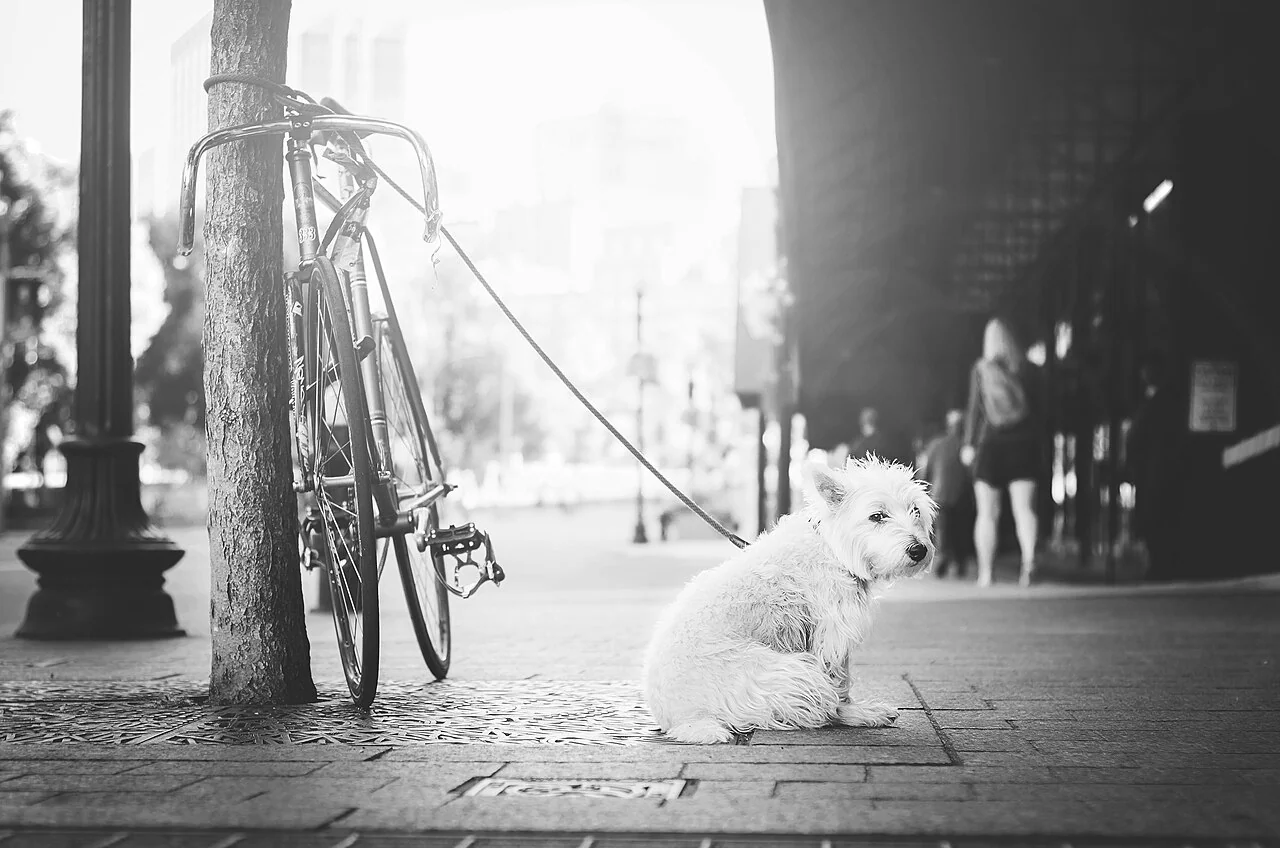
Dog waits for owner on leash, Boston Common, 2016 Qusai Akoud qusaiakoud · CC0 1.0. Web size optimized; original linked.
The Quiet Trade-offs We Accept for Their Sake
Critics sometimes frame leash laws as joyless bureaucracy that stifles a dog’s natural spirit. Yet consider the alternative: a world where every owner’s confidence in their own training becomes the only safeguard. The leash may limit the full gallop across an open meadow, but it also prevents the panicked sprint into traffic when a bike suddenly appears. The freedom it curtails is theoretical; the injuries and lost days it prevents are concrete.
There is emotional labor in this choice too. Owners must learn to read their dogs within the leash’s radius, turning a simple walk into a richer conversation of small corrections, shared observations, and mutual trust. Some days it feels like compromise. Other days it feels like the deepest kindness, an acknowledgment that our companions cannot foresee every hazard we can. The leash becomes less a chain than a promise that we will carry part of their vulnerability so they can carry the pure pleasure of being outside together.
Building a Culture Where Leashes Mean Freedom
Communities that treat leash laws as shared wisdom rather than scolding see the difference immediately. Clear signage, conveniently placed waste stations, and nearby fenced meadows for safe off-leash play all reduce friction. When education campaigns highlight the risks to the dogs themselves rather than abstract rules, resistance tends to melt. Owners begin to view the leash not as punishment but as the tool that lets their companions return home happy, uninjured, and ready for tomorrow’s walk.
Ultimately the suburban trail at sunset should remain a sanctuary of companionship and discovery for everyone involved. A simple length of nylon or leather makes that vision sustainable. It protects the small terrier from the enthusiastic charge, the curious beagle from the hidden coyote, and the worried owner from a night of searching flashlight beams through dark woods. In choosing the leash we do not diminish our dogs’ lives; we enlarge the chances that those lives stay long, vivid, and filled with the very adventures we want for them. That may be the most loving freedom we can offer.
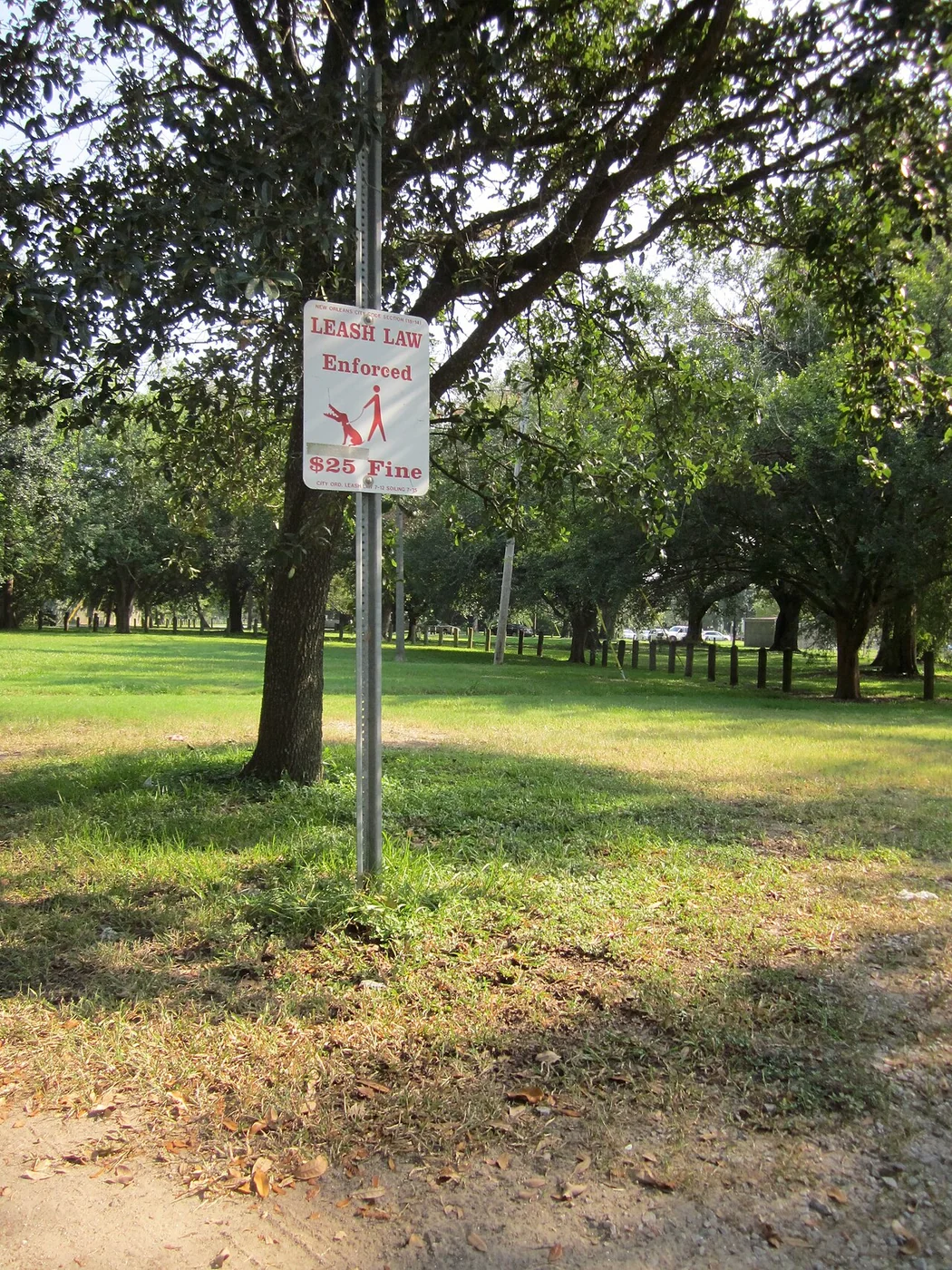
Modern documentary photograph of a 'Leash Law Enforced' sign in Audubon Park, New Orleans. Infrogmation of New Orleans · CC BY 2.0. Web size optimized; original linked.
AI-assisted original writing. This feature was revised against source material and checked for unsupported claims. An editorial perspective; interpretations are distinguished from factual reporting.
Sources & further reading
This article is labeled opinion and offers an editorial perspective.
Focusing on certain breeds distracts from the real drivers of dog bites: negligent ownership and missed opportunities for early socialization that affect every kind of pup.
Urban planners rarely pause to consider how their straight paths and echoing plazas feel through a dog's nose, ears, and eyes, yet a few gentle adjustments could transform shared spaces into places where both species truly thrive together.
 Photograph