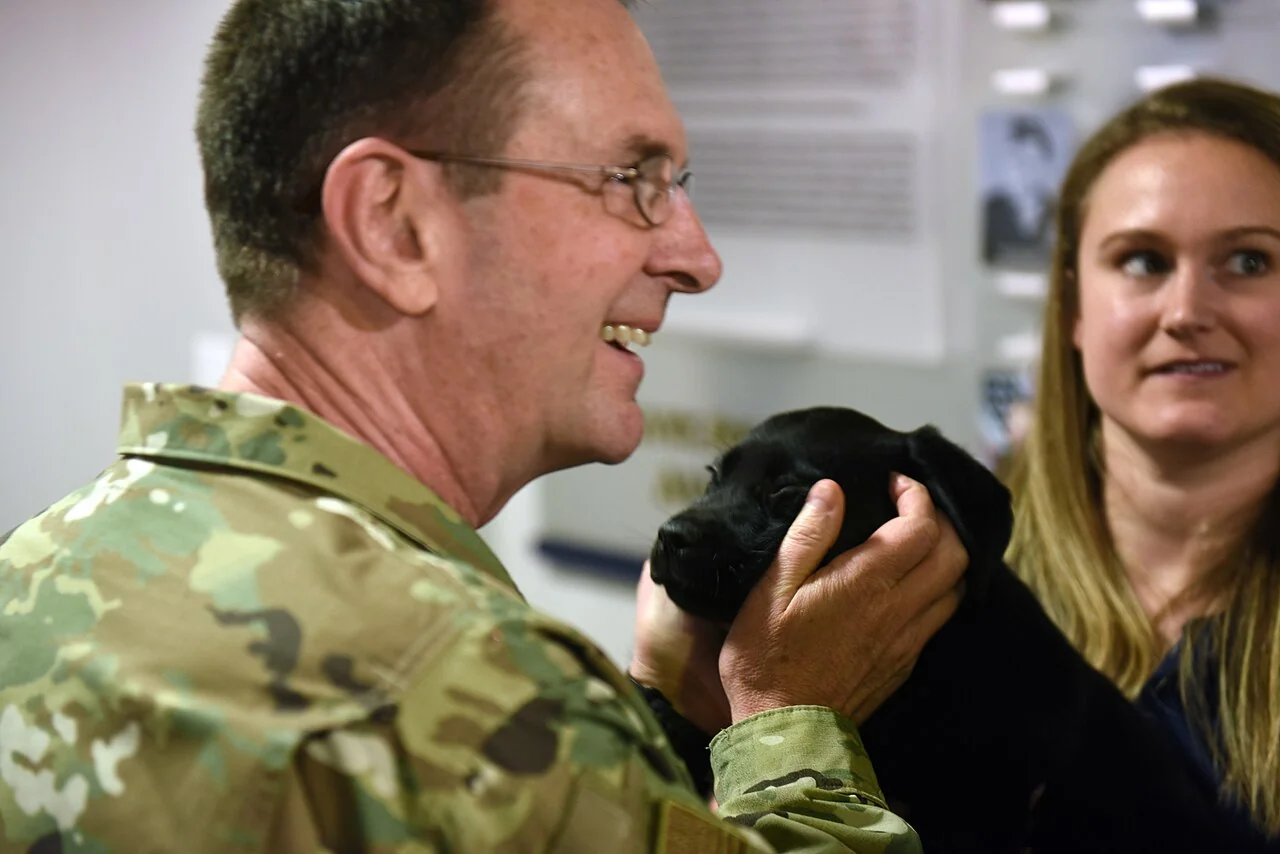
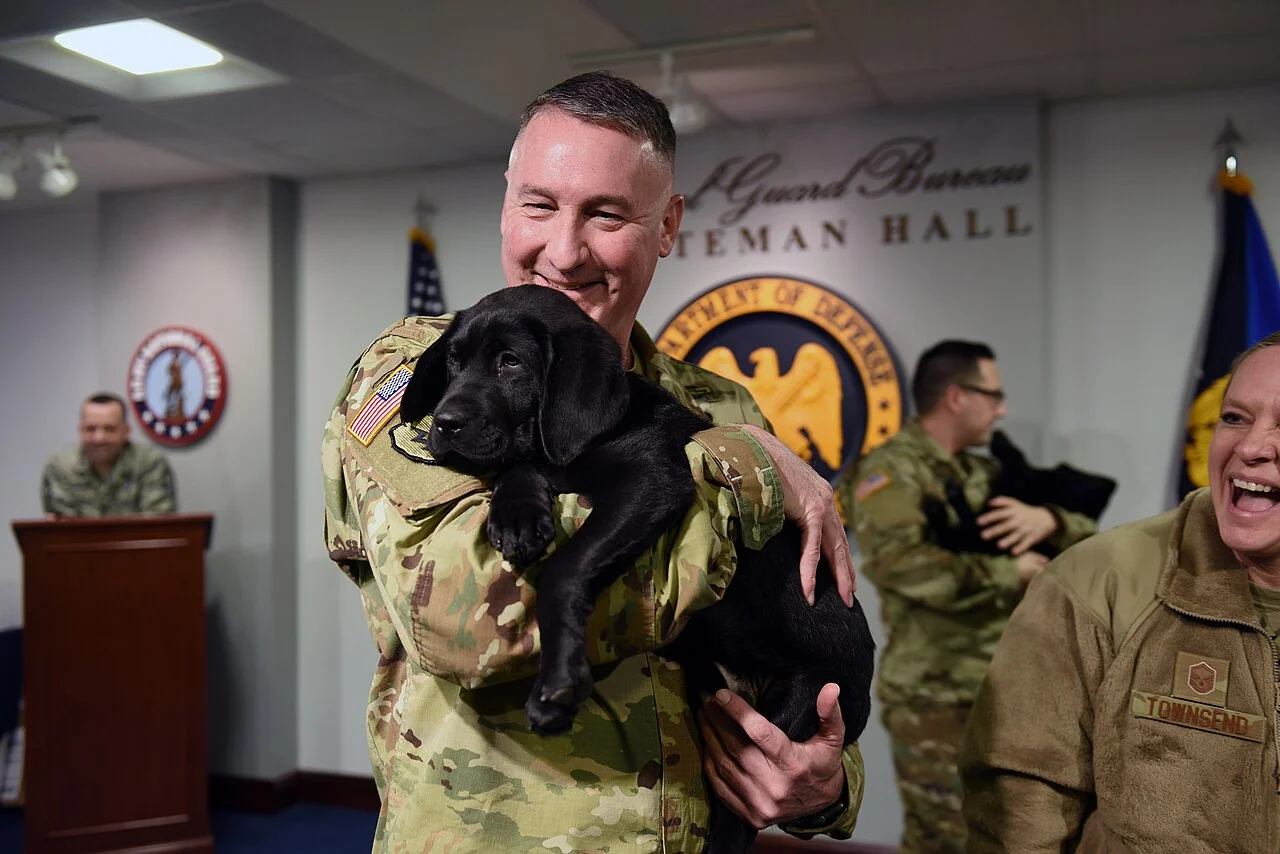
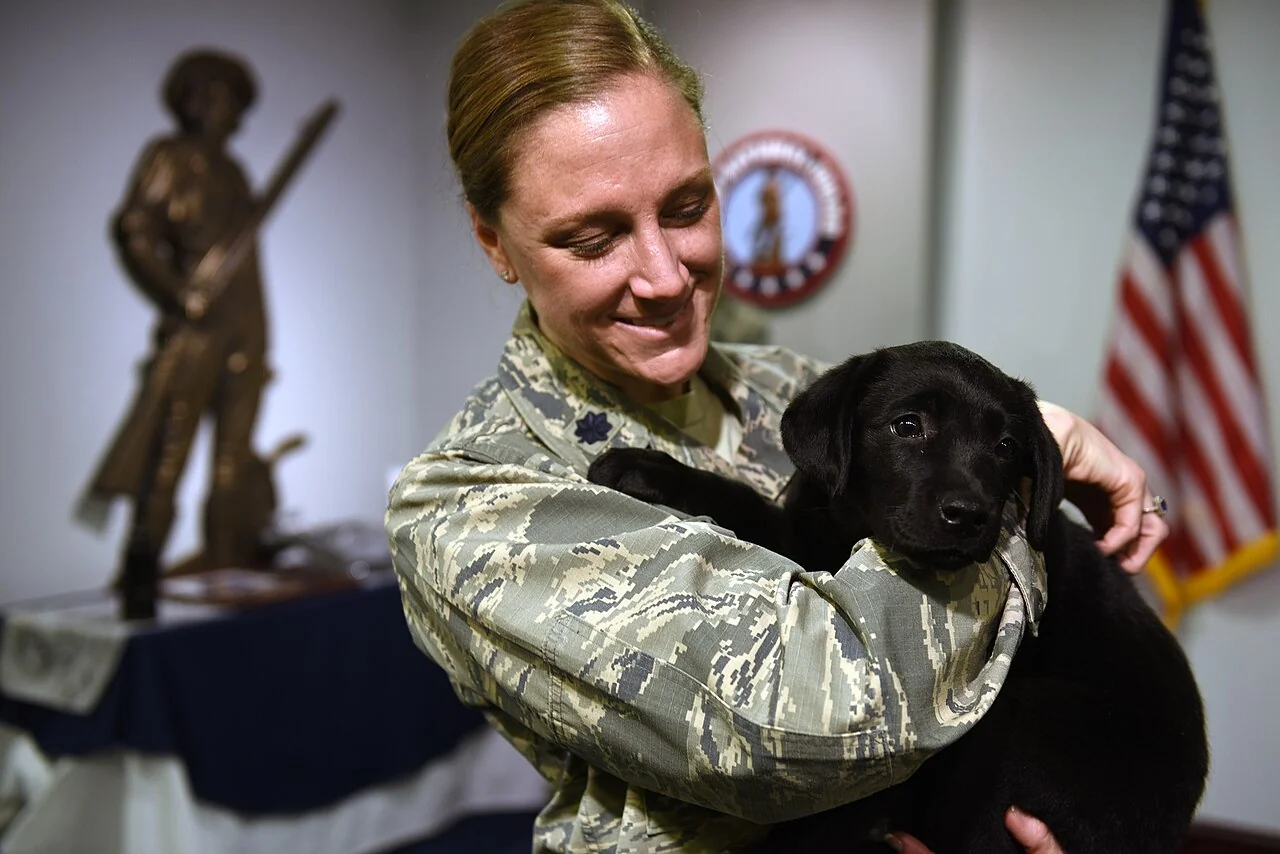
Recovering wounded warriors handle service dogs in training at the National Guard Bureau, Arlington, VA, January 2019, as part of the Warrior Canine Connection program. Chief National Guard Bureau from USA · CC BY 2.0 · Web size optimized; source linked for the original.
Veterans living with PTSD symptoms are taking part in VA pilot programs that involve training dogs intended to become service animals for other veterans. These structured sessions provide a chance for participants to build routines, practice calm leadership, and experience a sense of purpose. The dogs benefit from consistent positive reinforcement training that prepares them for specialized tasks. Early participant feedback points to feelings of renewed self-worth, though larger studies continue to examine clinical outcomes. The approach pairs veterans with dogs from partner organizations in a complementary care model that remains voluntary and adaptable.
Program Structure and Participation
The PAWS pilot operates at several VA sites, including Palo Alto. Outpatient veterans with PTSD symptoms join small groups of up to ten participants. Over eight weekly sessions they work with candidate service dogs under the guidance of partner organizations such as Warrior Canine Connection. The dogs are trained for future matching to other veterans rather than being placed with the trainers themselves.
Sessions focus on positive reinforcement methods that use praise, treats, and play. Activities include basic obedience as well as tasks that may support anxiety or other needs. Veterans attend on a voluntary basis after meeting eligibility criteria such as current VA enrollment and recent care appointments. The program does not serve as job training or lead to certification as a service dog trainer.
A separate short-term pilot involved six one-hour sessions over two weeks. That randomized study compared dog-training participants to a waitlist group. Both pilots emphasize complementary care alongside standard PTSD treatment, with ongoing data collection to track veteran experiences.
Recovering wounded warriors handle service dogs in training at the National Guard Bureau, Arlington, VA, January 2019, as part of the Warrior Canine Connection program. Chief National Guard Bureau from USA · CC BY 2.0. Web size optimized; original linked.
Veteran Experiences and Measured Effects
Initial feedback from PAWS participants described renewed purpose and self-worth after the training sessions. The larger pilot tracked 453 veterans who attended at least one of eight sessions, with 70 percent completing six or more. A separate randomized pilot with 29 service members found moderate reductions in intrusive thoughts and overall PTSD symptoms among those in the training group compared with the waitlist.
Within the training group of that smaller study, notable short-term decreases appeared in stress, intrusive thoughts, and hypervigilance. These findings come from self-reported measures and clinician assessments. The programs do not replace traditional therapy, and participants are encouraged to integrate the experience with their existing VA care plans.
Longer-term data from the main VA pilot showed no clinically relevant change in PTSD symptoms for those with complete pre- and post-data. Improvements were smaller than those seen in veterans receiving standard specialty PTSD care. High per-participant costs were also noted in the evaluation.
Outcomes for the Dogs
The dogs involved are candidate service animals from partner organizations. Training helps them develop obedience, focus, and behaviors useful for service roles. Veterans practice consistent cues that build the dogs’ confidence and reliability.
Some trained dogs may later be considered for adoption by a veteran participant when a health provider and partner organization determine it is appropriate. Follow-up support is available in those cases. The programs track participation and dog progress through standardized logs and outcome databases.
Because the dogs are destined for service roles rather than general shelter adoption, direct comparisons to municipal shelter graduation rates are not part of the reported data. The emphasis remains on preparing each animal for its future work with another veteran.
Service dogs in training visit the National Guard Bureau, the Pentagon, Arlington, VA, Jan. 10, 2019. Recovering wounded warriors help train the service dogs for fellow Veterans. Chief National Guard Bureau from USA · CC BY 2.0. Web size optimized; original linked.
Supporting Shelter Dogs in Your Community
Local shelters often welcome donations of gently used leashes, collars, and puzzle toys that provide mental stimulation. Safe, dog-friendly items such as peanut butter or low-sodium broth can be used to make lick mats for calming enrichment. Contacting shelters ahead of time helps ensure donations match their current needs and safety standards.
Short volunteer shifts spent reading to dogs or taking them on quiet walks can build confidence that benefits future training efforts. Assembling simple care kits with waste bags and grooming wipes offers another low-commitment way to help. Following each shelter’s health screening and handling rules protects both people and animals.
Practicing positive reinforcement at home, such as rewarding calm greetings or polite leash manners, reinforces the same techniques used in professional programs. Supporting spay-neuter efforts and responsible pet ownership choices can also reduce future shelter intake over time.
Current Status and Next Steps
The PAWS initiative runs as a five-year pilot scheduled to conclude in 2027. Data collection continues on veteran satisfaction, well-being, and any clinically relevant improvements. A formal report on the dog training therapy pilot recommended against permanent adoption or expansion based on results available as of mid-2025.
Communities interested in similar efforts can check local VA resources or accredited partner organizations for information on existing programs. Those considering participation should first consult their VA care team to determine suitability. For any dog showing signs of stress, prompt veterinary evaluation is advised.
These pilots illustrate one approach to pairing structured animal interaction with veteran recovery support. Ongoing evaluations aim to clarify which elements prove most helpful for participants and how best to refine future models.
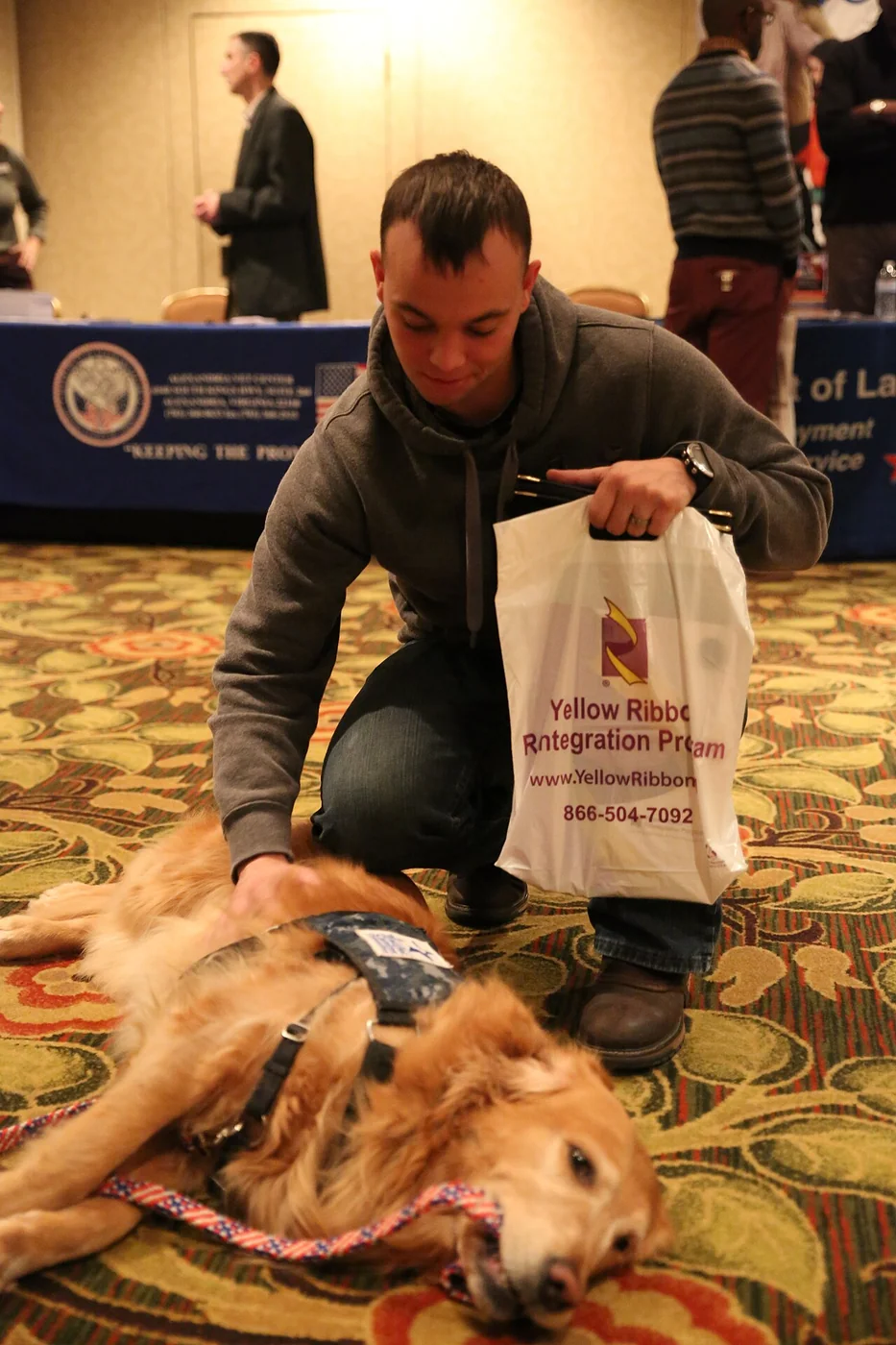
Sgt. William Turner pets Valerie, a service dog from the Warrior Canine Connection, at a Yellow Ribbon Re-Integration Program post-deployment training event in Washington, D.C., Jan. 24, 2015. Cpl. Tiffany Edwards · Public domain. Web size optimized; original linked.
AI-assisted original writing. This feature was revised against source material and checked for unsupported claims. Follow the references below for evidence and its limits.
 Photograph