U.S. Rules for Importing Dogs from High-Risk Rabies Countries
CDC requirements focus on age, microchips, health, and rabies documentation for dogs that have spent time in listed nations within the past six months.
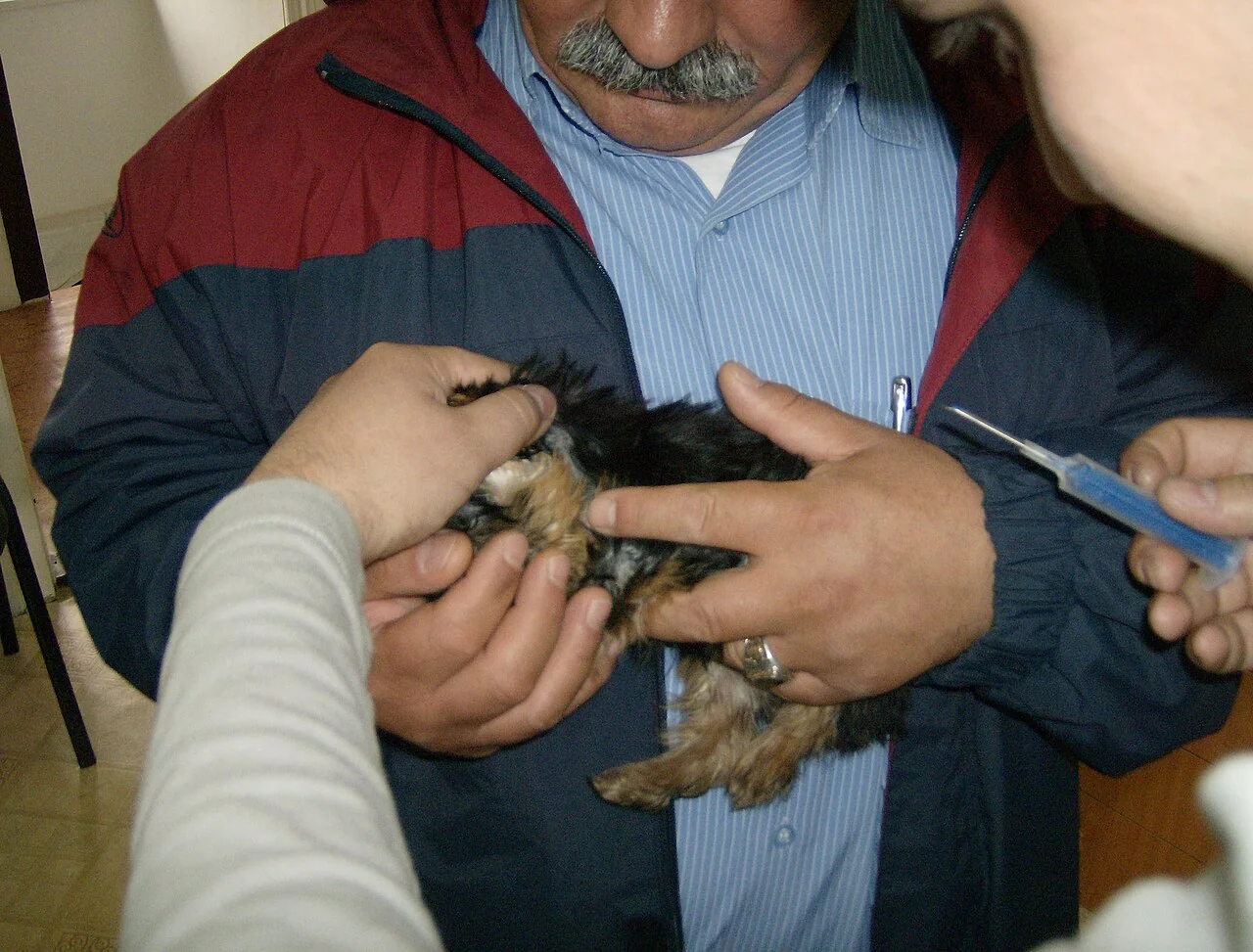
Microchip being implanted in a dog Izvora · Public domain · Web size optimized; source linked for the original.
Rescue organizations and individuals bringing dogs from overseas face specific federal requirements aimed at preventing rabies entry into the United States. The Centers for Disease Control and Prevention sets standards that apply especially to animals from high-risk countries where dog rabies variants remain a concern. These rules emphasize vaccination timing, laboratory testing, and proper forms to support both public health and animal welfare.
High-Risk Countries and the Six-Month Window
The CDC maintains a list of countries and political units considered high-risk for dog rabies. Any dog that has been in one of these locations during the six months before arriving in the United States must meet additional entry standards. The list includes nations such as Afghanistan, Algeria, Angola, Bangladesh, Brazil, China (excluding Hong Kong, Macau, and Taiwan), India, Mexico is not on the list but many others in Africa, Asia, and Latin America are.
This six-month period accounts for rabies incubation risks. Even a short stay or transit through a listed country can trigger the full requirements. Dogs from countries not on the high-risk list follow simpler protocols. Rescue groups planning imports are advised to review the current list directly from CDC sources before travel.
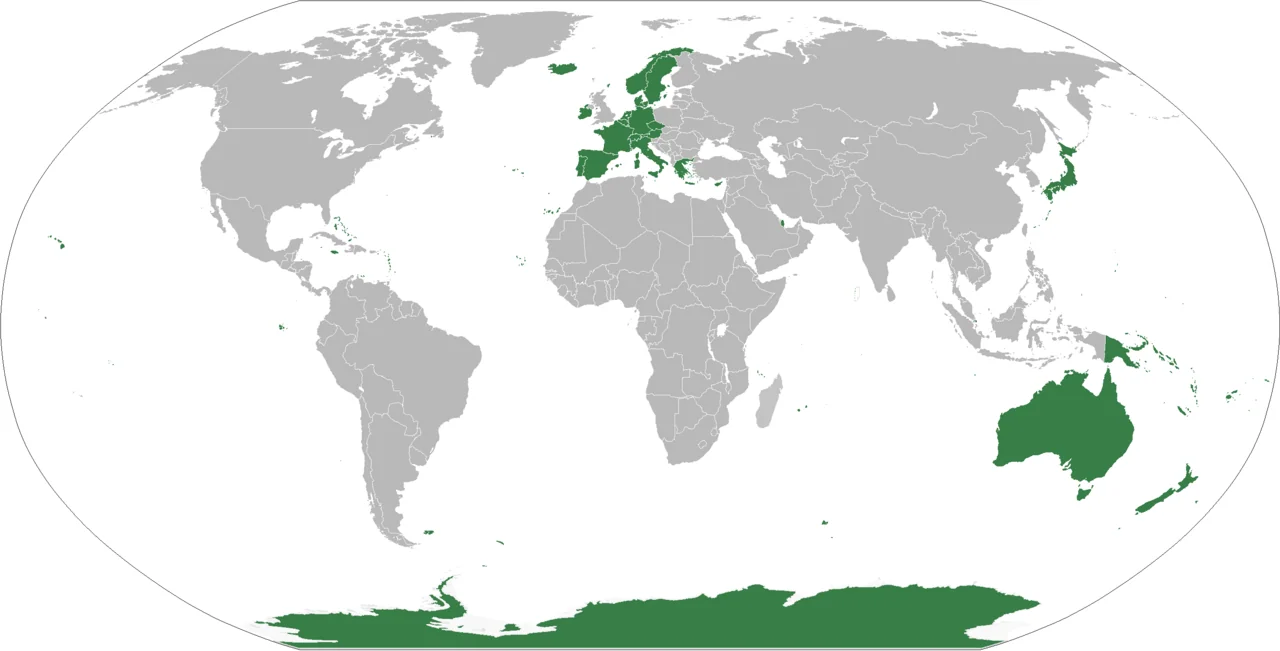
Map of rabies-free areas in 2024 according to UK government data on rabies risks in terrestrial animals by country. Fiver, der Hellseher · CC BY-SA 4.0. Web size optimized; original linked.
Baseline Requirements for All Imported Dogs
Every dog entering the United States must be at least six months old, have an ISO-compatible microchip implanted before any rabies vaccination, and appear healthy on arrival. The microchip links all records to the individual animal and must be readable by standard scanners used at ports of entry.
Importers must complete the CDC Dog Import Form online in advance and carry the generated receipt. This form collects details on travel history and vaccination status. Skipping any of these basics can result in the dog being denied entry or held for further review.
Rabies Titer Testing for Dogs Vaccinated Outside the U.S.
Dogs vaccinated abroad that have been in a high-risk country within the past six months need a rabies antibody titer result of at least 0.5 IU/mL from a CDC-approved laboratory. Blood for this test must be drawn at least 30 days after a valid rabies vaccination that was given after microchip implantation.
The sample must be submitted to an approved lab, and results must be available at least 28 days before U.S. entry. Passing titer results are considered valid for the dog's lifetime provided rabies vaccination coverage does not lapse. If the titer is below 0.5 IU/mL, the dog must be revaccinated and a new sample drawn at least 30 days later. Without a valid titer, the dog requires a 28-day quarantine at a CDC-registered facility after examination and revaccination upon arrival.
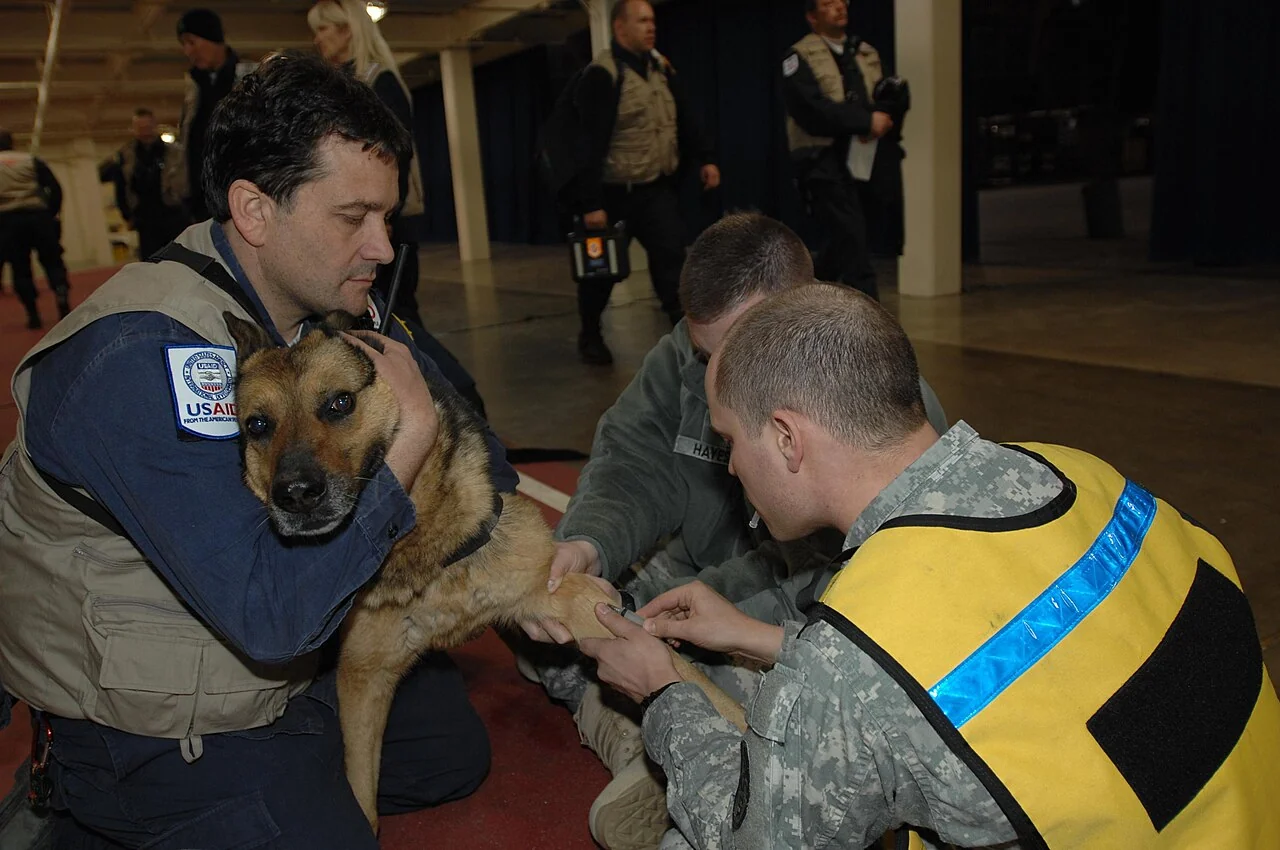
U.S. Army veterinarians draw blood from a search-and-rescue dog to test rabies antibody titer levels (2011). DVIDSHUB · CC BY 2.0. Web size optimized; original linked.
Pathway for Dogs Vaccinated in the United States
Dogs that received their rabies vaccination in the United States before traveling abroad can use a Certification of U.S.-Issued Rabies Vaccination form. This must be completed by a USDA-accredited veterinarian before the dog leaves the country. For a first rabies vaccine, the form cannot be issued until at least 28 days after vaccination. Booster vaccines are valid immediately if there has been no lapse in coverage.
Older USDA-endorsed export health certificates issued no later than July 31, 2025, may still be accepted if they meet specific criteria, including the dog's age of at least six months, microchip number, and confirmation that the vaccine was given after microchip placement. After that date, the new certification form is required. This documentation, paired with the CDC import receipt, can allow entry at a broader range of ports.
Additional Documentation and Foreign Vaccination Forms
Foreign veterinarians complete a Certification of Foreign Rabies Vaccination and Microchip form for dogs vaccinated outside the United States. This government-endorsed document is specific to animals from or through high-risk countries. Veterinarians should use approved versions and confirm with their country's authorities if variations apply.
All forms and records must travel with the dog. Importers should maintain clear documentation of the animal's whereabouts to demonstrate compliance with the six-month high-risk rule. Any sign of illness on arrival can lead to veterinary examination regardless of paperwork completeness.
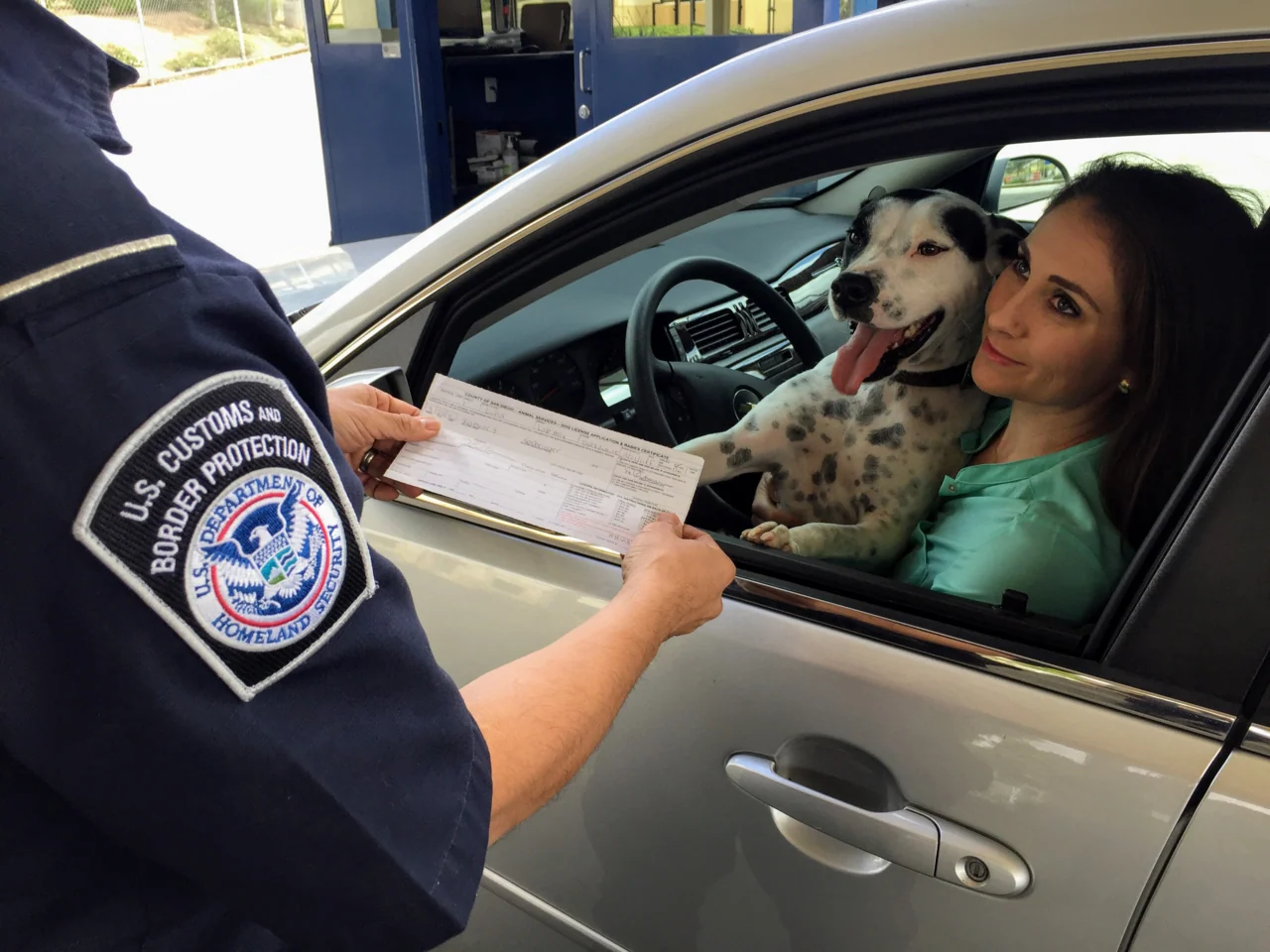
A dog at the U.S.-Mexico border crossing with its owner presenting a copy of a Dog License Application and Rabies Certificate to a CBP officer. Maureen Fonseca-Ford · Public domain. Web size optimized; original linked.
AI-assisted original writing. This feature was revised against source material and checked for unsupported claims. Follow the references below for evidence and its limits.
 Historical collection image