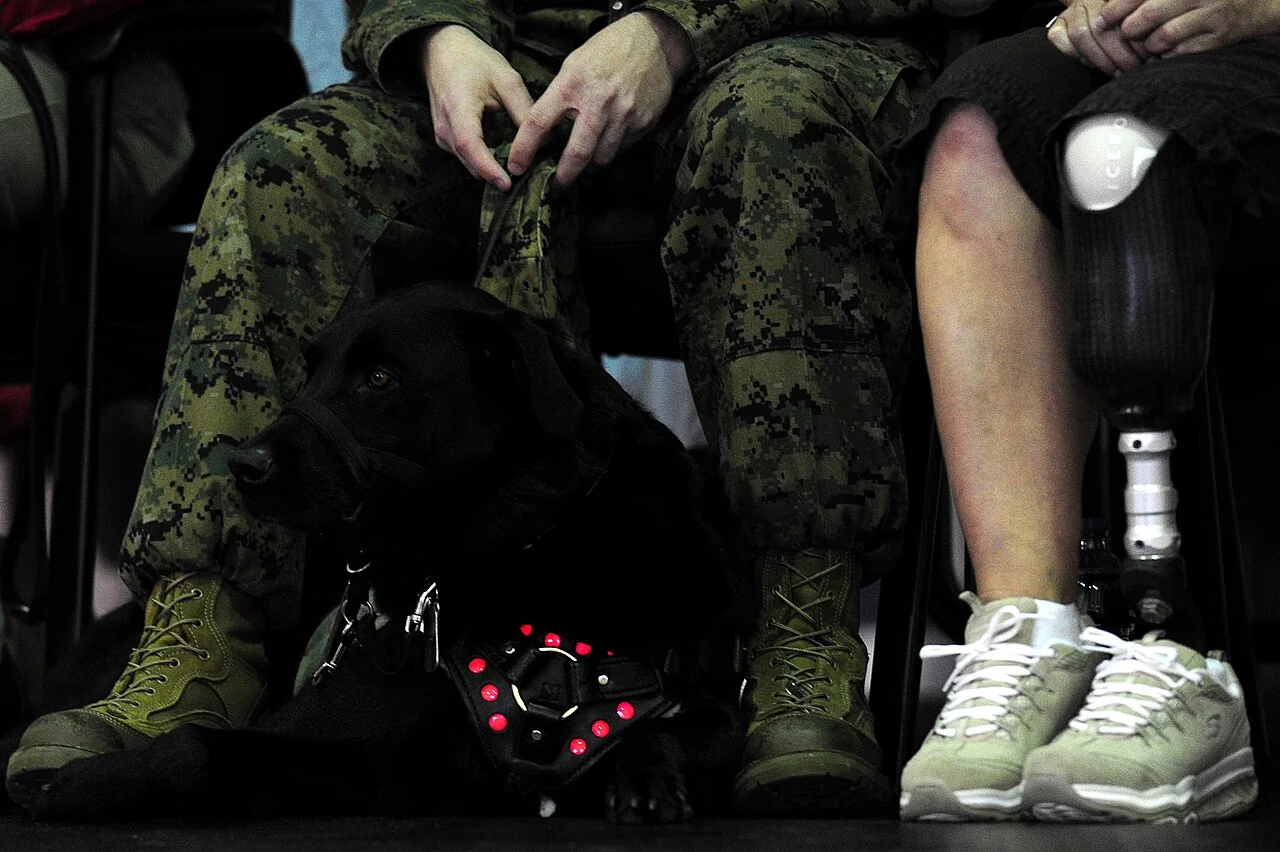
Marine Cpl. David Donchess with his new service dog Ruth during a placement ceremony, 1 December 2011 (archival U.S. Air Force photograph). Staff Sgt. Nicole Mickle · Public domain · Web size optimized; source linked for the original.
In the warm chaos of our daily lives, dogs slip into roles that feel almost predestined: the steady guide threading a blind person through a crowded subway, the therapy dog melting tension in a children's hospital ward, the farm guardian who reads the wind and the flock with equal intuition. Yet a rigid moral slogan, "Adopt don't shop," has quietly hardened into something sharper. When every planned litter draws reflexive scorn, we risk losing the thoughtful stewardship that keeps these specialized companions viable. The conversation deserves more breathing room, more honesty about tradeoffs, and more respect for the varied ways dogs enrich our world.
The Real-World Demands of Purpose-Bred Dogs
Imagine a young veteran waking from another nightmare, heart racing, the world narrowed to threat. A service dog beside him might rest a heavy head on his chest, grounding him with practiced calm. That steadiness rarely emerges by chance. It is sculpted through generations of selecting for low reactivity, durable joints that withstand years of public transit and harness work, and an unflappable focus even when fireworks crack overhead or strangers reach too suddenly. Therapy dogs visiting pediatric oncology floors face a different test: they must tolerate sticky fingers in their ears, sudden squeals of delight or distress, and still lean in with a gentle mouth and wagging tail. These are not universal canine virtues; they are honed traits.
Shelter dogs, bless them, arrive with stories written in mystery. A bouncy mixed-breed might charm everyone at adoption day, yet prove too easily startled for hospital visits or too driven to chase for livestock work. In a possible future, a family needing a mobility assistant dog spends months trialing shelter candidates only to watch each wash out during advanced training. The emotional toll compounds the financial one. Purpose-bred lines offer a higher starting probability of success, not a guarantee, but a foundation built on visible ancestry and tested parents. Dismissing that foundation out of hand does not magically create more suitable shelter dogs; it simply narrows options for people whose needs are precise and pressing.
Distinguishing Ethical Breeders from Commercial Mills
Picture a small kennel nestled behind a family home in the foothills. The breeding female sleeps on the couch each evening, her latest litter tumbling across the kitchen floor amid children's giggles and the scent of oatmeal cookies. Health clearances for hips, elbows, heart, and eyes are framed on the wall like proud report cards. Puppies leave only after weeks of careful socialization, with contracts that promise lifetime support and a return ticket if life changes. This scene represents the best of intentional breeding: limited litters, transparent practices, and dogs who know the rhythm of human days.
Contrast that with the grim reality of high-volume operations where mothers rarely see daylight and puppies ship out like catalog items. The moral gap between these models yawns wide, yet public rhetoric often flattens both under the single dismissive word "breeder." In one imagined scenario, a thoughtful young couple researching Labrador lines for future therapy work encounters online fury the moment they mention considering a planned litter from health-tested parents. Shamed into silence, they either abandon the idea or turn to less visible, less accountable sources. The result? Fewer homes willing to steward working bloodlines, and a slow erosion of the very qualities we claim to value in our canine partners.
Health and Genetic Preservation Under Threat
Consider a German Shepherd whose grandparents and great-grandparents moved through life with sound hips and clear eyes, each generation documented through careful veterinary screening. Over time, the likelihood of dysplasia shrinks, not to zero but enough to let a dog work comfortably into old age as a veteran's balance assistant. Without breeders tracking these threads, the living archive of functional health frays. In a hypothetical breeding program that falls dormant under cultural pressure, the next decade might see rising rates of early retirement for working dogs whose bodies simply cannot keep pace.
No responsible voice claims perfection is possible; every dog, sourced anywhere, carries some risk. The thoughtful path invites prospective owners to sit down with their own veterinarians, review available documentation, and weigh breed tendencies against their lifestyle. Yet when the dominant message brands all breeding suspect, that conversation gets shouted down. Genetic diversity itself becomes collateral damage. Popular lines narrow, hidden problems amplify, and the purposeful dogs we rely on for public service grow harder to sustain. Preserving their heritage is not nostalgia. It is practical care for the roles only they can fill.
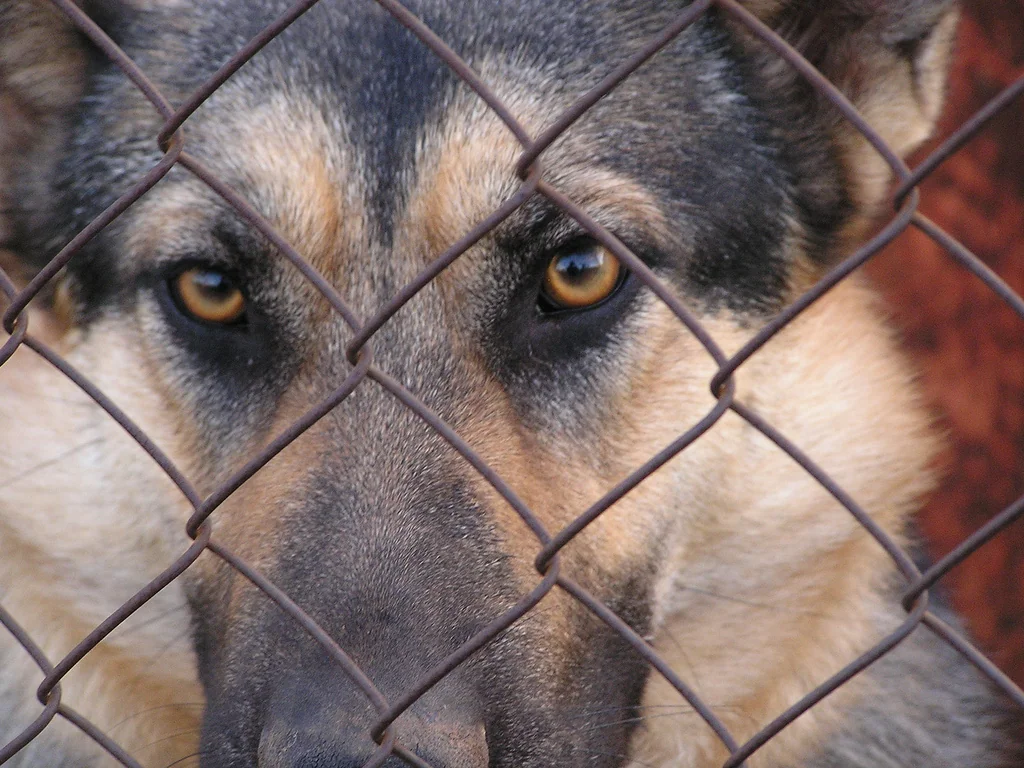
Close-up of a German Shepherd's eyes Miguel+ · CC BY-SA 2.0. Web size optimized; original linked.
The Shelter Reality and Unintended Consequences
Shelters and rescues do luminous work, stitching dogs and people together across countless happy endings. A senior hound might find his forever porch, a goofy mutt might become a child's best confidant. These stories warm the heart and deserve every cheer. Yet when a livestock producer seeks a puppy raised from birth around sheep, or a nonprofit needs candidates with predictable nerve for PTSD work, the shelter pool often cannot supply what the job demands. In one possible future, a sheep farm adopts a rescue with unknown herding instincts; months later the dog chases instead of gathers, stressing both flock and handler until the match dissolves.
The "adopt don't shop" rallying cry, when swung like a blunt instrument, can shame families whose honest needs point elsewhere. It does not increase appropriate shelter placements; it merely leaves certain niches empty. Public spaces grow safer and hospitals warmer when reliable working dogs perform their tasks with grace. Over-reliance on any single pathway, however well-intentioned, risks disappointing the very people and animals who depend on that reliability. A humane approach would honor shelter success while admitting that some roles call for more tailored beginnings.
Toward a More Nuanced Conversation
We can hold two truths without contradiction. Shelters deserve robust support, volunteer hours, and open hearts. At the same time, small-scale, transparent breeders who raise working dogs with visible care and documented health deserve room to operate without social exile. In an ideal future, breed clubs tighten their ethical codes, universities continue gentle research into canine genetics, and both adoption and purchase paths are judged by the welfare they deliver rather than the slogan they follow. Prospective owners learn to ask hard questions: May I visit the whelping area? Can you show me the parents' health clearances? What happens if this dog cannot fulfill the role I hoped for?
Adopters who embrace a dog's unknown history earn deep admiration; their patience and flexibility model a beautiful kind of love. The two routes need not battle in a moral arena where only one can win. Our farms, hospitals, schools, and homes grow richer when purposeful dogs walk beside us in all their varied excellence. Protecting that future asks us to speak with clearer eyes about what each avenue can and cannot promise. In the end, living well with dogs means refusing easy absolutes. It means staying curious, staying kind, and remembering that behind every wagging tail is a story worth understanding on its own terms.
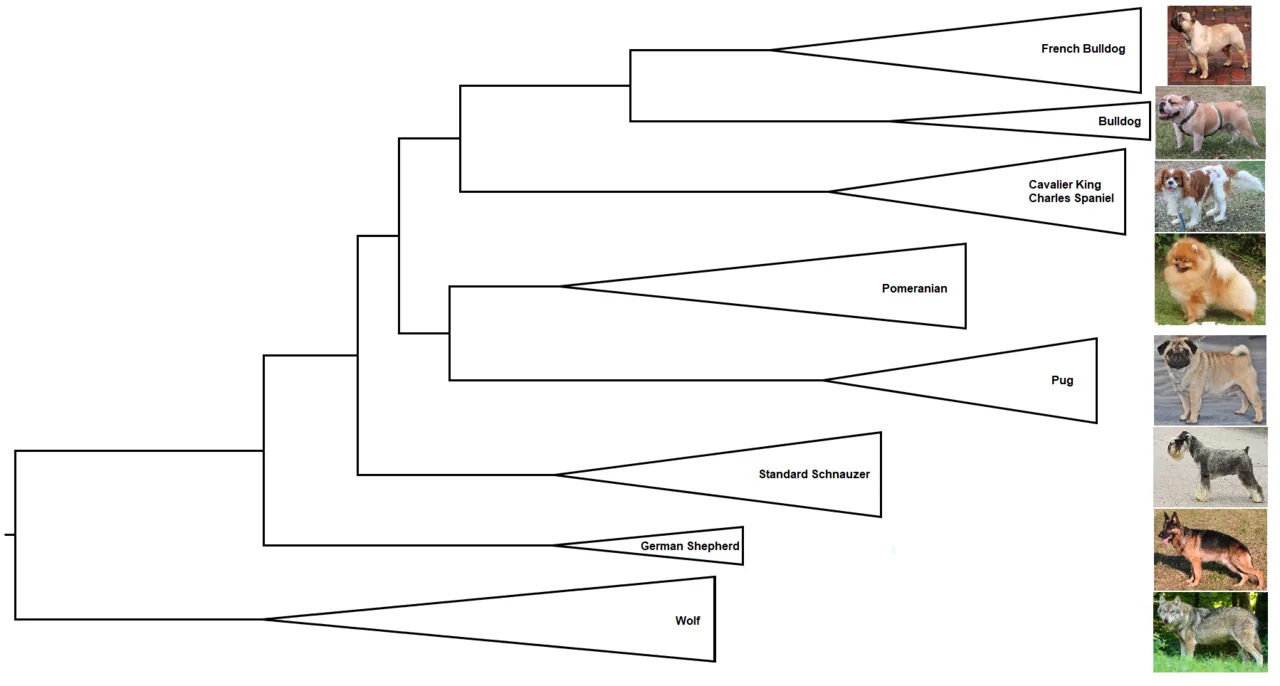
Phylogenetic tree of seven dog breeds rooted to the wolf, based on single nucleotide polymorphism data from the NHGRI Dog Genome Project (scientific diagram). Tulumnes · CC BY 4.0. Web size optimized; original linked.
AI-assisted original writing. This feature was revised against source material and checked for unsupported claims. An editorial perspective; interpretations are distinguished from factual reporting.
Sources & further reading
This article is labeled opinion and offers an editorial perspective.
Focusing on certain breeds distracts from the real drivers of dog bites: negligent ownership and missed opportunities for early socialization that affect every kind of pup.
Urban planners rarely pause to consider how their straight paths and echoing plazas feel through a dog's nose, ears, and eyes, yet a few gentle adjustments could transform shared spaces into places where both species truly thrive together.
Strict enforcement on suburban paths and trails quietly shields our canine companions from injury, escape, and tense encounters that off-leash freedom too often invites.
 Photograph