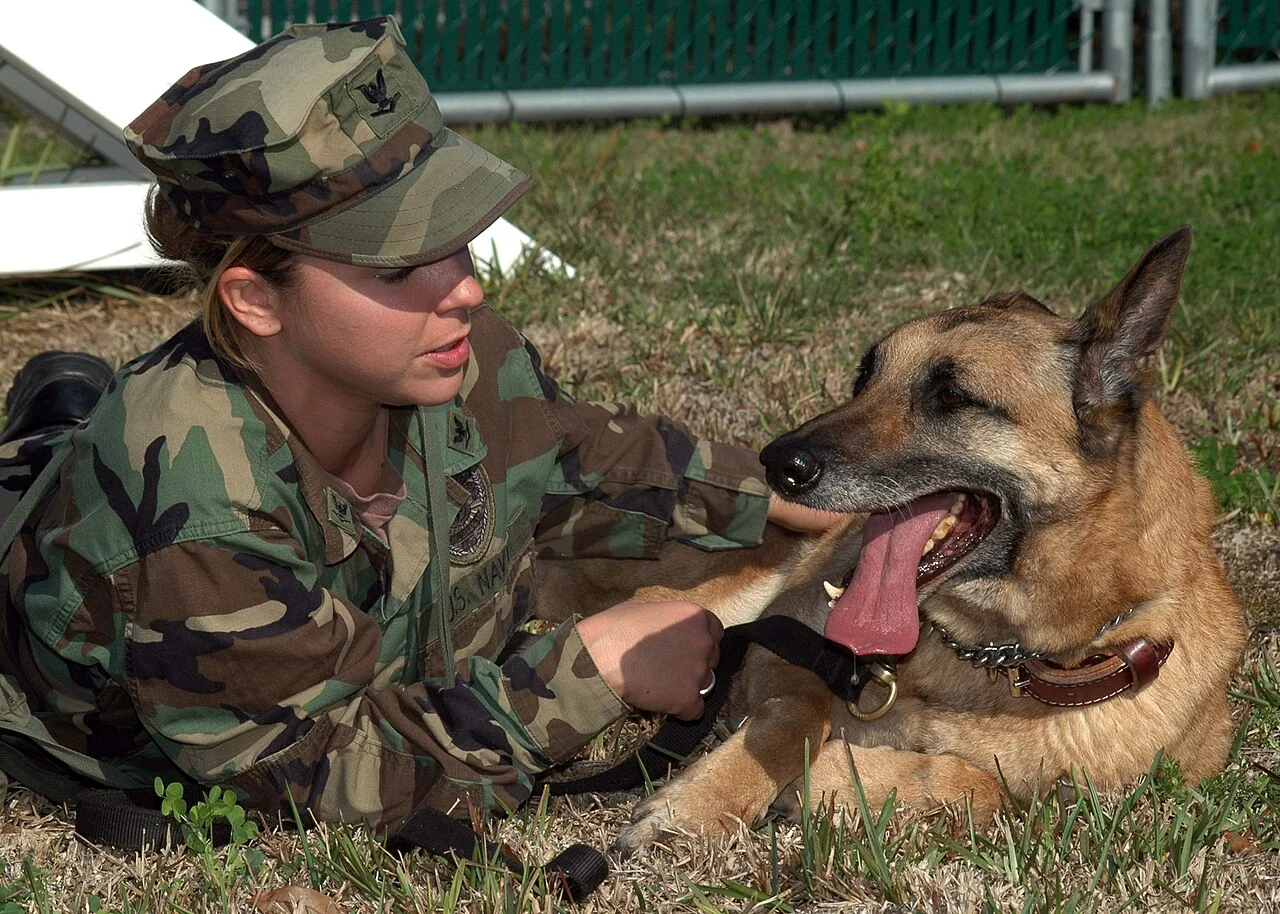
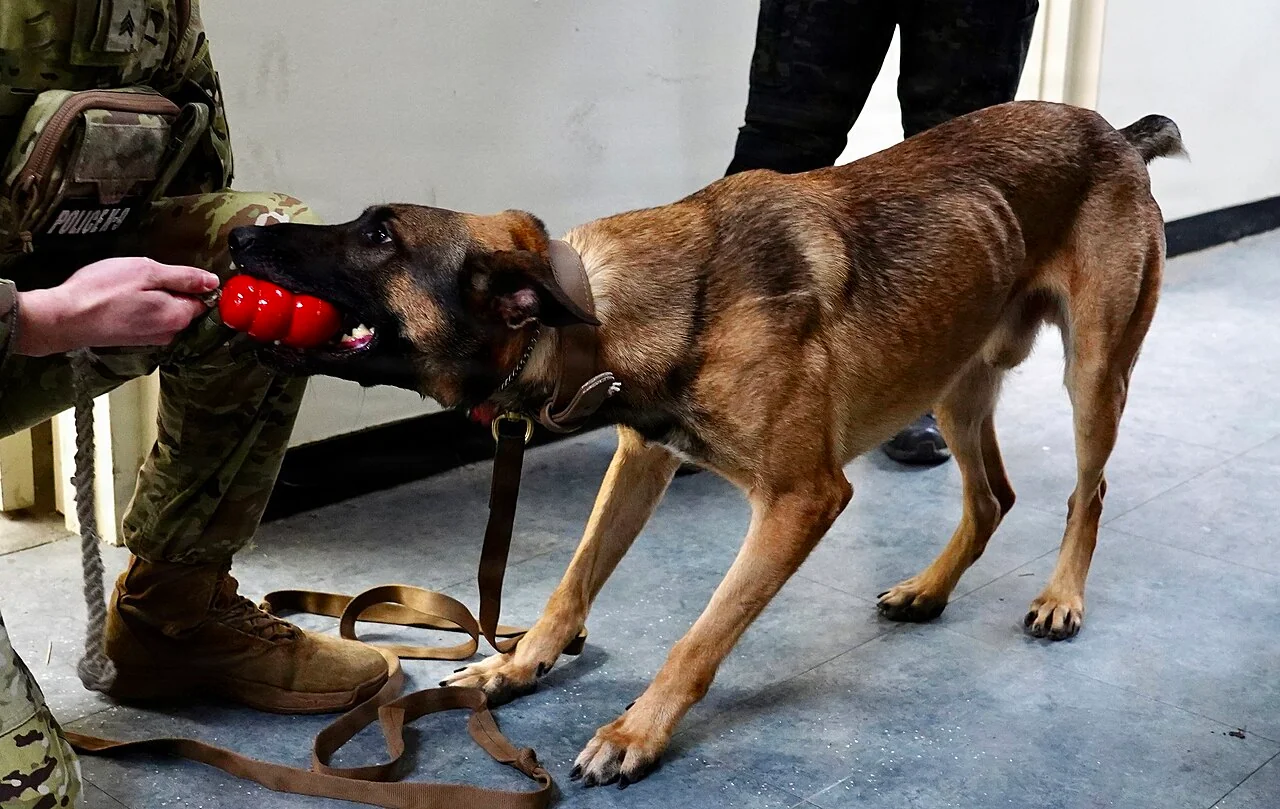
Master-at-Arms 3rd Class Leslie Orand gives positive reinforcement to Amber, an explosive detector dog, after completing her obstacle training course (2006). U.S. Navy photo by Mass Communication Specialist 2nd Class Leah Stiles · Public domain · Web size optimized; source linked for the original.
Veterinary organizations focused on animal behavior emphasize positive reinforcement as an effective way to encourage desirable actions in dogs. These approaches rely on rewards such as treats or praise rather than punishment, helping to strengthen the bond between people and their pets. While university programs in animal science often incorporate community outreach, specific service-learning initiatives pairing students with low-income seniors for in-home training are not detailed in the available sources.
Understanding Positive Reinforcement
Positive reinforcement involves adding something pleasant, like a treat or attention, immediately after a dog performs a wanted behavior. This increases the likelihood that the behavior will be repeated. The American Veterinary Society of Animal Behavior supports this method as part of improving animal welfare and the human-animal bond.
Veterinary behavior professionals recommend focusing on what the dog should do instead of punishing unwanted actions. For example, rewarding a dog for sitting calmly can reduce jumping on visitors over time. Short, consistent practice helps dogs learn without becoming overwhelmed.
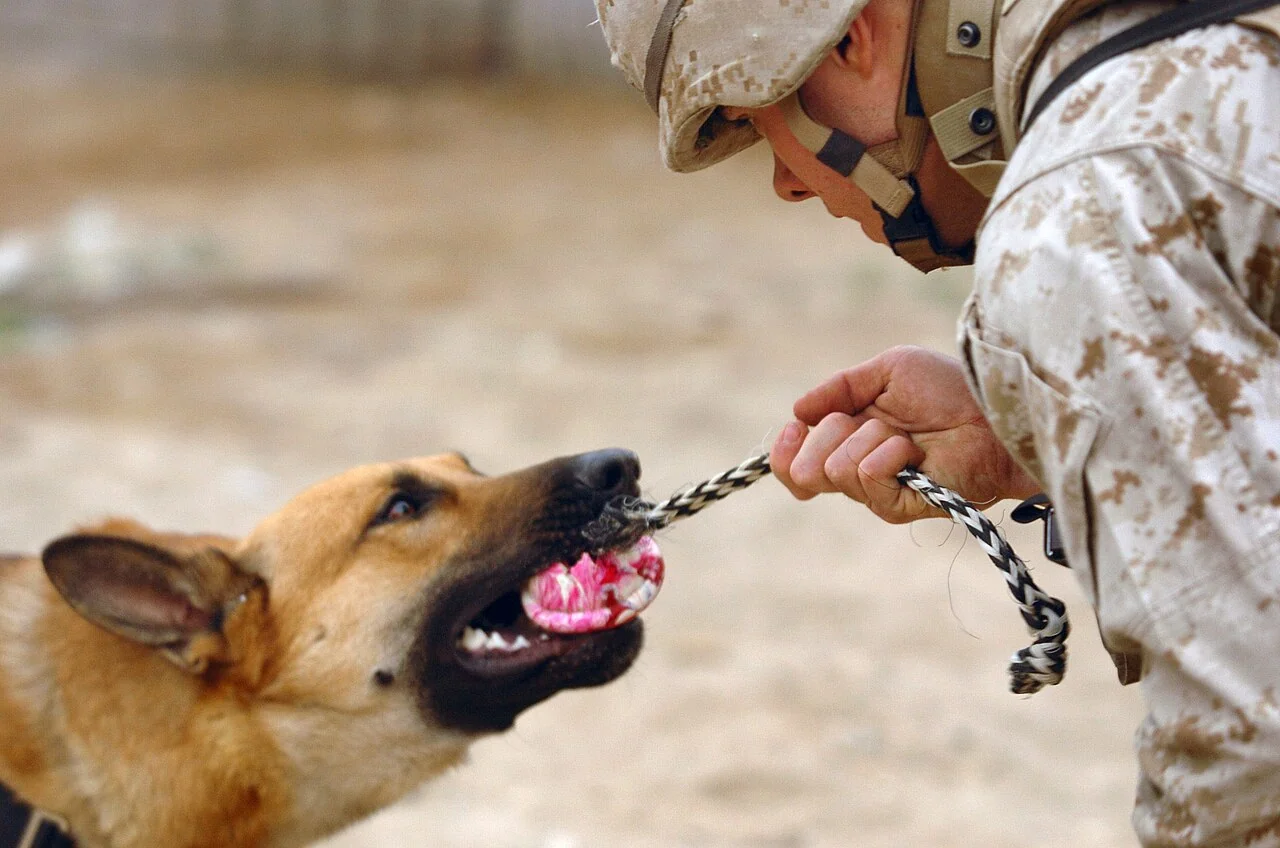
U.S. Marine rewards an explosive-sniffing dog with a treat after a successful search at a checkpoint in Ramadi, Iraq, 2005. Shane T. McCoy · Public domain. Web size optimized; original linked.
Everyday Enrichment Ideas Using Household Items
Simple games can provide mental stimulation that supports healthy behavior. One technique is to scatter kibble in a muffin tin and cover the cups with tennis balls, turning mealtime into a puzzle that keeps a dog occupied.
Another approach uses an old towel rolled into a mat to teach a dog to settle quietly in one spot, such as during family meals or television time. These activities require no special purchases and can be adapted for dogs of various sizes and energy levels living in apartments or houses.
Teaching a "Touch" Command for Redirection
A useful cue is the "touch" command, where a dog learns to bump its nose against a hand or target stick to earn a reward. This can redirect excited energy away from jumping and create an engaging game that improves focus.
Practicing in brief sessions of about five minutes, several times a day, is often more productive than longer sessions. The American Veterinary Society of Animal Behavior highlights how such insights into animal behavior can enhance welfare and strengthen relationships with pets.
Progress with dogs comes from celebrating small improvements rather than expecting instant perfection. Consistent use of rewards helps build reliable behaviors like coming when called or walking without pulling on the leash.
Owners are encouraged to remain patient, as individual dogs learn at different rates depending on their age, breed tendencies, and past experiences. Veterinary behavior resources stress that mental stimulation through training contributes to a dog's well-being, though any concerns about underlying health should be discussed with a veterinarian.
Resources for Further Learning
The American Veterinary Society of Animal Behavior offers directories of professionals and educational materials on behavior topics. Their resources include position statements and articles on subjects such as helping fearful shelter dogs and providing brain games for cats, which illustrate broader principles applicable to dogs as well.
Communities interested in evidence-based approaches can explore university extension programs or veterinary colleges for general guidance on animal behavior. These organizations focus on advancing knowledge that benefits both animals and the people who care for them.
U.S. Army board-certified veterinary behaviorist, an example of the type of professional resources promoted by organizations such as the American Veterinary Society of Animal Behavior. U.S. Army RHCE by Russell Toof · Public domain. Web size optimized; original linked.
AI-assisted original writing. This feature was revised against source material and checked for unsupported claims. Follow the references below for evidence and its limits.

 Photograph