Natufian Canid Remains Hint at Early Human–Wolf Ties in the Levant
Burials from about 12,000 years ago in northern Israel contain small canids that lived near people, offering clues to changing relationships between humans and wolves.
Cast of a Natufian burial of a woman with a dog, Israel Museum, Jerusalem. Gary Todd from Xinzheng, China · CC0 1.0 · Web size optimized; source linked for the original.
Archaeological finds from Natufian sites in what is now northern Israel include canid bones and skeletons found in or near human burial contexts. Researchers have examined these remains for signs that some wolves may have begun living closely with people long before the domestication of plants or other animals. The evidence consists of a few specific skeletons and jaw fragments that differ in size and shape from local wolves. While the material does not prove full domestication, it raises interesting questions about how humans and wild canids may have interacted during the Late Pleistocene to Early Holocene transition. This article reviews the primary published descriptions, considers what the physical differences might mean, and explores broader implications without assuming outcomes not directly supported by the reports.
The Natufian Context in Northern Israel
The Natufian period, roughly 15,000 to 11,500 years ago, marks a time when some hunter-gatherer groups in the Levant began living more sedentary lives, building stone structures and relying heavily on wild cereals. Two sites mentioned in the studies—Eynan (also called Ain Mallaha) and Hayonim Terrace—have yielded both human graves and associated animal bones. These locations are significant because they preserve evidence of deliberate burials, sometimes with elaborate features such as constructed pits or groupings of multiple individuals. The presence of canid remains in these contexts stands out because most earlier Paleolithic sites show only scattered, fragmentary animal bones that appear to result from hunting or scavenging rather than intentional placement with the dead.
Finding canids in burial association does not automatically mean the animals were pets or domesticated. It does, however, invite consideration of whether certain wolves had become habituated to human settlements, perhaps drawn by food scraps. The two papers reviewed here focus on metric and morphological comparisons rather than speculation about emotions. Their caution is welcome; interpreting ancient behavior from bones alone is inherently limited. One can imagine a humorous scene of a bold wolf puppy trailing after children at a campsite, but such mental pictures remain modern storytelling rather than archaeological fact.
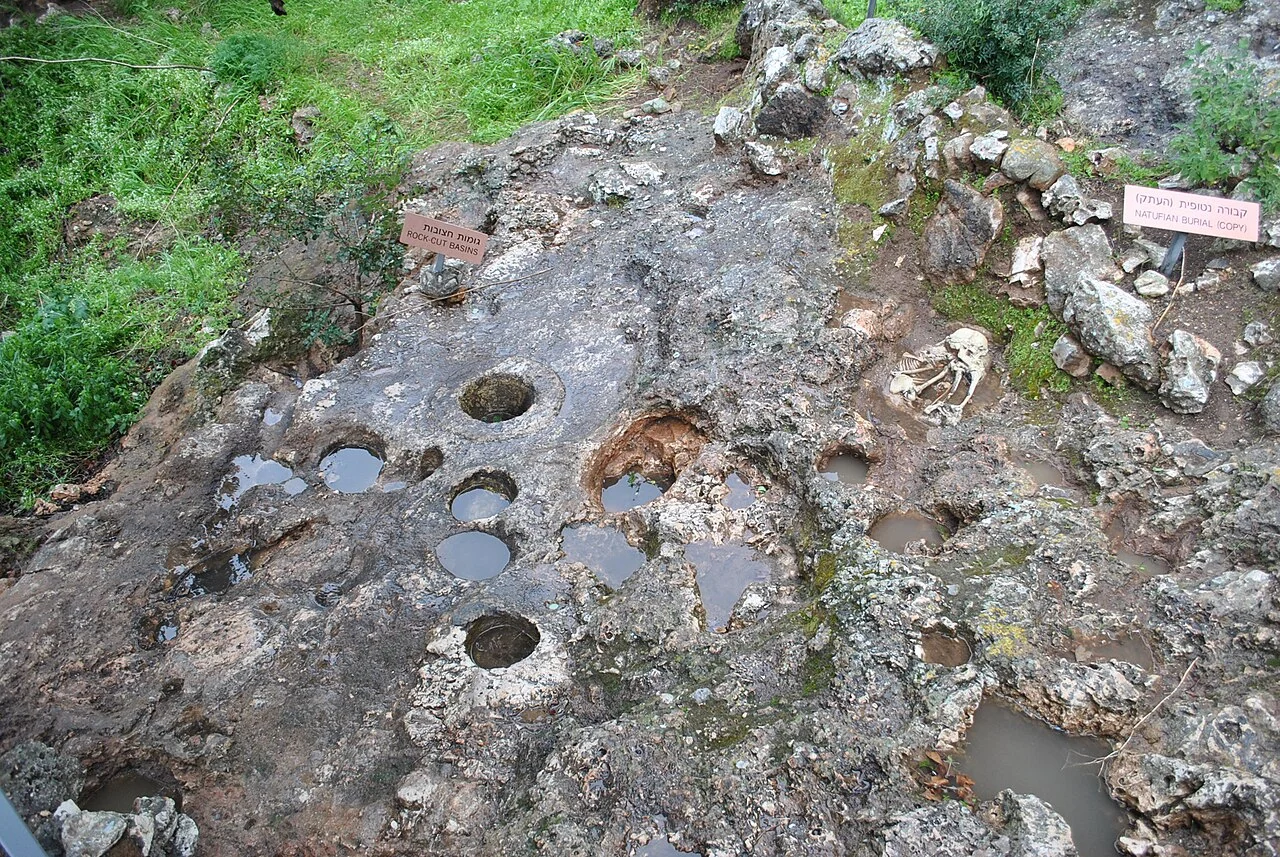
Early Natufian remains at el-Wad, Mount Carmel, Israel: bedrock mortars, a terrace wall and a copy of a burial. R. Yeshurun · CC BY-SA 3.0. Web size optimized; original linked.
Specific Canid Finds at Eynan and Hayonim
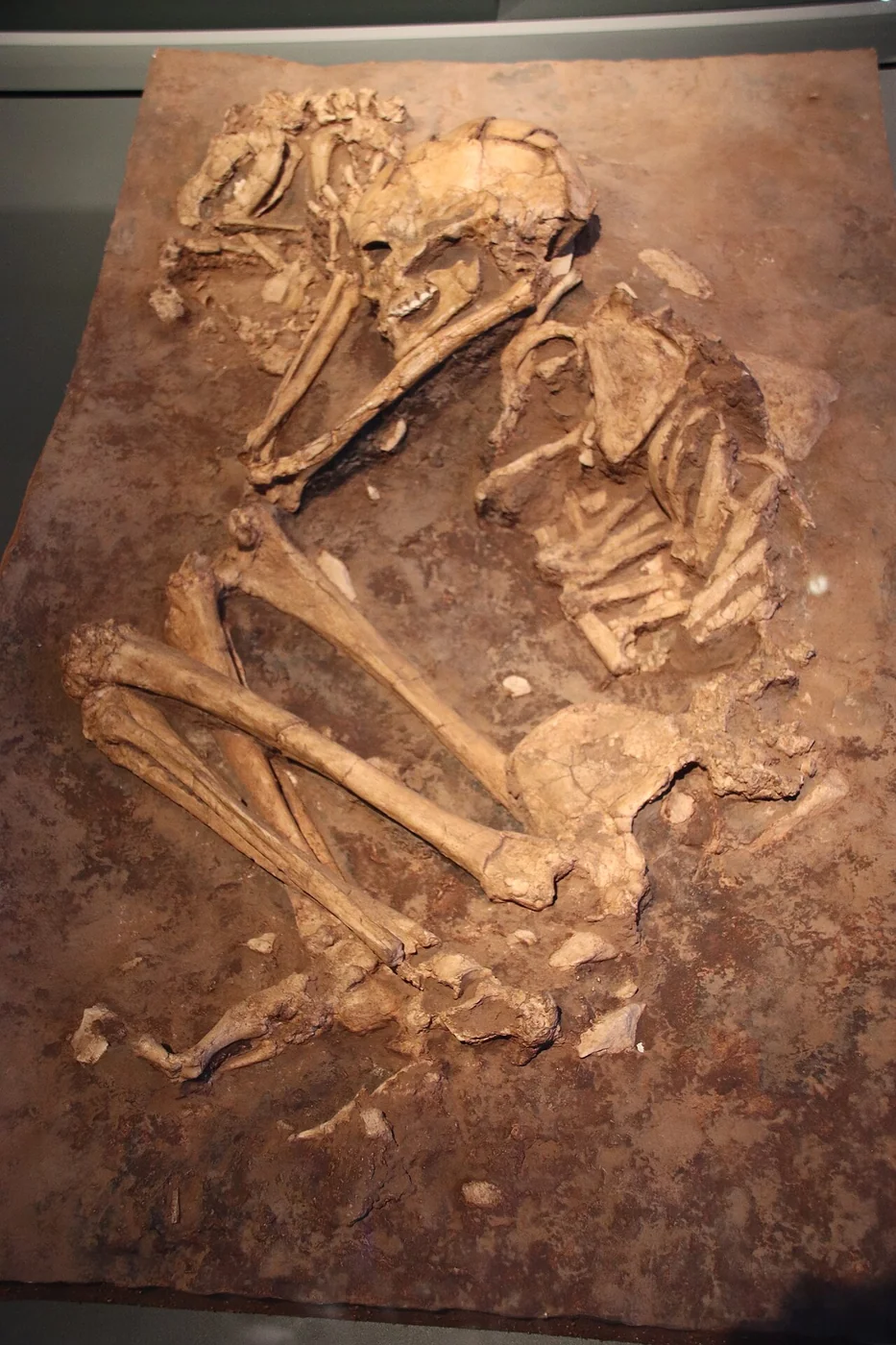
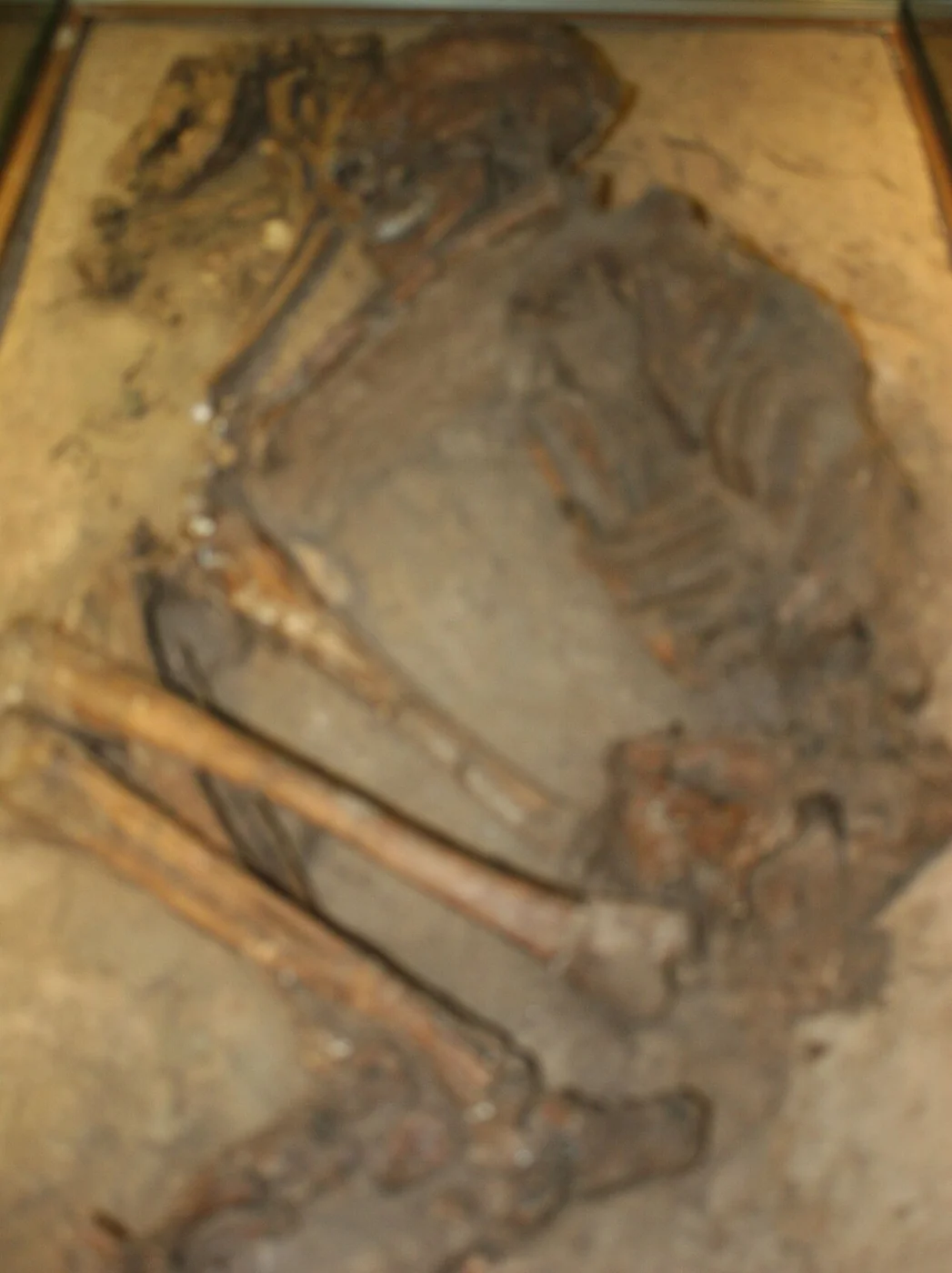
At Eynan, excavators recovered a diminutive carnassial tooth, a mandible, and the partial skeleton of a puppy placed near a human burial. These elements are described as smaller than expected for local wolves of the period. At Hayonim Terrace, two fairly complete canid skeletons were found in a burial feature that also contained three human skeletons and showed signs of an elaborate construction. The 1997 study compares these and other Natufian canid bones with modern southern Levantine wolves, noting consistent size reduction and some shape differences in teeth and jaws.
Importantly, the authors interpret the puppy burial at Eynan as possibly indicating a special relationship, though they stop short of claiming ownership or affection. The Hayonim canids are described as having lived around and within human habitations. Both papers note that these animals appear distinct enough from wolves to be labeled dogs in a broad sense. However, the 1997 report explicitly states there is no evidence that later Neolithic dogs descend directly from these particular Natufian canids. This reminder keeps expectations modest: the finds document early close association, not a continuous lineage of modern dog breeds.
Morphological Differences and What They Might Mean
The key evidence consists of smaller overall body size, reduced carnassial teeth, and mandible proportions that diverge from recent wolves. These traits are consistent with what researchers sometimes see in animals adapting to human-provided food sources. The suggestion is that unconscious selection—favoring individuals less fearful of people or better at scavenging—could have begun in Natufian villages. The 1978 paper proposes that such changes may have preceded the domestication of food animals, placing canid-human relationships early in the sequence of domestication events in the region.
Still, size reduction alone does not prove genetic domestication. Environmental factors, nutrition, or intentional selection of smaller wolves could produce similar results. The studies emphasize morphological distinction and proximity to humans rather than claiming behavioral proof. Editorial analysis suggests this evidence is intriguing but narrow. It rests on a handful of specimens rather than a large comparative sample. Future discoveries could either strengthen or challenge the interpretation. A useful reading question is whether similar small canids appear at non-burial Natufian sites; if so, it might indicate widespread commensal living rather than rare ritual inclusion.
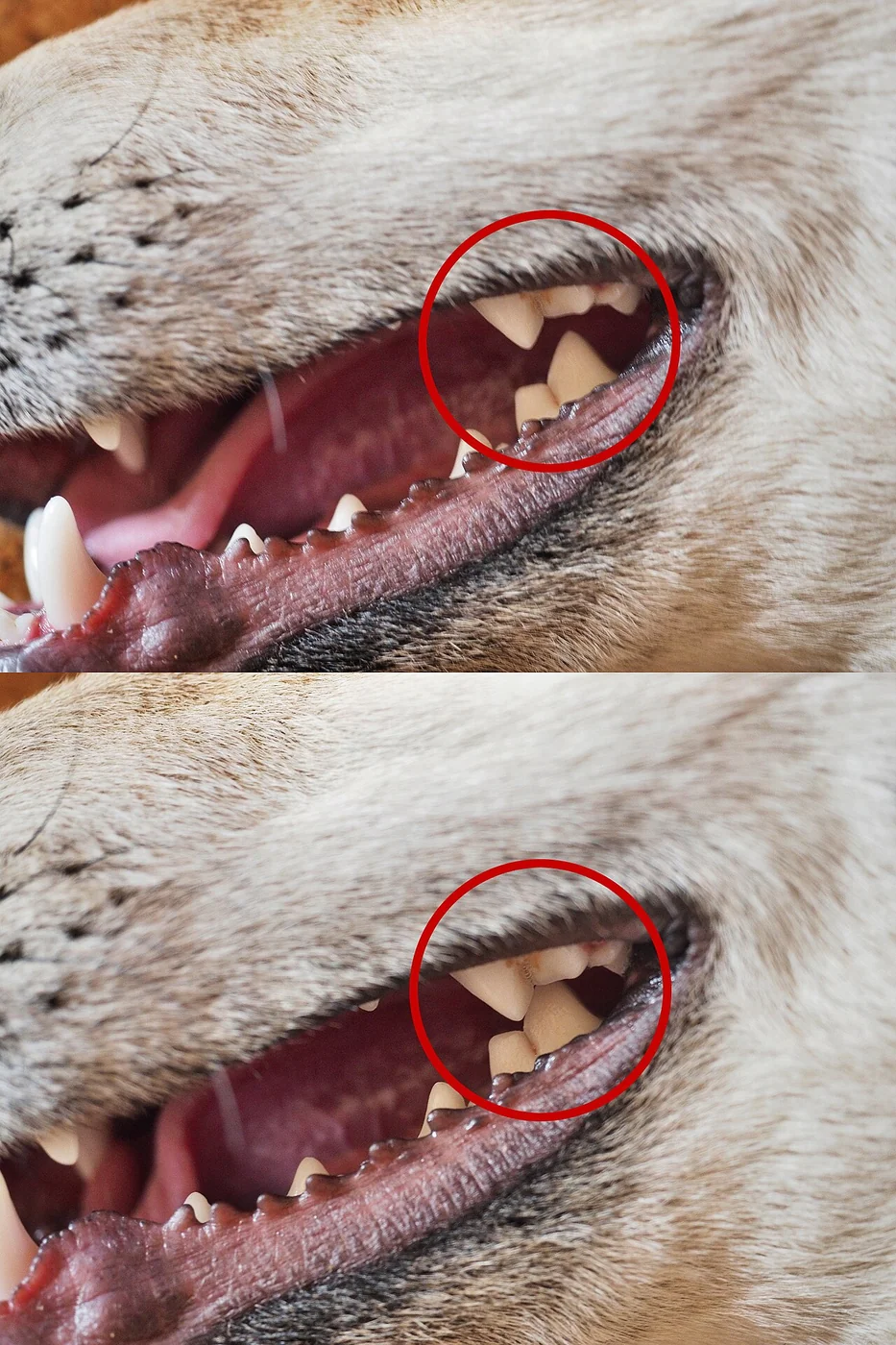
Carnassials of a dog (male mongrel, 9 months old). The inside of the 4th upper premolar aligns with the outside of the 1st lower molar. Kreuzschnabel · CC BY-SA 3.0. Web size optimized; original linked.
Interpretations and Ritual Assimilation
Both papers link the burial contexts to possible ritual significance. The 1997 study describes the Natufian canids as “ritually assimilated to human society.” This phrasing implies that whatever their daily status, some individuals were treated in death similarly to people. The elaborate construction at Hayonim and the puppy’s placement at Eynan support the idea that these animals held a cultural role beyond mere utility. The authors stop short of labeling them fully domesticated companions, preferring terms such as “genuine dogs living around and within human habitations.”
Light humor might picture a prehistoric elder insisting that the camp wolf “has earned his spot in the grave plot,” but such jokes must remain clearly fictional. The actual evidence supports only the observation of intentional placement, not the thoughts or feelings of the people involved. An implication worth pondering is how these early associations might have influenced later attitudes toward animals in the ancient Near East. If some wolves were already integrated into social and ritual life, the transition to herding and farming could have built upon existing familiarity rather than starting from scratch.
Limitations, Open Questions, and Editorial Reflections
The reviewed studies rely on a small number of specimens from two sites. No genetic data are presented; conclusions rest on osteology and archaeological context. The 1997 paper cautions that Natufian canids may not be ancestral to later dogs, highlighting discontinuity. This honesty is refreshing in a field sometimes prone to sweeping narratives. Uncertainties remain about the exact processes—whether selection was unconscious, deliberate, or a mix—and about how widespread the phenomenon was beyond these burials.
From an editorial perspective, these finds are best viewed as valuable data points rather than proof of the “earliest domestication.” They document early morphological divergence and deliberate human-canid burial in the Levant around 12,000 years ago. Readers might ask: What additional evidence would be needed to confidently trace a continuous dog lineage? How do these remains compare with contemporaneous canids from Europe or East Asia? The Natufian material invites careful, curiosity-driven research rather than romantic conclusions about “the first dog.” By keeping interpretations close to the bones, archaeologists preserve the integrity of the record while still allowing space for wonder about ancient relationships. In the end, these small skeletons remind us that the story of dogs and humans is long, patchy, and still being uncovered one careful excavation at a time.
Display of a Natufian human and puppy burial from Eynan (Ain Mallaha), Israel Museum exhibit Ehab2833 · CC BY-SA 4.0. Web size optimized; original linked.
AI-assisted original writing. This feature was revised against source material and checked for unsupported claims. Follow the references below for evidence and its limits.
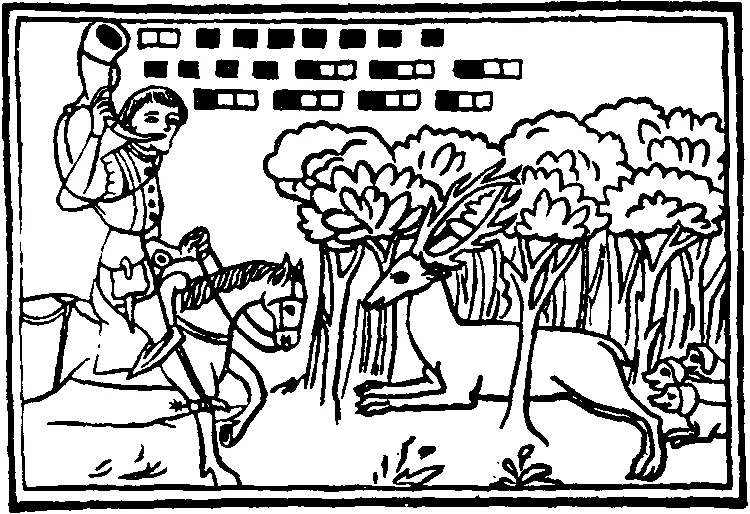
Royal charters set rules for restraining dogs to protect game, while hunting manuals later recorded the calls and names used by those who followed hounds on the trail.
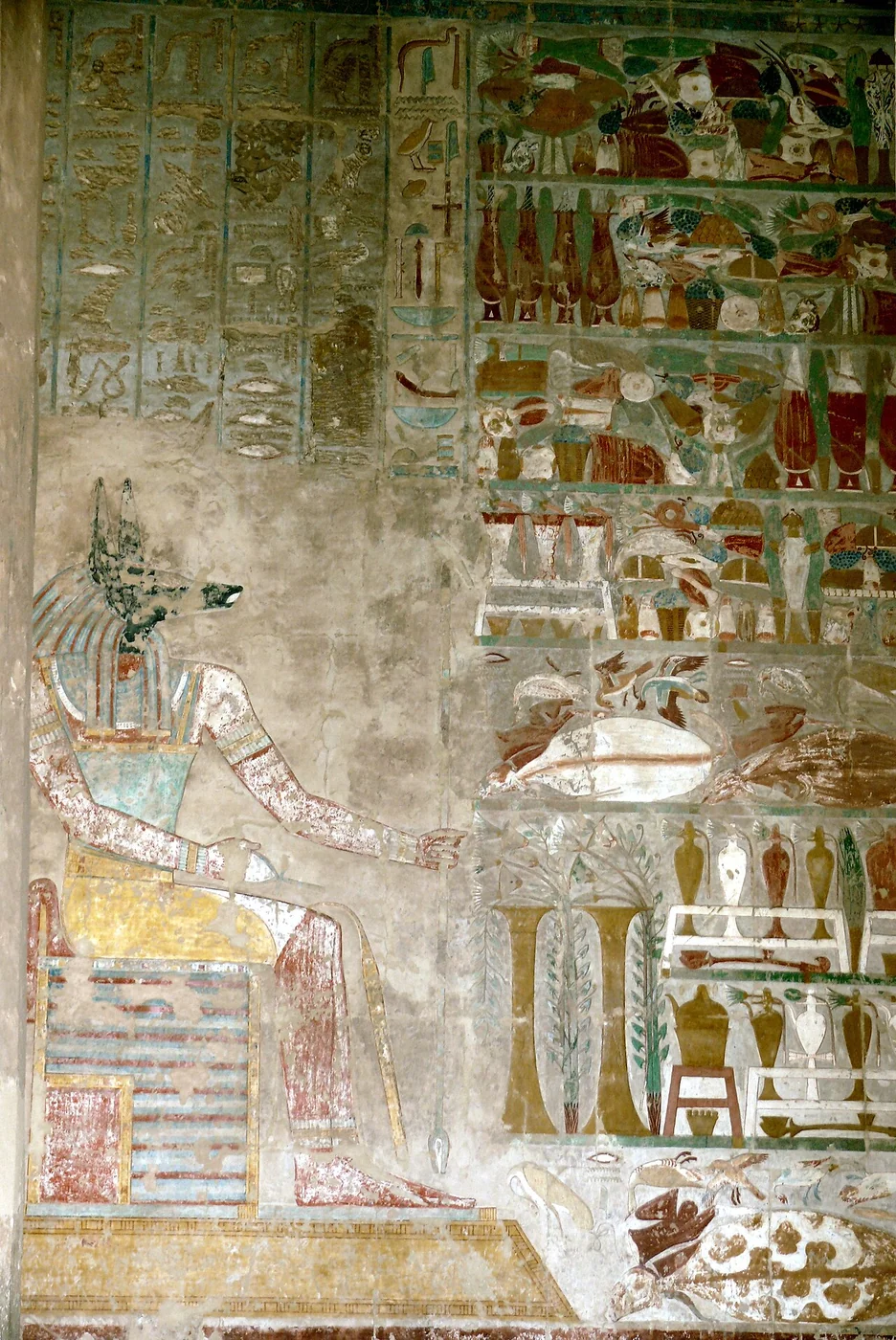
Evidence from Saqqara and Asyut shows that dogs and other canids were mummified in large numbers as votive offerings connected to the gods Anubis and Wepwawet.
 Historical collection image