How Short-Term Foster “Doggie Speed-Dating” Helps Shelters Find Homes for Dogs
Structured meet-and-greet sessions after a week in foster care let dogs show their true personalities and give adopters better information before deciding.
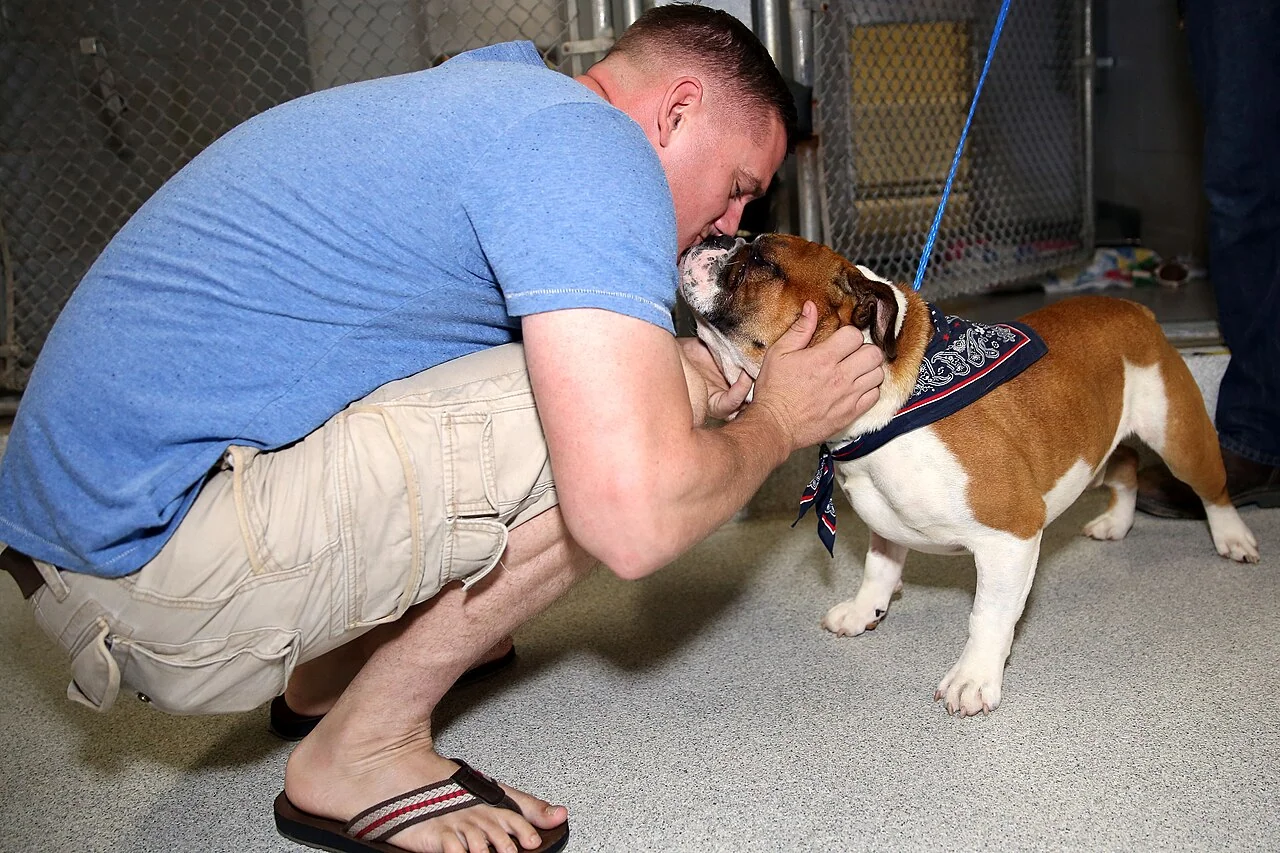
Staff Sgt. Chad Hall is greeted by his newly adopted English Bulldog Pinkerton at the Camp Pendleton Animal Shelter during the annual adoption event, July 26, 2014. (U.S. Marine Corps photo) Sgt. Valerie Eppler · Public domain · Web size optimized; source linked for the original.
Some animal shelters give overlooked dogs a week in a foster home before an adoption event. During the event, potential adopters rotate through quick, structured meet-and-greet sessions with the dogs and their foster handlers. The approach aims to let dogs relax outside a kennel and helps people learn about house manners and behavior that might not show up at the shelter.
How the Events Actually Work
Pasadena Humane places selected dogs into short-term foster homes one week before a major adoption event. Foster caregivers learn about each dog’s behavior in a home setting. At the event itself, the dogs wait in a training room with volunteer handlers. Attendees move from station to station for brief, structured introductions.
If an attendee and dog seem to click, the person can take the dog back into foster care the same day. After one more week the dog returns to the shelter for final adoption paperwork. The format gives everyone a low-pressure way to gather real-world information before committing to a lifelong match.
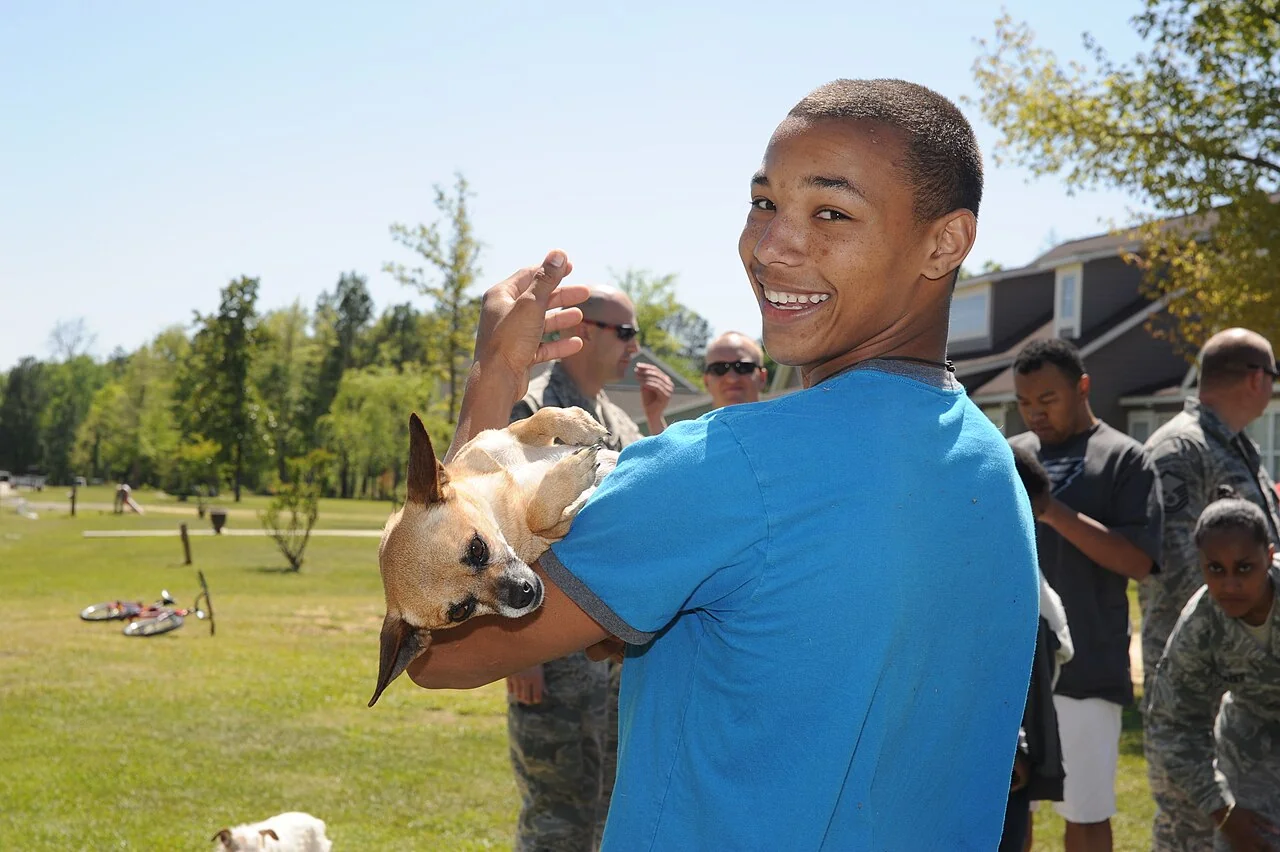
A resident plays with a dog at Eagle Harbor Ranch, a foster and rescue facility in Summerville, S.C., April 12, 2012. (U.S. Air Force photo) Airman 1st Class Chacarra Walker · Public domain. Web size optimized; original linked.
A Real Example from Pasadena
One dog had spent nearly a month at the shelter without finding a home. After the short-term foster period and speed-dating session, the same dog was adopted quickly. Foster caregivers had been able to share details about house manners and everyday behavior that helped the right adopter recognize a good fit.
The program uses foster homes to give dogs a break from the shelter environment so they can show more of their natural personalities. Handlers who have lived with the dog for a week can answer questions with recent, practical examples rather than observations made only inside a kennel.
Broader Matching Practices in Shelters
A survey of 370 U.S. animal shelters and rescues looked at various matching programs designed to improve the fit between adopters and dogs. Practices such as holding pre-adoption conversations, showing only pre-matched dogs, or limiting choices to likely best-fit animals were associated with higher live-release rates, lower return rates, and fewer days spent in the shelter.
The study notes these are statistical associations only and does not prove that any one practice directly causes better outcomes. Speed-dating itself is not examined in the survey, but the general idea of gathering extra information before adoption lines up with the foster-plus-event model used in places like Pasadena.
Dog running during a working dog demonstration at an animal shelter adoption event. Sgt. Valerie Eppler · Public domain. Web size optimized; original linked.
What Foster Care Adds
Best Friends Animal Society has run adoption events that pair dogs from foster homes with potential adopters. Foster caregivers stay with the dogs and can describe how the animal behaves in an actual house rather than a shelter run. This extra context can help people decide whether a particular dog would thrive in their own home.
Events do not always follow a strict timer. Attendees may spend as long as they like with a dog that catches their interest. The goal remains the same: let the dog show its personality in a calmer setting while giving the adopter honest, first-hand observations from someone who has lived with the animal.
Practical Takeaways for Potential Adopters
A short meeting, even after a foster period, still offers only a snapshot. New owners should watch for signs of adjustment stress during the first weeks at home and reach out to the shelter or a veterinarian if questions arise. Many programs now provide written notes listing a dog’s known preferences and sensitivities to help the transition go smoothly.
Anyone thinking about adopting can prepare by learning basic canine body-language cues and by asking shelters what support they offer after an adoption. The combination of foster insight, structured introductions, and follow-up resources appears to give both dogs and people a stronger start together.
Two dogs displaying distinct body language signals: stamping feet, drooped ears, forward whiskers, and yawning (calming signal). Photo by Michael211 (2006). Gopal Aggarwal from INDIA · CC BY 2.0. Web size optimized; original linked.
AI-assisted original writing. This feature was revised against source material and checked for unsupported claims. Follow the references below for evidence and its limits.


 Photograph