Archaeological finds from the Viking trading center at Birka include dog remains placed alongside people, offering limited but tangible clues about how some Norse communities treated animals in death.
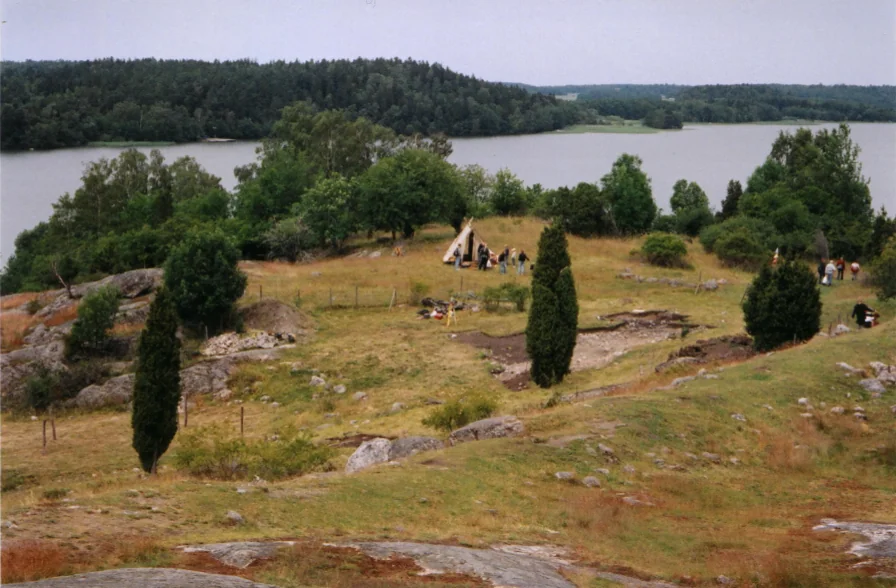
Wide angle shot of the archaeological excavation at Birka. Alex Peterson · CC BY-SA 3.0 · Web size optimized; source linked for the original.
Excavations at Birka, a Viking-age settlement on the island of Björkö in Sweden, have turned up thousands of artifacts and human burials. Among them are occasional dog bones found in graves. These discoveries give a narrow but concrete window into burial customs at one specific site during the late eighth to late tenth centuries. The evidence does not support sweeping claims about all Viking beliefs or practices, yet it does show that at least some dogs were intentionally included in certain burials at Birka.
Birka as a Viking-Age Center
Birka on Björkö in Lake Mälaren was an important trading and craft center from roughly the end of the 700s until the end of the 900s. Archaeologists have conducted multiple excavations there since the 1800s. The site has produced around 100,000 finds now held by the Swedish History Museum and displayed at the Birka Museum on the island.
The location included both settlement areas and extensive burial grounds. Researchers have studied these graves for clues about daily life, trade, and ritual. Information about the site is collected on the Birkaportalen resource run by the Historiska Museet, which draws on old excavation notes, maps, and modern surveys.
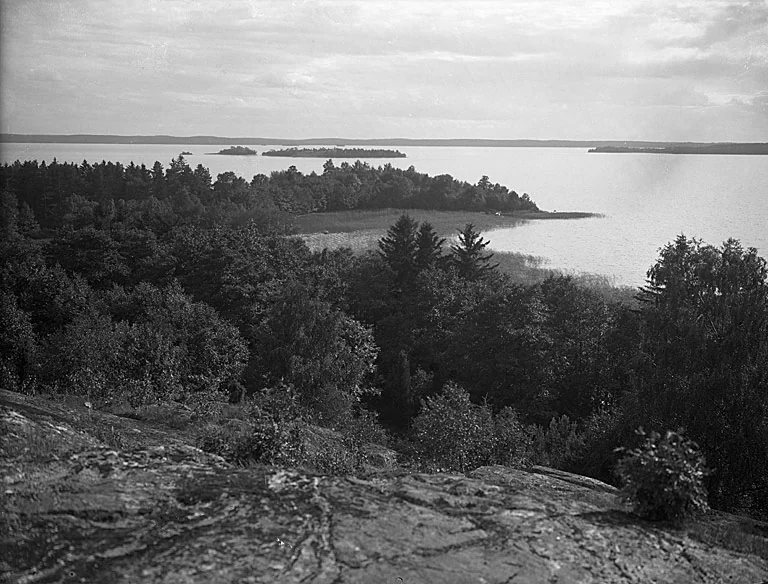
Historical photograph from 1926 showing the landscape and waters around Birka on Björkö island, Lake Mälaren. Harald Faith-Ell · Public domain. Web size optimized; original linked.
Dog Remains in the Graves
Some of the burials at Birka contain dog skeletons. These animals appear in contexts that also include human remains and grave goods. The presence of the dogs suggests they were placed there deliberately rather than by chance.
Exact numbers and detailed osteological descriptions of every dog find are not uniformly published in the cited source material. The evidence confirms that dog bones have been recovered from the burial fields, but does not specify sizes, ages, or precise positions for each case. Many graves were disturbed long ago, which complicates full interpretation.
Context Within the Burial Fields
Birka’s graves often contained weapons, tools, and other items. When dog bones appear, they form part of these assemblages. The patterns vary across the different burial areas on Björkö and nearby Hovgården.
The Birkaportalen resource provides access to grave-field plans digitized from earlier work. These maps help researchers see the spatial relationships between graves, but they do not always label every animal bone. The overall record shows that animal remains, including those of dogs, were sometimes incorporated into the rituals performed at the site.
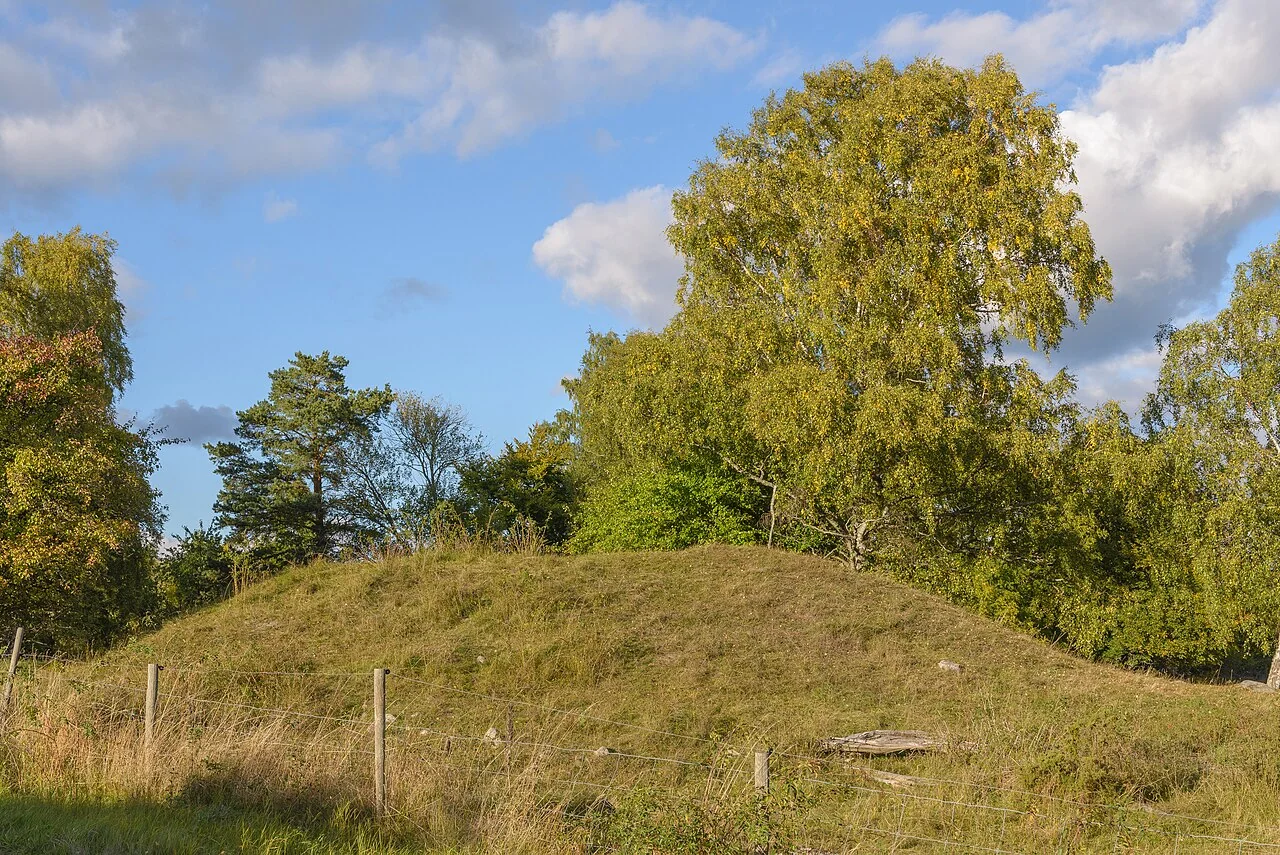
Burial mounds (Kungshögarna, Kings mound) at Hovgården, Adelsö. Part of Birka and Hovgården World Heritage Site. Arild Vågen · CC BY-SA 3.0. Web size optimized; original linked.
Modern Study of the Site
Since the 1800s, investigators have returned to Birka repeatedly. Projects such as the one running from 2011 to 2015 digitized records, scanned the landscape with lidar, and made older notebooks available. The Swedish History Museum, the Antikvarisk-Topografiska Arkivet, and cooperating institutions have contributed to this ongoing work.
Stable isotope or DNA studies of the dog bones are not described in the cited source material. The material instead emphasizes the volume of finds and the value of the site for continued research. New techniques are used at Birka, but the portal materials focus on mapping, photography, and archival data rather than specific results about the dogs.
Limits of What the Evidence Shows
The dog remains at Birka offer one localized example of animals included in Viking-age burials. They do not, on their own, prove uniform beliefs across Scandinavia or over centuries. Other sites and periods may show different patterns.
Scholars continue to examine the material. The Birkaportalen site serves as a tool for both researchers and interested readers by gathering plans, photographs, and reports in one place. It underscores that any conclusions must rest on the physical record rather than later stories or broad assumptions.
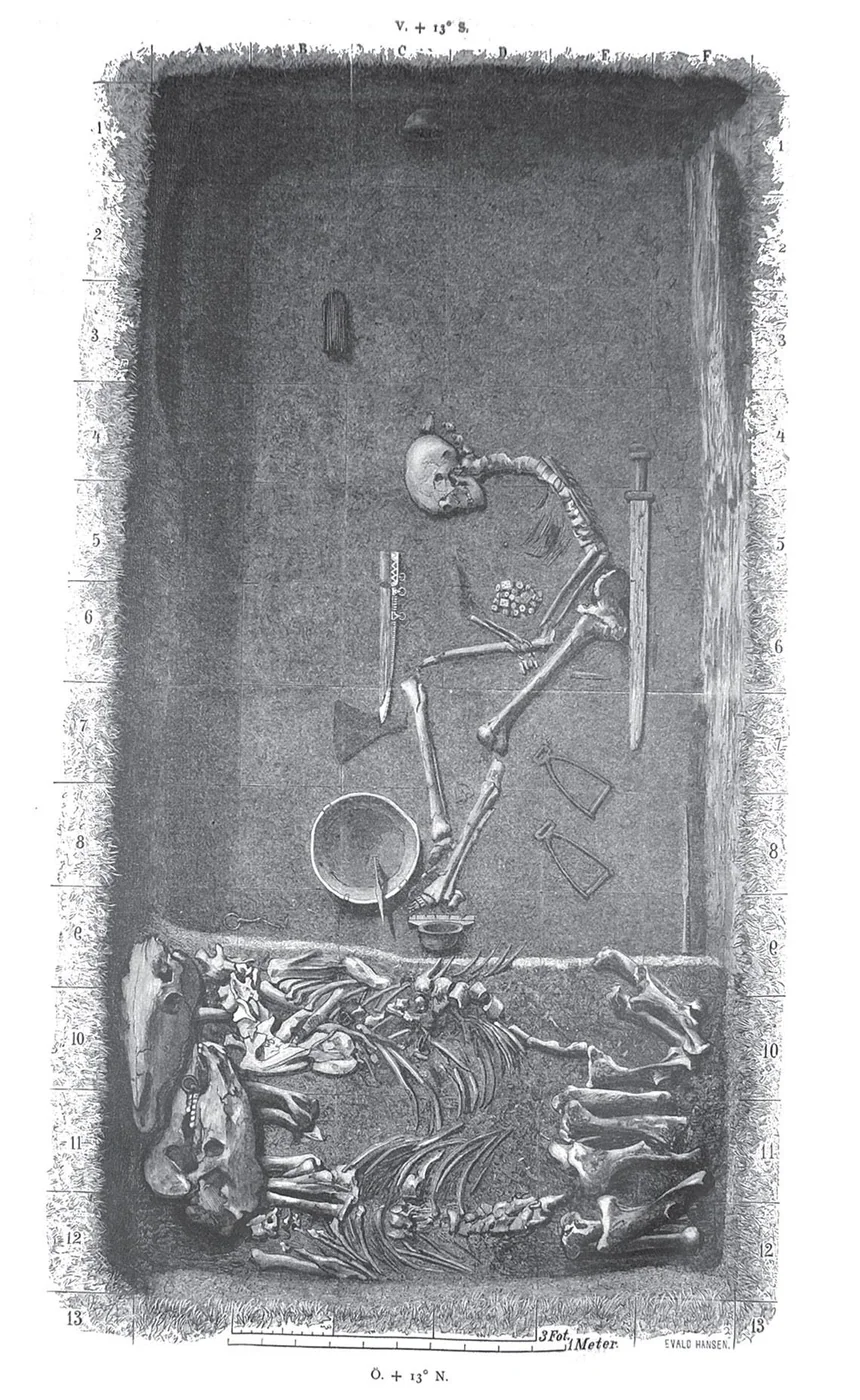
Sketch of archaeological grave Bj 581 found and labelled by Hjalmar Stolpe in Birka, Sweden, published 1889. Evalo Hansen · Public domain. Web size optimized; original linked.
AI-assisted original writing. This feature was revised against source material and checked for unsupported claims. Follow the references below for evidence and its limits.
Royal charters set rules for restraining dogs to protect game, while hunting manuals later recorded the calls and names used by those who followed hounds on the trail.
Evidence from Saqqara and Asyut shows that dogs and other canids were mummified in large numbers as votive offerings connected to the gods Anubis and Wepwawet.
 Historical collection image