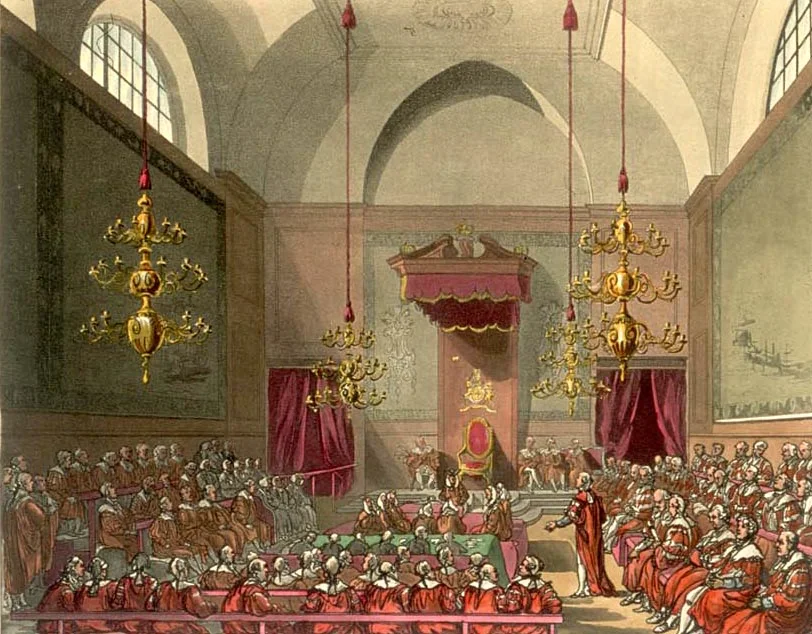
Queen Anne addressing the House of Lords, c. 1708–1714 Peter Tillemans · Public domain · Web size optimized; source linked for the original.
For generations British lawmakers saw dogs as both companions and potential sources of government revenue. Records from the House of Commons reveal repeated attempts to turn pet ownership into a taxable activity. Two later debates, one in 1979 and another in 1982, revisited these older efforts and give modern readers a glimpse into the practical and political challenges involved. The story is less about dramatic enforcement than about the steady bureaucratic habit of attaching a fee to almost anything that moved—including the family hound. Light-hearted as the subject sometimes sounds, the records also hint at genuine questions of fairness, class, and animal welfare that lawmakers wrestled with on and off for decades.
Early Attempts to Regulate and Tax Dogs
Parliamentary speakers in the 20th century looked back on an unsuccessful proposal made in 1755 that would have introduced some form of dog-related legislation. The idea did not pass at the time, yet it set a precedent for later efforts. By 1796 another bill, associated with a member named Dent, reached the Commons and appears to have gained more traction. These early moves suggest that lawmakers were already thinking about how to manage the growing number of dogs in towns and countryside alike. The precise reasons for the 1755 failure are not spelled out in the later records, but the repeated return to the subject shows that the underlying concern—how to account for and perhaps profit from canine ownership—remained alive.
What these debates make clear is that taxation was never purely about raising cash. Lawmakers also worried about stray animals, livestock worrying, and the practical difficulty of counting dogs across scattered rural parishes. The 1796 effort, though mentioned only briefly in 1982, stands as an early documented attempt to bring dogs inside the formal machinery of public finance. Readers today might smile at the image of 18th-century MPs debating the merits of a dog duty while larger matters of war and empire loomed, yet the persistence of the topic reveals a characteristically British fondness for tidy administration.
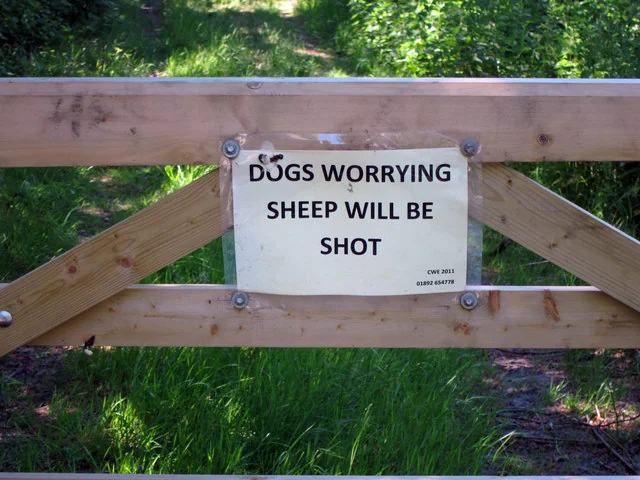
Sign warning that dogs worrying sheep will be shot, directly illustrating the livestock-worrying concerns discussed by lawmakers in the 1755 and 1796 parliamentary debates on dog regulation. Oast House Archive · CC BY-SA 2.0. Web size optimized; original linked.
The 1796 Bill and Its Immediate Context
The 1982 parliamentary record notes that a bill brought by Dent in 1796 formed part of a longer pattern of dog-related proposals. While the exact provisions of that bill are not reproduced in the later debate, its mention alongside the failed 1755 idea implies a growing seriousness. By the end of the 18th century Britain was expanding its fiscal toolkit; new taxes appeared on windows, hats, and even hair powder. Placing a levy on dogs fitted this broader trend of looking for taxable objects that were visible and relatively easy to assess.
One useful question for modern readers is whether the 1796 measure aimed chiefly at revenue or at social control. The later speeches do not settle the matter, but they do show that lawmakers continued to revisit the concept. The very fact that the 1796 bill is still being cited nearly two centuries afterward suggests it left a mark on institutional memory. For anyone interested in fiscal history, the episode offers a small but telling example of how everyday life became entangled with the Treasury’s reach. It also invites a gentle chuckle: even parliamentarians who debated revolution and naval blockades found time to argue about who should pay for keeping a spaniel.
Nineteenth-Century Changes and the 1867 Flat Rate
According to the 1979 debate, charges for keeping dogs varied at different rates between 1796 and 1867. This period of fluctuating duties gave way in 1867 to a flat excise duty. The shift from graduated rates to a single fee suggests an attempt to simplify collection and reduce disputes over valuation. A flat tax is easier to administer, though it can feel less fair to owners of working dogs versus luxury pets. The parliamentary record presents this change as a factual milestone rather than a policy triumph or disaster.
The move to a uniform duty in 1867 also reflected wider Victorian efforts to modernise revenue systems. By then the state was expanding its role in public health, education, and policing; a straightforward dog licence fitted neatly into an expanding bureaucratic framework. Later speakers looking back on the era seem mildly amused by the long list of taxable items their predecessors once devised. Yet beneath the humour lies a serious point: once a tax is established it tends to persist, acquiring its own administrative momentum even if the original justification fades.
When MPs returned to the subject in 1979 they were debating the future of dog licences rather than inventing them anew. The earlier history—from the 1755 proposal through the 1796 bill and the 1867 flat rate—served mainly as background. Speakers treated the long timeline as evidence that the idea of charging for dogs had deep roots. The 1979 discussion therefore offers a useful window on how institutional memory works: old taxes are rarely forgotten, even when the amounts involved have become trivial.
The later debate also highlights a recurring tension. On one side stood those who saw the licence as a small but useful source of local revenue and a way to encourage responsible ownership. On the other were critics who viewed it as an outdated nuisance that cost more to administer than it raised. The 1979 and 1982 records do not resolve this argument, but they illustrate how a policy first floated in the 18th century could still spark disagreement in the late 20th. For students of public administration the episode is a miniature case study in path dependence—once started, a tax can prove remarkably hard to kill.
What the Records Teach Us About Taxation and Animal Welfare
Reading these old parliamentary exchanges today prompts several useful questions. How should governments balance the desire for revenue against the risk of burdening ordinary families? Does attaching a fee to pet ownership really improve animal welfare, or does it simply create another layer of paperwork? The historical record supplies no definitive answers, yet it shows that lawmakers have wrestled with versions of these issues for more than two hundred years. The light tone of some later remarks should not obscure the underlying seriousness: dogs live among us, and any policy affecting them touches real lives.
One modest implication is that taxation choices often reflect the administrative tools available at the time. In an era before microchips or national databases, a simple licence fee may have seemed the least-bad option. Contemporary readers might also reflect on how attitudes toward animals have shifted. What began as a fiscal measure gradually acquired welfare overtones, even if the original statutes were silent on the matter. The parliamentary speeches therefore serve as both historical curiosity and gentle reminder that public policy is rarely as straightforward as it first appears. A tax on dogs can be funny—until one considers the practical consequences for owners, animals, and the public purse.
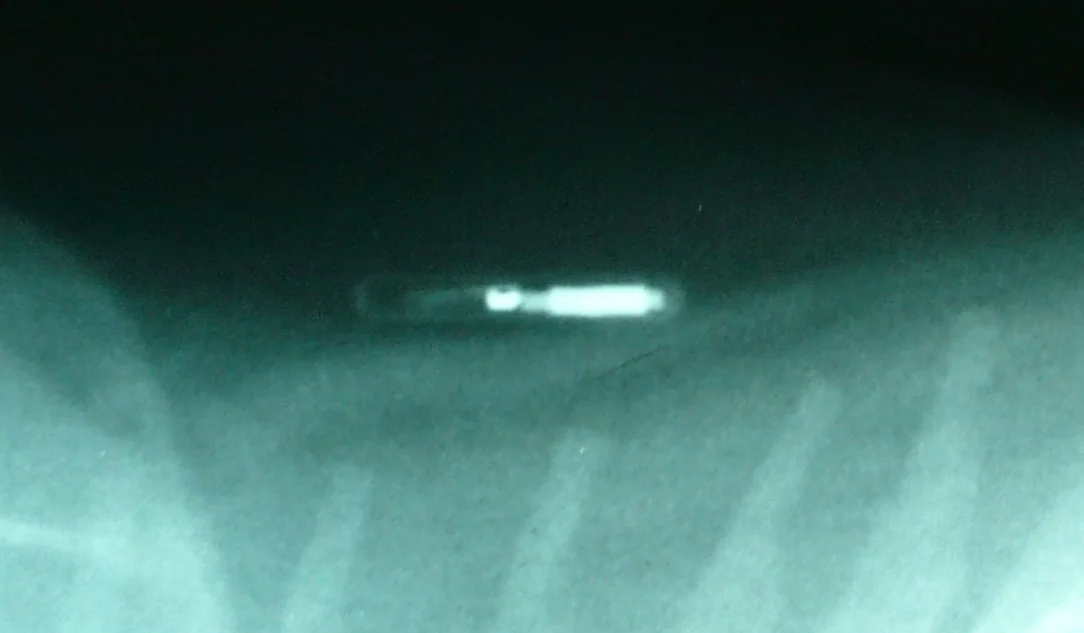
Radiograph of a cat showing an implanted identification microchip, representing the modern administrative tools for pet identification that replaced the historic dog licence system discussed in the parliamentary records. Feline_identifying_microchip.JPG: Joelmills derivative work: Hundehalter · CC BY-SA 3.0. Web size optimized; original linked.
AI-assisted original writing. This feature was revised against source material and checked for unsupported claims. Follow the references below for evidence and its limits.
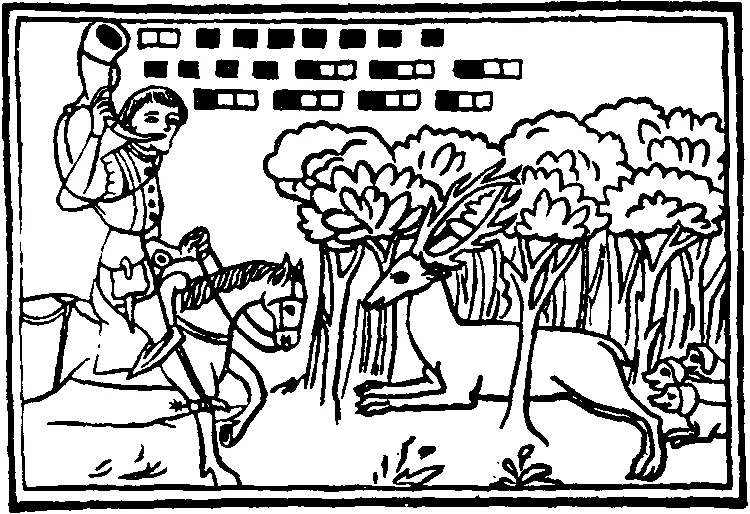
Royal charters set rules for restraining dogs to protect game, while hunting manuals later recorded the calls and names used by those who followed hounds on the trail.
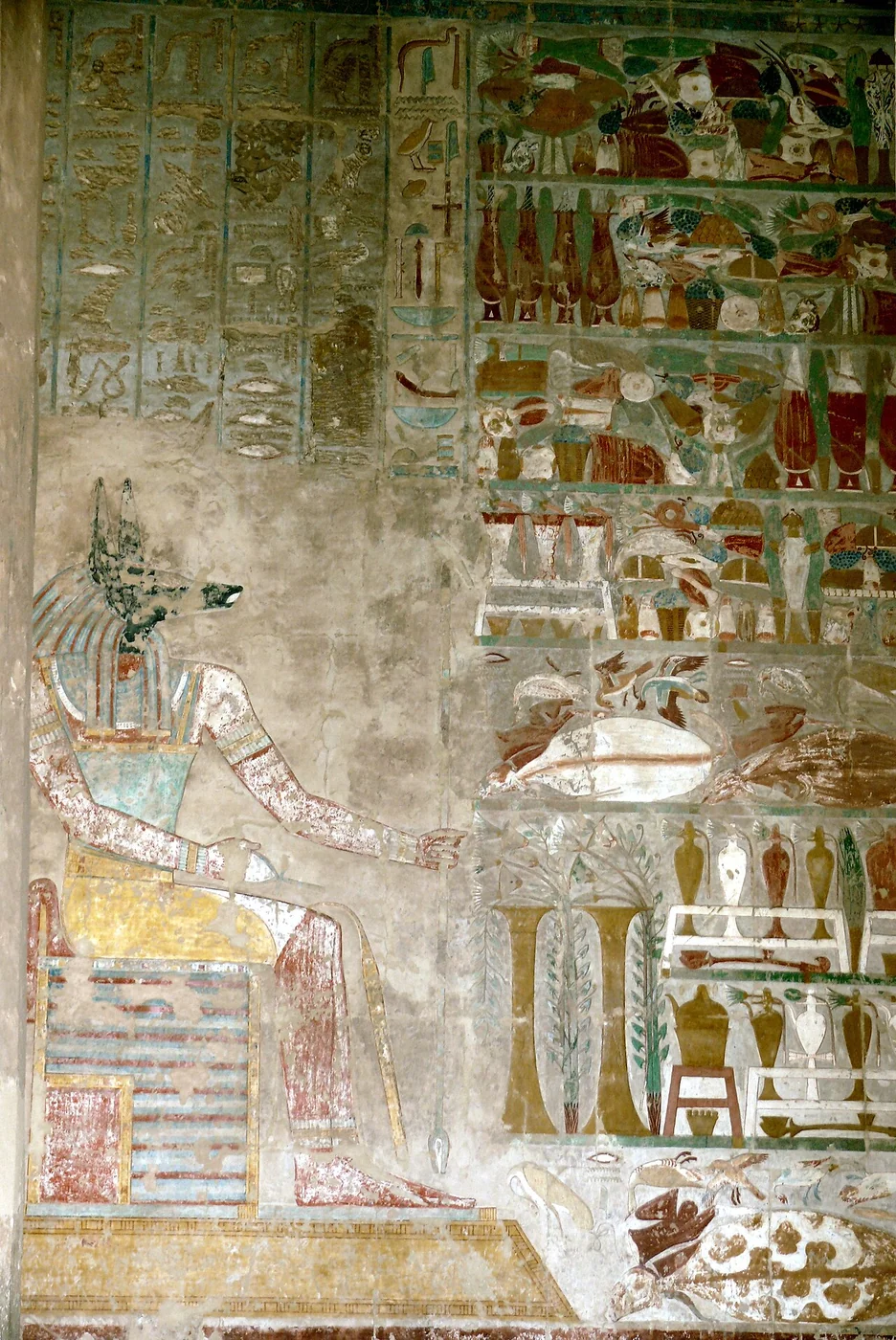
Evidence from Saqqara and Asyut shows that dogs and other canids were mummified in large numbers as votive offerings connected to the gods Anubis and Wepwawet.

 Historical collection image