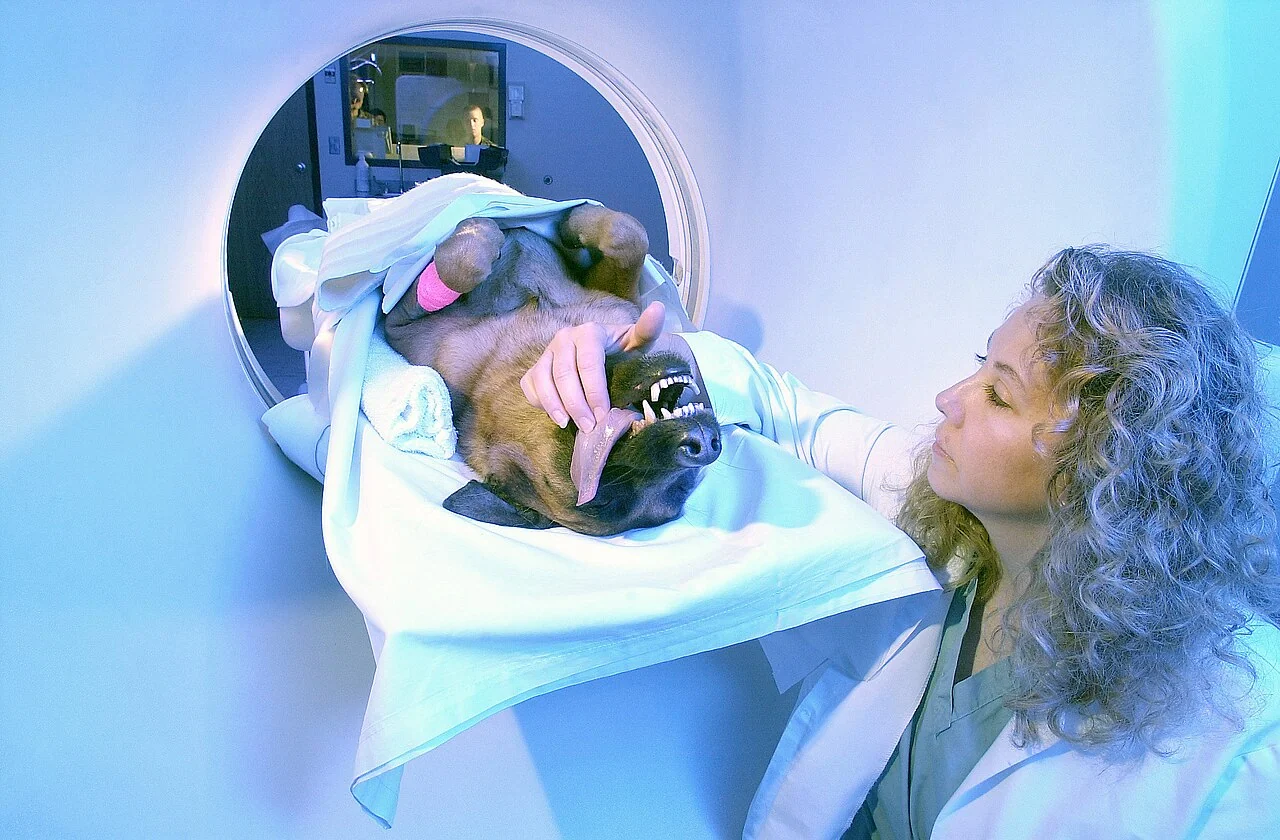
Dogs see the world in fewer hues than people do, but that doesn’t make their vision black and white. A look at the evidence, its limits, and what it means for life with dogs.
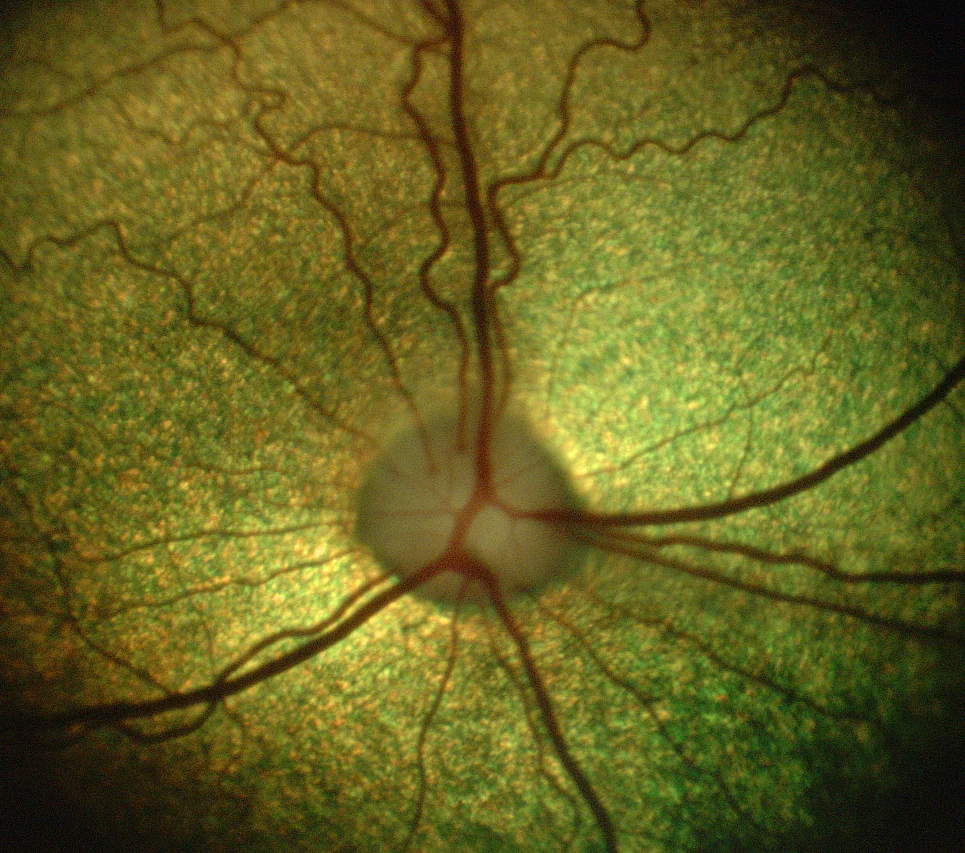
Dog retina showing optic disc (white mass) and retinal vasculature Vinum opus · CC BY-SA 4.0 · Web size optimized; source linked for the original.
Most of us grew up hearing that dogs see only in black and white. That idea is easy to picture, yet it turns out to be an oversimplification. Scientific descriptions of canine vision show that dogs are dichromats: they rely on two types of cone cells rather than the three that give humans trichromatic color vision. The result is a more limited color palette, not an absence of color. Understanding this distinction helps owners choose toys, plan training, and avoid projecting human experiences onto their pets. The evidence comes from vision-research summaries; no single study can tell us exactly what a particular dog perceives moment to moment. Still, the basics are solid enough to guide practical decisions while leaving room for wonder.
Dichromatic Vision in Dogs and Other Mammals
Dogs, like the majority of mammals, possess dichromatic color vision. This means their eyes contain two classes of photopigments that respond to different wavelengths of light. In contrast, people with typical vision are trichromats and use three such classes. The distinction matters because it changes the range of colors an animal can separate. A dichromat can still tell bright from dark and can distinguish some hues, but many shades that look different to us blur together for them.
This pattern is not unique to dogs. Most mammals share the same basic setup, which suggests it is an ancient feature of mammalian sight rather than a canine peculiarity. The evidence does not support claims about exact colors dogs “see” or how those colors appear to them subjectively. Such interpretations remain outside what the research currently verifies. Owners who remember this limitation are less likely to be disappointed when their dog ignores a bright red toy on green grass; the two may simply look similar in brightness or hue to the dog.
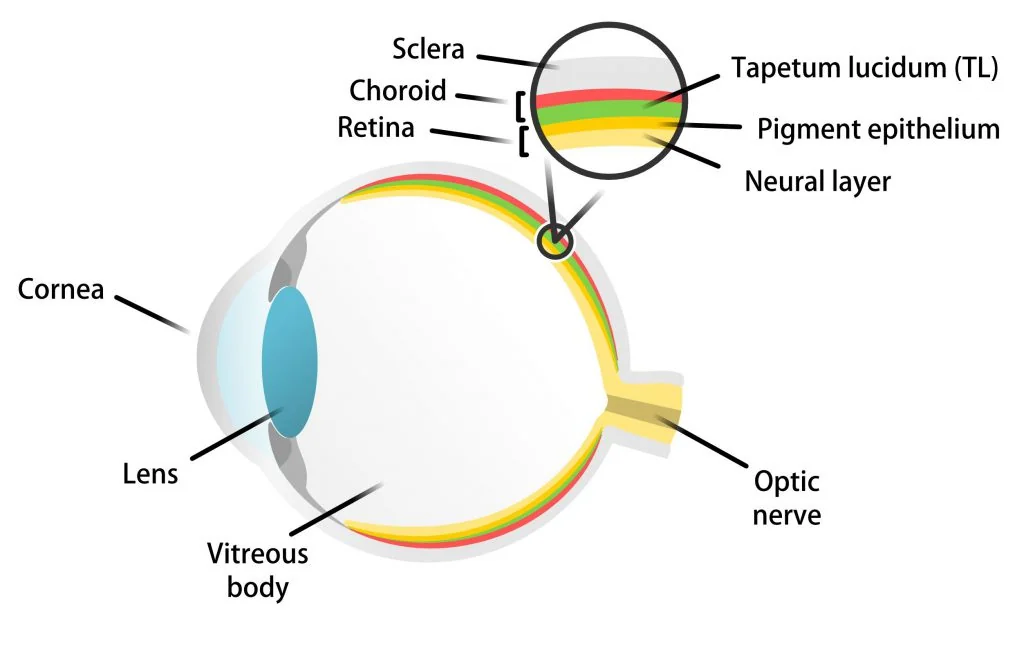
Structure of the mammalian eye indicating the tapetum lucidum behind the retina. Modern scientific diagram. New biologyst · CC BY-SA 4.0. Web size optimized; original linked.
Why the “Black and White” Myth Persists
The notion that dogs see only in grayscale has been repeated for decades. It probably grew out of early observations that dogs lack the full color range humans enjoy. Once that idea took root, it was easier to say “black and white” than to explain the more nuanced reality of dichromatic vision. The phrase is punchy and memorable, which helps it survive even after better information is available.
Yet describing canine sight as strictly monochrome is inaccurate. Dichromatic vision still delivers color information; it simply does so with fewer reference points. A useful analogy is to imagine a person with red-green color blindness trying to sort laundry: many items look alike, but the world is not rendered in shades of gray. Keeping this in mind spares us from unintentionally designing dog environments based on human color preferences that our pets cannot appreciate.
Practical Takeaways for Choosing Toys and Training Aids
Because dogs distinguish colors less readily than we do, brightness and contrast often matter more than hue when selecting toys or training tools. A bright blue ball may stand out against green grass for a dog, while a red one may fade into the background. This is not a flaw; it is simply a different way of sampling the visual world. Trainers who prioritize high-contrast combinations tend to have an easier time keeping a dog’s attention during outdoor sessions.
That said, individual variation exists. Some dogs may rely more on movement or scent than on any visual cue. The research does not provide toy-performance statistics or recommend specific products. It simply reminds us that what looks obvious to a person may be far less clear to a dog. A light-hearted experiment at home—rolling balls of different colors across the lawn and noting which ones get noticed first—can be both informative and entertaining, provided we avoid reading too much certainty into the results.
Limits of Current Evidence and the Value of Transparency
Vision science relies on careful measurement of photopigments, retinal structure, and behavioral responses. Even so, translating those measurements into a dog’s everyday experience involves inference. We cannot ask a dog to describe its color world. This gap is why responsible sources emphasize what is known while resisting the temptation to fill in subjective details. Readers should treat popular articles that claim to show “exactly what your dog sees” with healthy skepticism.
A separate but related lesson comes from an unrelated correction in a high-profile science journal. In 2020, researchers had to revise survey percentages because of a coding error in data processing. The incident illustrates how even careful scientists can misreport numbers and why transparency about methods and data matters. While the topic is not about canine vision, it serves as a useful reminder: when we read about animal perception or any scientific claim, we benefit from knowing how the numbers were obtained and whether the work has been openly shared for scrutiny.
Editorial Reflections: Living Well with a Dichromatic Companion
Knowing that dogs see a narrower range of colors does not diminish the joy of sharing life with them. If anything, it encourages us to enrich their world in ways that match their actual senses—scent games, varied textures, and motion-based play. The evidence invites humility: we cannot fully inhabit another species’ viewpoint, but we can stop assuming ours is the default.
A gentle reminder to fellow dog guardians: the next time your dog sprints past a bright orange toy, resist the urge to label him color-blind in the colloquial sense. He is simply navigating a visual landscape that differs from yours. That difference is fascinating rather than disappointing. Asking ourselves, “What cues is my dog actually using right now?” turns routine walks into small lessons in empathy and observation. In the end, a clearer picture of canine vision helps us design better environments and strengthens the bond we share with animals who experience the world on their own terms.
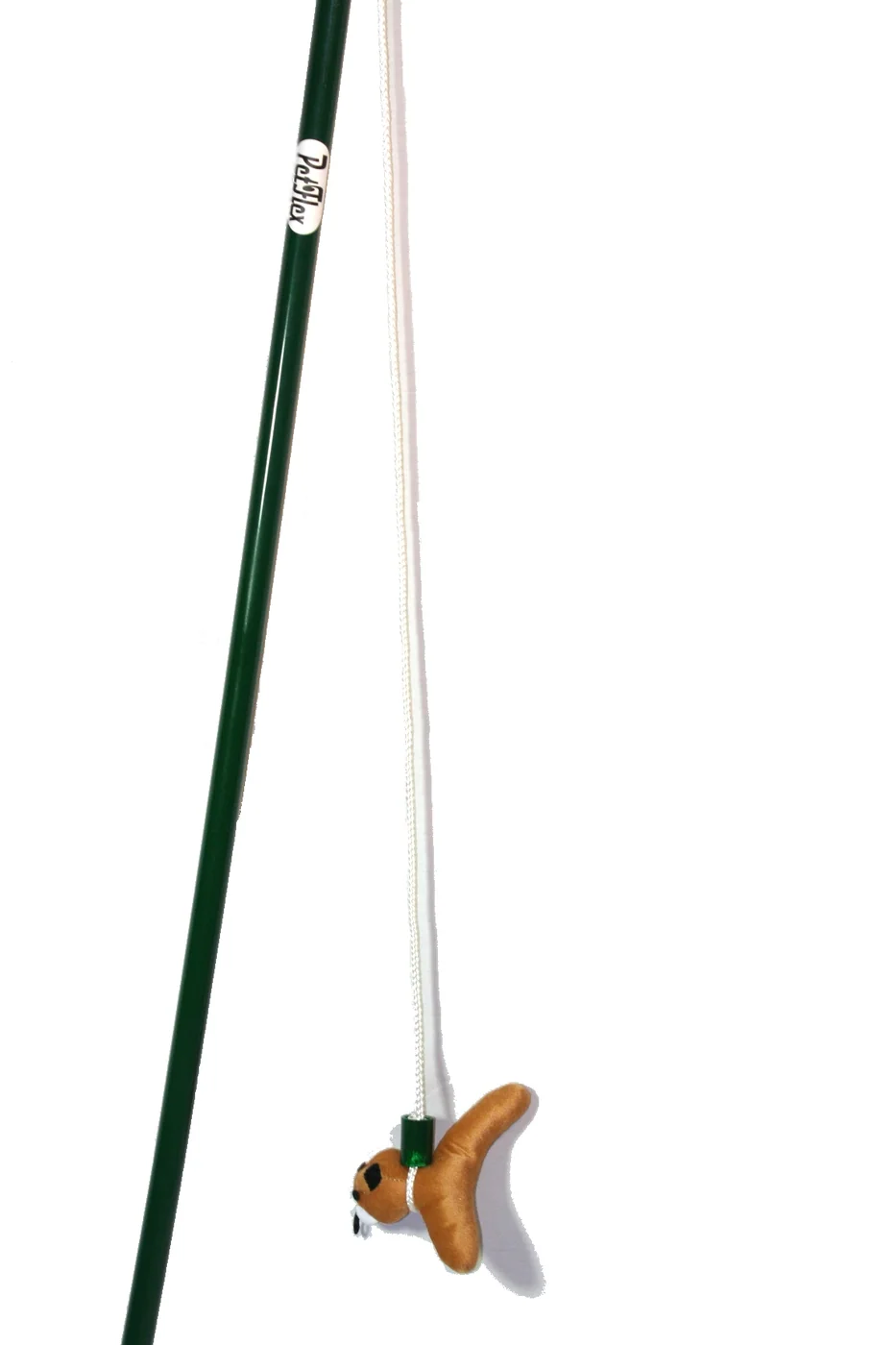
Flirt pole, dog exercise equipment used by trainers and those who want to but cannot walk their dog. Tranndee · CC BY-SA 3.0. Web size optimized; original linked.
AI-assisted original writing. This feature was revised against source material and checked for unsupported claims. Follow the references below for evidence and its limits.
Archaeological finds from select European sites offer glimpses into possible relationships between people and dogs, while underscoring the challenges of interpreting ancient deposits.
Owner-led projects offer scale and real-world glimpses into canine minds, yet differences in tester identity and uncontrolled home settings can introduce systematic errors that large samples do not automatically cancel out.
Penn State researchers once used MRI scans and computer simulations to map airflow inside a dog’s nasal passages, offering clues for designing better chemical sensors.

 Photograph