How Air Moves Through a Dog’s Nose: Insights From Early Engineering Models
Penn State researchers once used MRI scans and computer simulations to map airflow inside a dog’s nasal passages, offering clues for designing better chemical sensors.
Dogs are famous for their extraordinary sense of smell, but the exact mechanics of how air travels through their noses have long intrigued scientists and engineers. In the late 2000s, a team at Penn State set out to understand this process by creating a detailed computer model based on a real dog’s anatomy. Their work, built around magnetic resonance imaging and computational fluid dynamics, aimed to reveal patterns of airflow that could one day inform the creation of artificial noses. While the study focused on a single specimen and remains an early step rather than a comprehensive blueprint, it highlights the value of blending biology with engineering. This article explores the research, its methods, and what it suggests about both canine noses and human-made detection devices. We’ll also consider the limitations of such models and pose questions for future inquiry.
The Appeal of Canine Olfaction for Engineers
For engineers seeking to build better chemical detectors, a dog’s nose serves as a natural source of inspiration. These animals can detect faint odors in ways that outpace many current technologies, prompting researchers to examine the physical structures that make this possible. Rather than simply marveling at the outcome, the Penn State team chose to investigate the underlying fluid dynamics inside the nasal cavity. Their 2009 project used imaging data to reconstruct the airway in three dimensions, allowing simulation of how air moves during breathing and sniffing.
This approach reflects a broader trend in bio-inspired design, where natural systems are studied to solve technical problems. The model was not intended as a definitive map of every dog’s nose, nor did it claim to quantify overall smelling power. Instead, it provided a tool for visualizing airflow patterns, which could help identify features worth replicating in synthetic sensors. Light humor aside, one might imagine a robotic bloodhound that never needs a walk, though the real goal remains grounded in practical detection challenges such as locating explosives or disease markers.
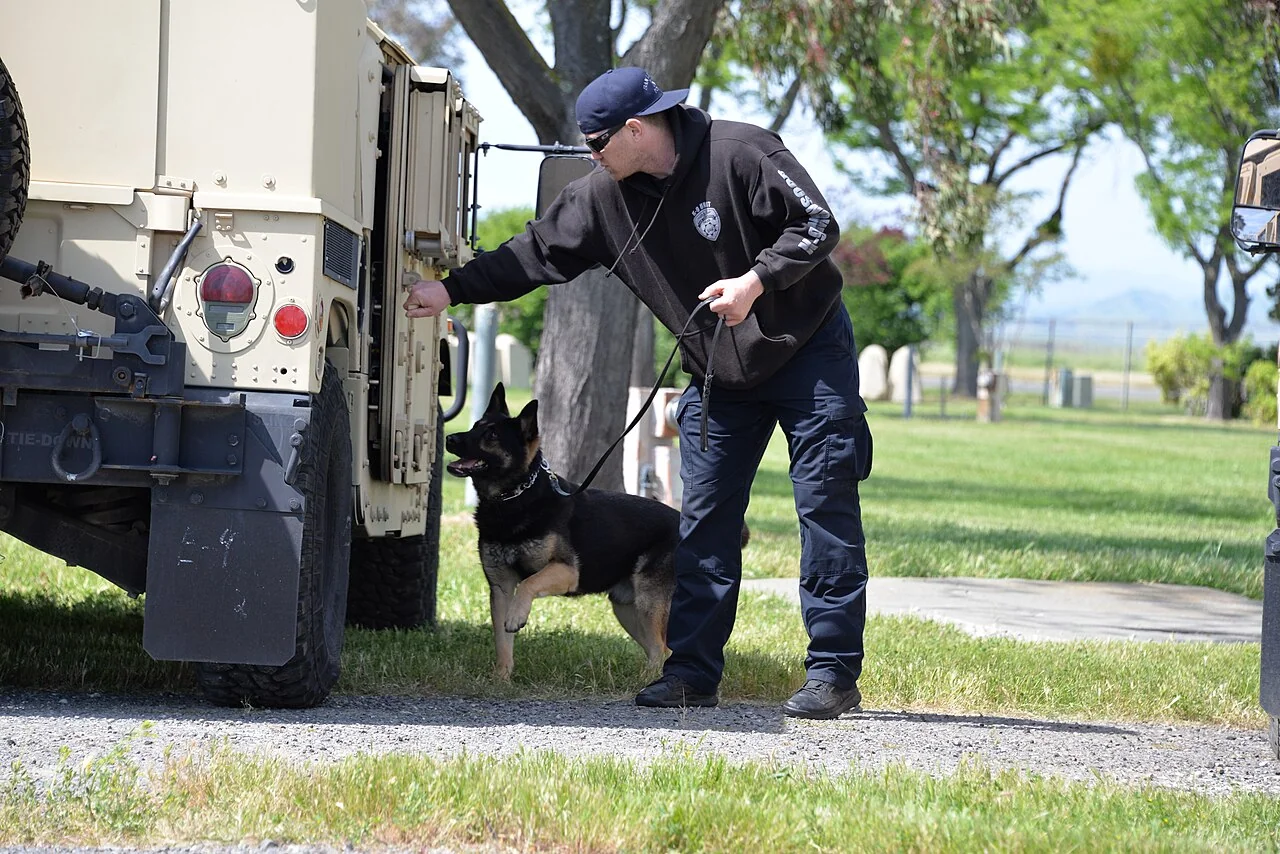
Explosive detection dog Conan searching during a competition at Travis Air Force Base, California, 8 April 2016 (documentary photograph). Amber Carter · Public domain. Web size optimized; original linked.
Building the Model From MRI Data
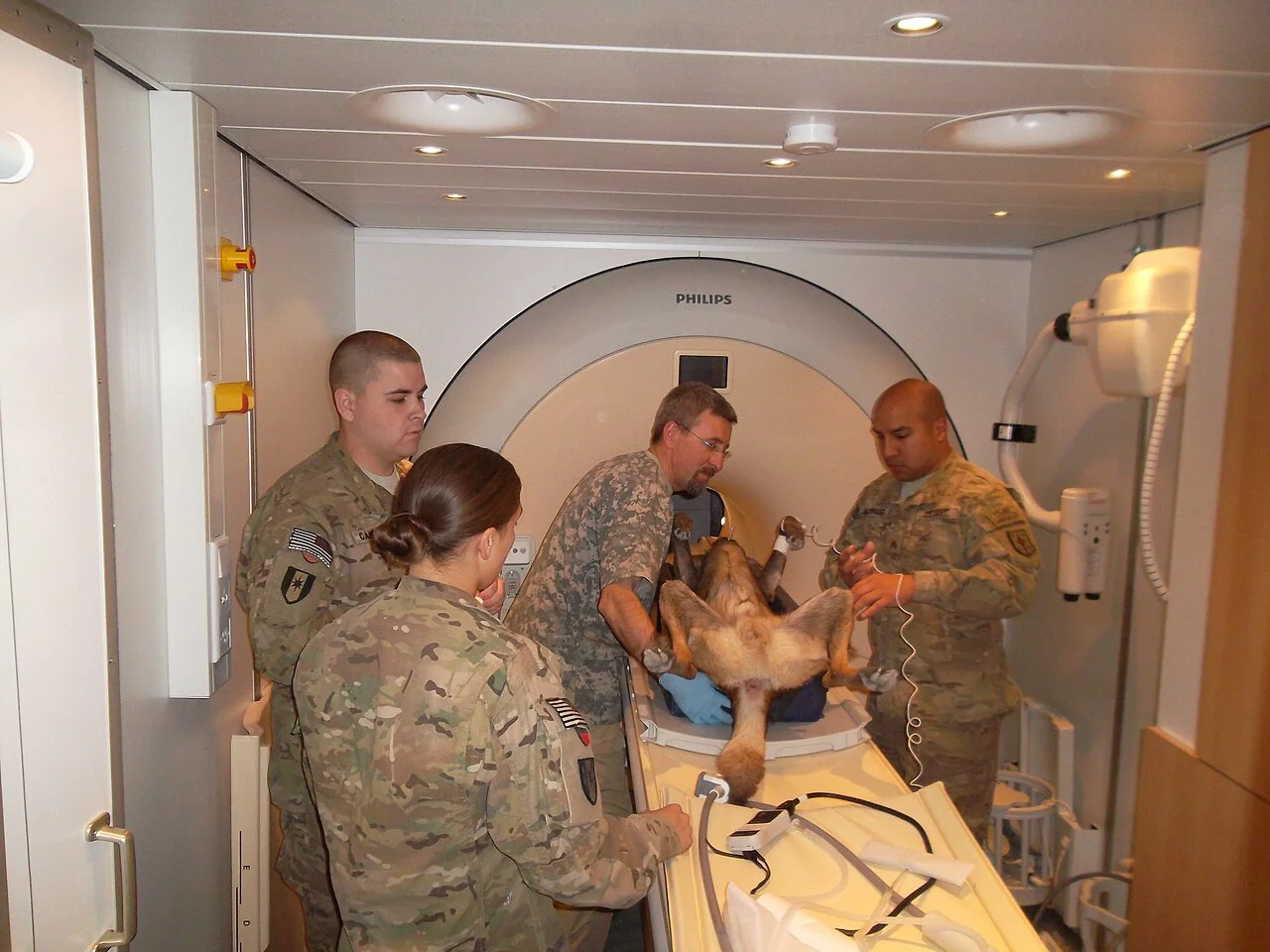
The foundation of the research was an MRI scan of a dog’s nasal anatomy. From this, Brent Craven and colleagues created a computational fluid-dynamics simulation that recreated the complex passages inside the nose. The resulting three-dimensional model allowed them to track how air flows through different regions, including areas involved in both respiration and olfaction.
Morphometric analysis followed, measuring dimensions of the nasal airway to understand its geometry. This step produced quantitative data on the size and shape of passages but did not extend to performance claims about smell sensitivity across breeds or individuals. The work, documented in a peer-reviewed publication, remains a specific case study rather than a universal template. Its value lies in demonstrating a method that future researchers could adapt with larger sample sizes or different imaging techniques.
What the Simulations Revealed About Airflow
Simulations showed distinct patterns: during inhalation, air takes a particular route that directs odor molecules toward sensory regions. The model illustrated how the nasal structure creates zones of varying airflow speed and pressure. Such details help explain why dogs might excel at separating scents, although the study stopped short of linking specific flow features to behavioral outcomes.
The computational approach also permitted virtual experiments that would be difficult in a living animal. Engineers could adjust variables to see how changes in anatomy might alter airflow, providing a platform for hypothesis testing. Editorial analysis suggests this kind of modeling bridges gaps between biology and technology, yet it underscores the gap between simulating one nose and replicating the full living system with its moist tissues, constant mucus flow, and active sniffing behaviors.
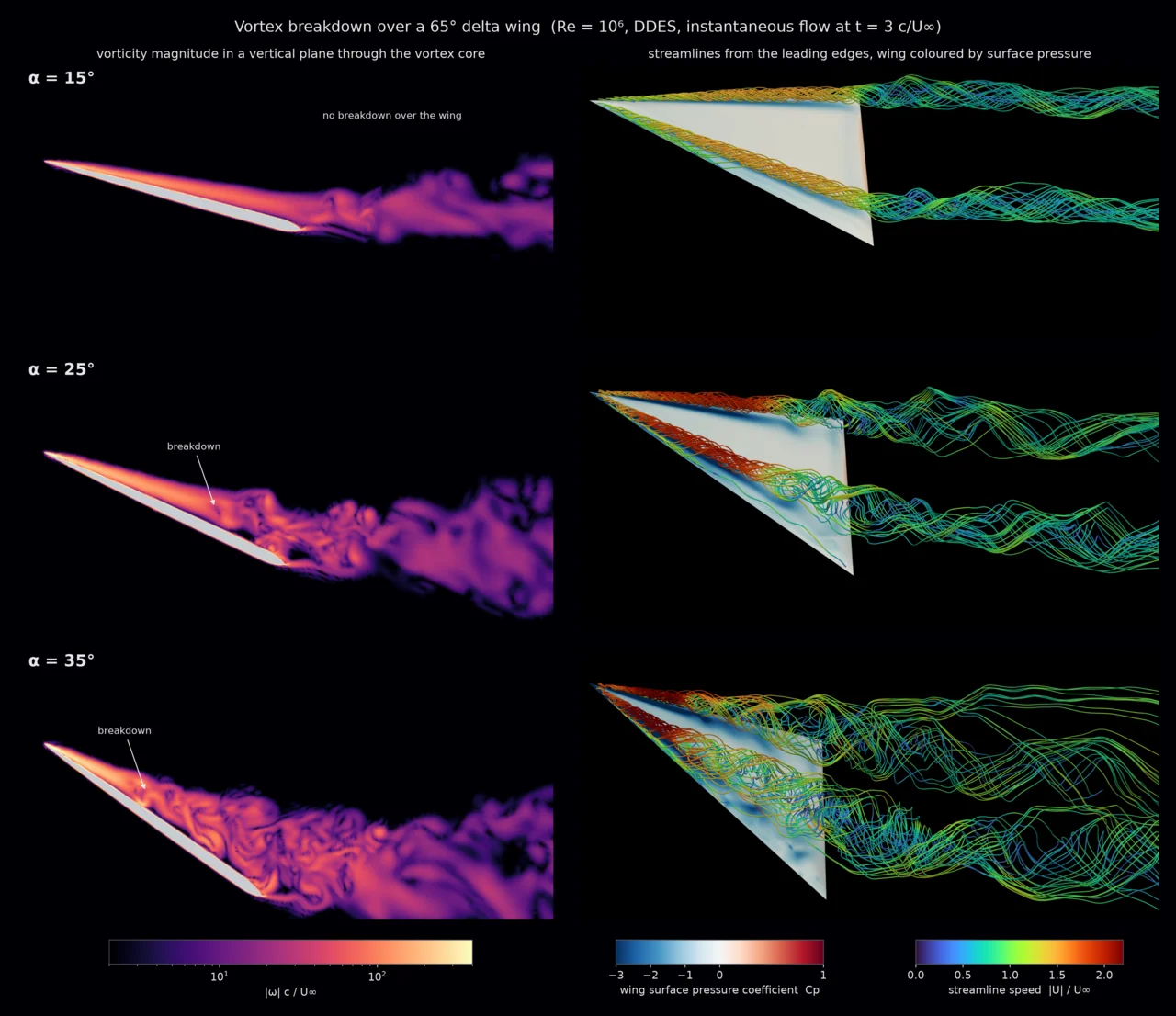
Vortex breakdown over a 65° delta wing at three angles of attack (α = 15°, 25° and 35°), from a computational fluid dynamics simulation. Air flows from left to right. Vilhelm.s · CC0 1.0. Web size optimized; original linked.
Implications for Artificial Nose Development
One practical aim was to apply lessons from the canine nose to the design of electronic sensors. By understanding how natural airways concentrate and deliver molecules, engineers might improve the efficiency of devices that detect trace chemicals in air. The Penn State model offered a starting point for thinking about micro-scale channels or filters that mimic nasal geometry.
However, the research record emphasizes that the work was exploratory. It does not provide a finished blueprint for a working artificial nose, and real-world applications would require many additional steps, including material science advances and extensive testing. Useful questions for readers include: How closely must an artificial system copy biology to be effective? Could simpler designs achieve similar results? These considerations highlight both the promise and the humility needed when translating animal abilities into technology.
Limitations and Paths for Future Research
The study examined a single dog’s nasal airway, so its findings cannot be generalized to all canines or even to different breeds without further validation. Computational models also simplify reality; they cannot fully capture the dynamic effects of breathing patterns, temperature, or the chemical interactions that occur on nasal surfaces. The authors themselves framed the effort as an initial reconstruction rather than a conclusive analysis.
Looking ahead, expanding the dataset to include multiple animals, combining imaging with live measurements, or integrating the model with actual sensor prototypes could strengthen its utility. Editorial reflection suggests that while the project sparks curiosity about our canine companions, its greatest contribution may be methodological: showing how engineers and biologists can collaborate on problems that span disciplines. For animal welfare, such non-invasive modeling reduces the need for direct experimentation. In the end, the work reminds us that even sophisticated simulations are approximations, inviting continued wonder at the living nose that inspired them.
AI-assisted original writing. This feature was revised against source material and checked for unsupported claims. Follow the references below for evidence and its limits.
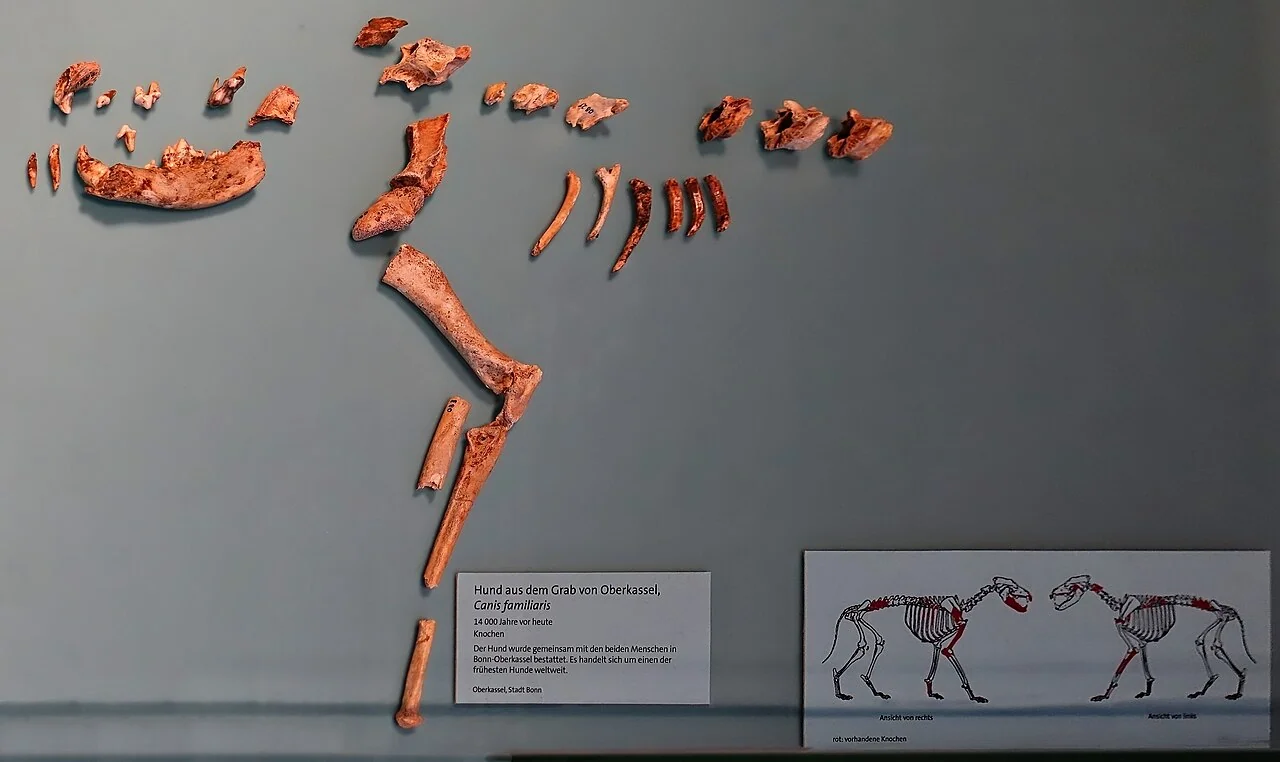
Archaeological finds from select European sites offer glimpses into possible relationships between people and dogs, while underscoring the challenges of interpreting ancient deposits.
Owner-led projects offer scale and real-world glimpses into canine minds, yet differences in tester identity and uncontrolled home settings can introduce systematic errors that large samples do not automatically cancel out.
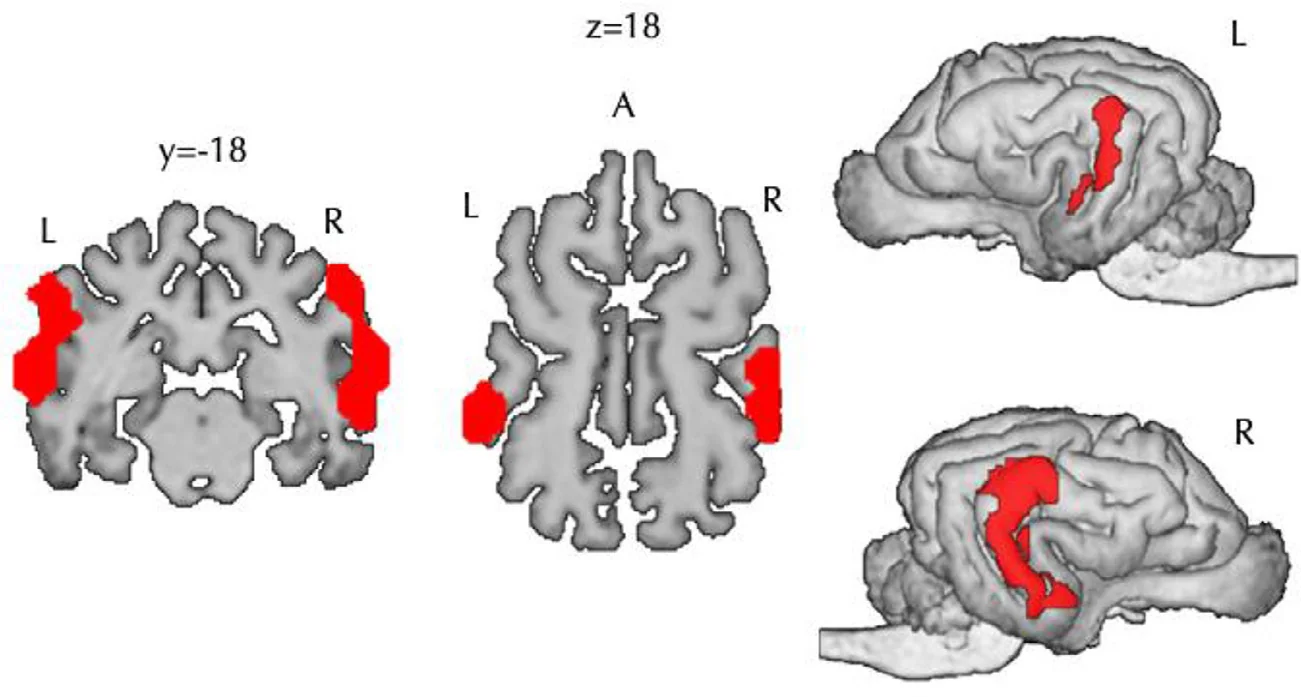
Comparative fMRI studies show that dogs, like humans, have brain regions that react more strongly to vocalizations than to non-vocal sounds, with sensitivity to emotional tone cues.
 Photograph