What Heritability Studies Reveal About Canine Inhibitory Control
Breed-level data show substantial genetic influence on certain cognitive factors, yet the picture remains nuanced and distinct from popular ideas of instant obedience.
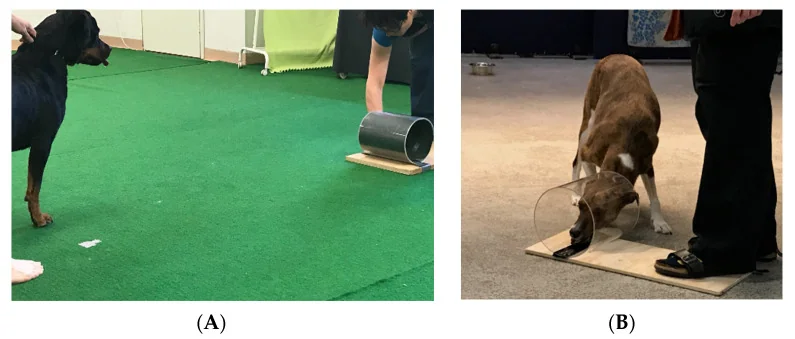
Test set-up for the cylinder test. (A) Opaque cylinder during training trials. (B) Transparent cylinder during test trials where the dog must inhibit the direct reach and go around the barrier. Junttila S, Huohvanainen S, Tiira K. · CC BY 4.0 · Web size optimized; source linked for the original.
When people talk about dogs who can wait patiently for a treat or resist chasing a squirrel, they often assume it’s simply a matter of training. Research using large citizen-science datasets and genomic comparisons suggests that genetics play a larger role than many realize—particularly for what scientists call inhibitory control. Two studies offer useful windows into this: one estimating how much variation in cognitive performance traces to breed genetics, and another exploring selection signals in herding dogs. The findings highlight real patterns without supporting the myth of effortless, automatic obedience in any specific breed. Instead, they point to a complex mix of inheritance, environment, and training that owners and trainers should consider thoughtfully.
Understanding Inhibitory Control in Dogs
Inhibitory control refers to a dog’s ability to suppress an immediate impulse in favor of a more appropriate or rewarded behavior. Think of a dog who holds a sit-stay despite the temptation of a dropped sandwich, or one who ignores the urge to bolt after a ball until given the cue. This capacity matters for everyday life, from polite greetings to complex working roles. The first study, drawing on citizen-science data from over 1,500 dogs across 36 breeds, used 11 different tasks to derive a cognitive factor representing inhibitory control. This factor showed the highest among-breed narrow-sense heritability estimate of the traits examined.
Importantly, the researchers applied mixed models that incorporated breed-averaged genetic relatedness. The resulting heritability figure for inhibitory control was 0.70, remaining a robust 0.50 even after accounting for average breed body weight. Memory and physical reasoning factors, by contrast, showed much lower heritability estimates of 0.17 and 0.21 respectively. These numbers indicate that, at the breed level, genetic differences explain a substantial portion of variation in this particular cognitive domain. Yet the authors emphasize that these are population-level patterns derived from averaged data, not guarantees for any individual dog. Training, early experience, and environment still shape outcomes in meaningful ways.
Heritability estimates often get misinterpreted in popular discussions. A high h² value like 0.70 does not mean that 70 percent of a dog’s self-control is fixed by genes with no room for improvement. Rather, it describes the proportion of observed differences between breeds that can be attributed to genetic relatedness under the conditions of the study. The citizen-science tasks came from the Dognition platform and involved real pet dogs performing activities such as detour tasks, cylinder tests, and waiting exercises. Factor analysis helped group related measures into broader cognitive domains.
The study also found that inhibitory control and a separate communication factor covaried with breed genetic relatedness, hinting at possible selection pressures during domestication. This is intriguing but remains correlational. The authors note the work relies on breed averages rather than individual genotyping, and the tasks, while standardized, were performed in home environments with varying levels of owner involvement. These limitations mean the results illuminate broad trends across breeds but cannot yet support precise predictions about a single puppy’s future behavior. Owners might usefully ask: If I’m choosing a breed for a job requiring strong impulse control, does this data guide me, or should I still prioritize individual temperament and training history?
Insights From Herding Breeds and Selection Signatures
A separate genomic study focused on herding dogs, including border collies, identified signatures of positive selection in genes linked to neurodevelopmental and cognitive pathways. One gene highlighted, EPHB1, has associations with locomotor activity and spatial memory in other contexts. The researchers also noted a working-line-specific haplotype connected to elevated chase-bite motor patterns reported in behavior surveys. Herding dogs have previously shown strong performance in behavioral tests of inhibitory control, and the genomic data suggest selection on pathways involving axon guidance, memory, and social interaction.
These findings add texture to the heritability picture by pointing to specific biological systems that may have been shaped in working lineages. However, the study did not directly measure inhibitory control or self-control tasks in the same dogs. The behavioral associations come from owner surveys rather than controlled experiments, and the functional links to impulsivity or obedience remain correlational. This underscores a recurring theme: while genetic influences appear real, translating genomic signals into practical advice requires more validation. A light-hearted way to think about it is that even the most carefully selected herding dog may still need a patient owner who understands that genetics load the gun, but training pulls the trigger—preferably not at the neighbor’s cat.
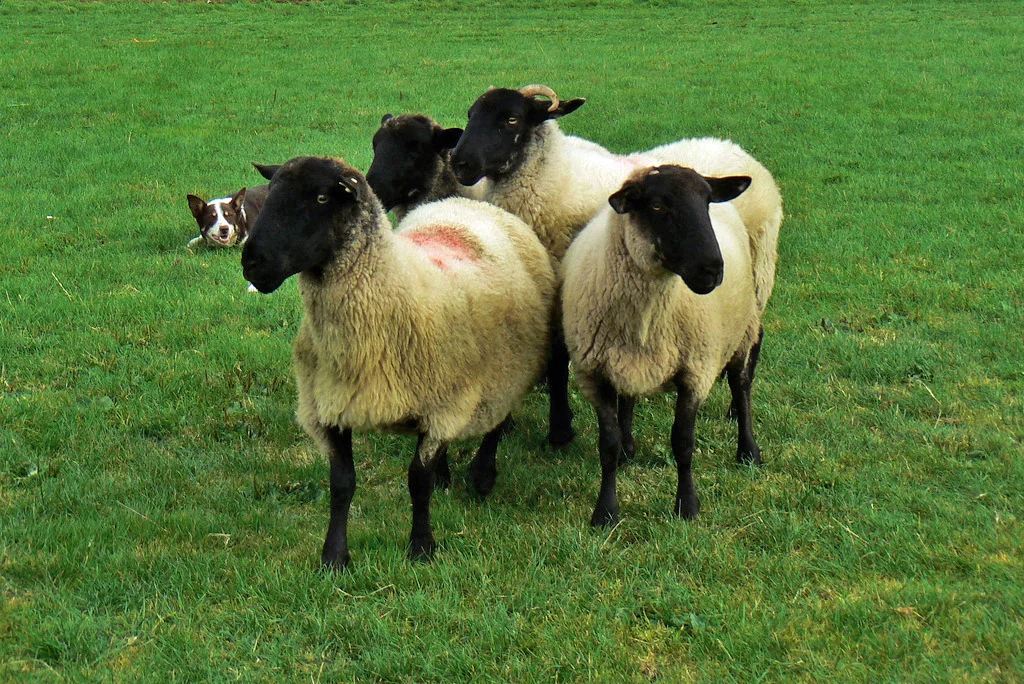
Border Collie herding sheep during sheepdog trials at the Ballingeary Show, County Cork, Ireland. Documentary photograph illustrating the herding behavior shaped by selective breeding. mozzercork · CC BY 2.0. Web size optimized; original linked.
Separating Evidence From Popular Myths
Popular media and breed marketing sometimes promise near-magical obedience in certain working lines, implying that genetics alone produce instantly reliable dogs. The evidence reviewed here does not support that view. The heritability study explicitly avoided identifying specific gene variants, and the genomic work found associations rather than causal proof for self-control. Both papers stress that cognitive traits continue to be shaped by environment and training. Claims of “instant obedience” or particular breeds being universally superior in inhibitory control exceed what the data can currently demonstrate.
This gap between marketing and science matters for animal welfare. Dogs who fail to meet unrealistic expectations may face frustration, punishment, or rehoming. A more grounded perspective encourages prospective owners to view heritability data as one piece of information alongside temperament testing, breeder practices, and commitment to lifelong training. Reading question: When choosing a dog for demanding work or family life, how do you weigh population-level genetic trends against the individuality of each animal? The studies suggest caution and humility rather than certainty.
Practical Implications and Future Directions
For trainers, breeders, and owners, these findings invite thoughtful application. High breed-level heritability for inhibitory control suggests that some lines may start with a genetic advantage in tasks requiring impulse suppression. This could inform breeding decisions for working roles where such traits are valuable. At the same time, the moderate heritability of other cognitive factors and the persistent role of environment remind us that no dog is a blank slate or a finished product. Consistent, positive training remains essential regardless of breed background.
Looking ahead, the authors of both papers call for further research that bridges the gap between breed averages and individual prediction, ideally combining detailed genotyping, controlled behavioral testing, and longitudinal studies. Such work could clarify which genetic pathways most influence real-world self-control and how they interact with training methods. In the meantime, the existing evidence offers useful context without overpromising. It encourages a respectful partnership with dogs that acknowledges their evolutionary history while meeting them where they are today. Editorial note: The data illuminate tendencies, not destinies—a reminder that science often complicates our desire for simple answers, which, while less satisfying than myths, ultimately leads to better outcomes for dogs and people alike.
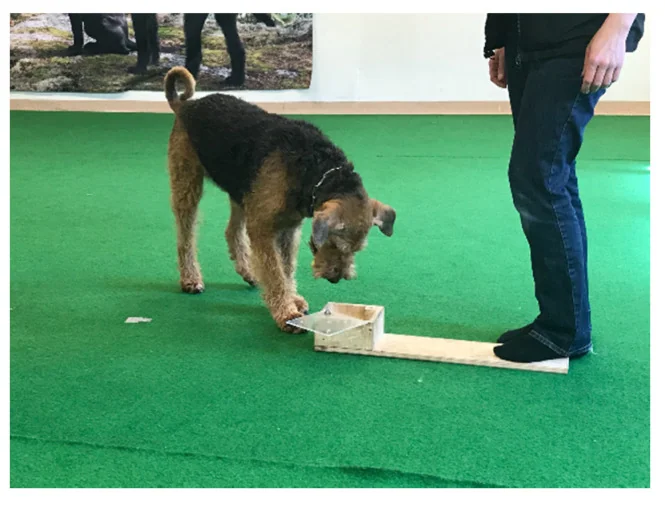
Test setup during the training phase of the unsolvable task. The lid is open, allowing the dog to easily access it. The box was then placed in front of the dog again, and the dog was released. For 2 min, the dog was allowed to move freely around the room and manipulate the box. The owner was advised to stay quiet and only look at the box, and the experimenter did the same. Junttila S, Huohvanainen S, Tiira K. · CC BY 4.0. Web size optimized; original linked.
AI-assisted original writing. This feature was revised against source material and checked for unsupported claims. Follow the references below for evidence and its limits.
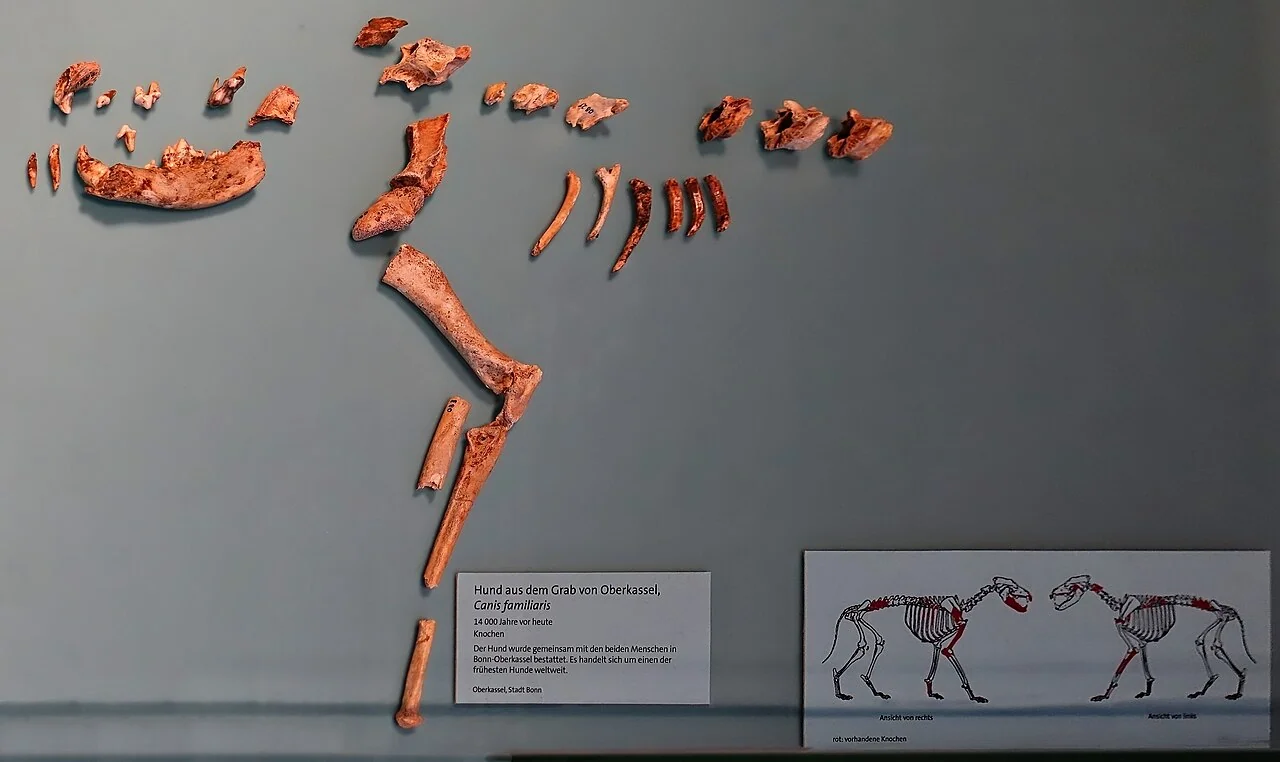
Archaeological finds from select European sites offer glimpses into possible relationships between people and dogs, while underscoring the challenges of interpreting ancient deposits.
Owner-led projects offer scale and real-world glimpses into canine minds, yet differences in tester identity and uncontrolled home settings can introduce systematic errors that large samples do not automatically cancel out.
Penn State researchers once used MRI scans and computer simulations to map airflow inside a dog’s nasal passages, offering clues for designing better chemical sensors.
 Photograph