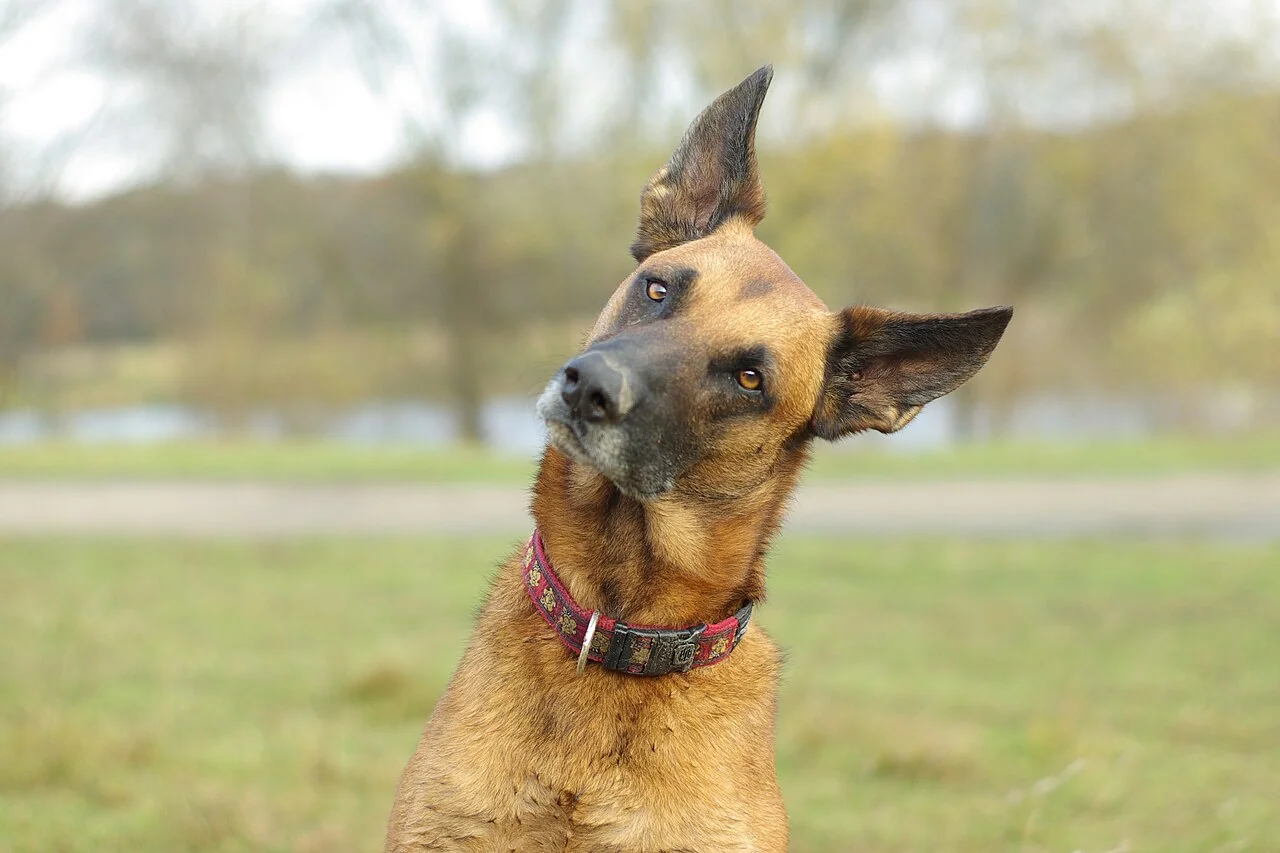
Studies link the familiar head-cock mainly to dogs that are unusually skilled at learning object names, suggesting it helps with processing meaningful spoken words rather than general sound sharpening.
Dog performing a distinct head tilt while listening to a human speaker (2007) Olgierd Rudak · CC BY-SA 4.0 · Web size optimized; source linked for the original.
Most dog owners have seen it: a curious cock of the head when you say something interesting. The gesture looks irresistibly cute, but researchers have been asking whether it serves a practical purpose in how dogs interpret sound. Recent exploratory work finds the behavior is far from universal. It appears most often in a select group of dogs that have shown an exceptional talent for learning the names of toys. This pattern hints that the tilt may relate to focused auditory processing of meaningful speech rather than a broad evolutionary tweak for better hearing. While the exact mechanics remain uncertain, the evidence invites us to view the tilt less as automatic cuteness and more as a window into canine cognition. Light-hearted as the image is, it also raises practical questions for anyone living with dogs: what are they really doing when they lean in like that?
Who Tilts and When
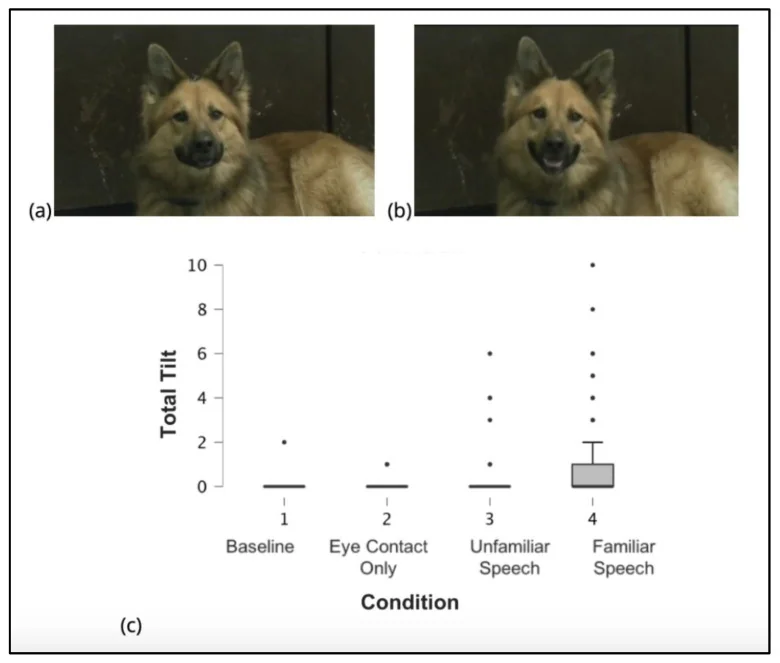
In one set of experiments, only dogs previously identified as gifted word learners tilted their heads with any regularity. These dogs performed the behavior on 43 percent of trials when owners asked for specific named toys. By contrast, typical family dogs rarely tilted, doing so on just 2 percent of similar trials. The difference suggests the gesture is not a default response to any human voice or familiar sound. Instead it seems tied to moments when the dog is actively trying to make sense of a meaningful verbal request.
The same dogs showed consistency in their preferred tilt direction across months of testing. One animal might reliably tilt left, another right, with the habit holding steady rather than shifting randomly. This individual stability implies the movement is not purely random or purely reflexive. Observers noted that the tilt happened specifically when the spoken words carried clear relevance to the dog’s learned vocabulary. Nonsense or irrelevant speech did not trigger the same reaction, pointing again to a link with language-like processing rather than raw acoustics.
Popular accounts sometimes claim that head-tilting sharpens sound localization or filters particular frequencies, yet the reviewed studies offer no direct test of those ideas. One investigation measured dogs’ minimum audible angle—the smallest angle at which they can tell a sound has moved sideways. Ten dogs averaged 7.6 degrees, with some individuals possibly sharper than 2 degrees. Performance improved with practice, but researchers found no statistical tie between that sharpness and ear shape, head shape, or age within their small sample. Crucially, the experiment did not examine head-tilting at all.
An older study from 1981 looked at how dogs judge the location of sounds played through headphones. It reported thresholds for detecting tiny timing or loudness differences between the ears. Those thresholds changed with the pitch of the sound, and above roughly 1.5 kHz the dogs lost the ability to use timing cues. The work relied on conditioned reflexes and only two dogs, so its relevance to natural head-tilting in everyday life is limited. Taken together, the existing evidence leaves open whether tilting actually improves localization or frequency filtering; the connection remains a hypothesis rather than demonstrated fact.
What the Tilt Might Mean for Everyday Dogs
If the head-cock appears mainly in dogs that excel at word learning, owners of more typical pets might rarely see it. That observation carries a gentle reminder: not every dog processes human speech the same way. For those that do tilt, the gesture could signal genuine mental effort rather than simple confusion or charm. Recognizing this might help people adjust how they talk to their dogs—perhaps slowing down, using consistent names, or watching for that attentive tilt as a sign the message is landing.
From an animal-welfare angle, the findings discourage treating the behavior as mere entertainment. A tilt might reflect cognitive work; laughing at it without respecting the underlying attention could feel dismissive. A bit of humorous self-awareness helps here: many owners proudly show videos of their pet’s “adorable” head-cock while the dog is quietly doing its best to decode a request for “Mr. Bear.” The evidence invites us to appreciate the effort behind the gesture instead of reducing it to viral cuteness.
All three studies emphasize their narrow scope. The word-learning project focused on a handful of exceptional dogs. The localization test used ten animals and never filmed head movements. The headphone study relied on just two subjects and artificial stimuli. Larger, more varied samples are clearly needed before anyone can confidently link head-tilting to improved hearing mechanics across the whole canine population.
Researchers also note conflicting earlier reports on whether moving the head during a sound helps or hinders accuracy. Without direct experiments that measure both tilt angle and localization success in the same moment, claims about acoustic benefit stay speculative. Readers should therefore treat the “auditory advantage” story as an interesting possibility rather than settled science. This uncertainty itself is useful: it highlights how much remains to discover about the everyday sensory world of dogs.
Questions Worth Asking Next
If head-tilting helps with word comprehension, would training more dogs to learn object names increase how often they tilt? Could certain breeds or ages show different patterns once sample sizes grow? And might the direction of tilt relate to brain lateralization in ways we have not yet mapped? These questions flow directly from the current evidence and could shape future experiments that combine behavioral observation with precise acoustic measurements.
For dog guardians, a practical follow-up is whether deliberately using clear, consistent vocabulary encourages more attentive listening—and more visible tilts. The studies do not prescribe training methods, but they do suggest that the gesture can be a visible marker of engagement. Watching for it without expecting every dog to perform on cue keeps expectations realistic and kind. In the end the tilt remains partly mysterious, which only adds to the quiet wonder of sharing life with another species that listens so intently.
AI-assisted original writing. This feature was revised against source material and checked for unsupported claims. Follow the references below for evidence and its limits.
Archaeological finds from select European sites offer glimpses into possible relationships between people and dogs, while underscoring the challenges of interpreting ancient deposits.
Owner-led projects offer scale and real-world glimpses into canine minds, yet differences in tester identity and uncontrolled home settings can introduce systematic errors that large samples do not automatically cancel out.
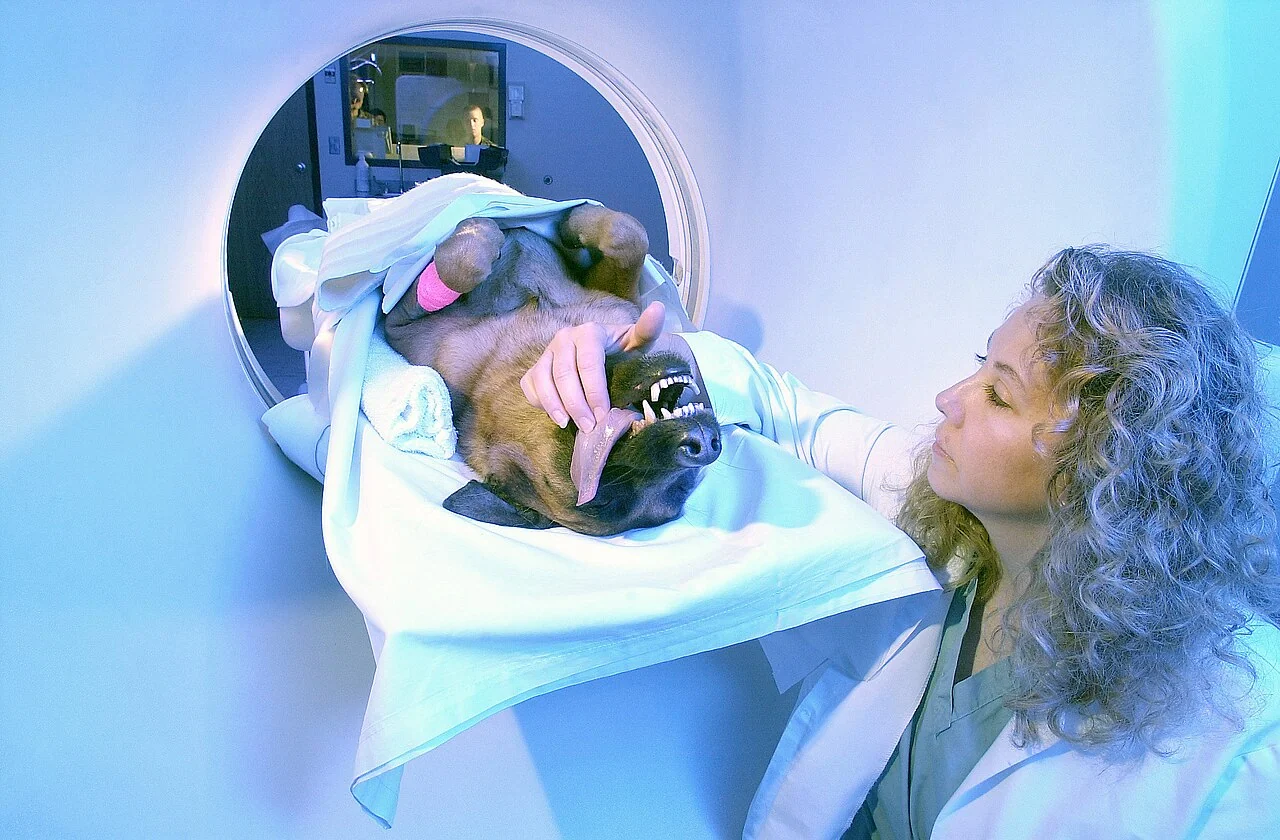
Penn State researchers once used MRI scans and computer simulations to map airflow inside a dog’s nasal passages, offering clues for designing better chemical sensors.

 Photograph