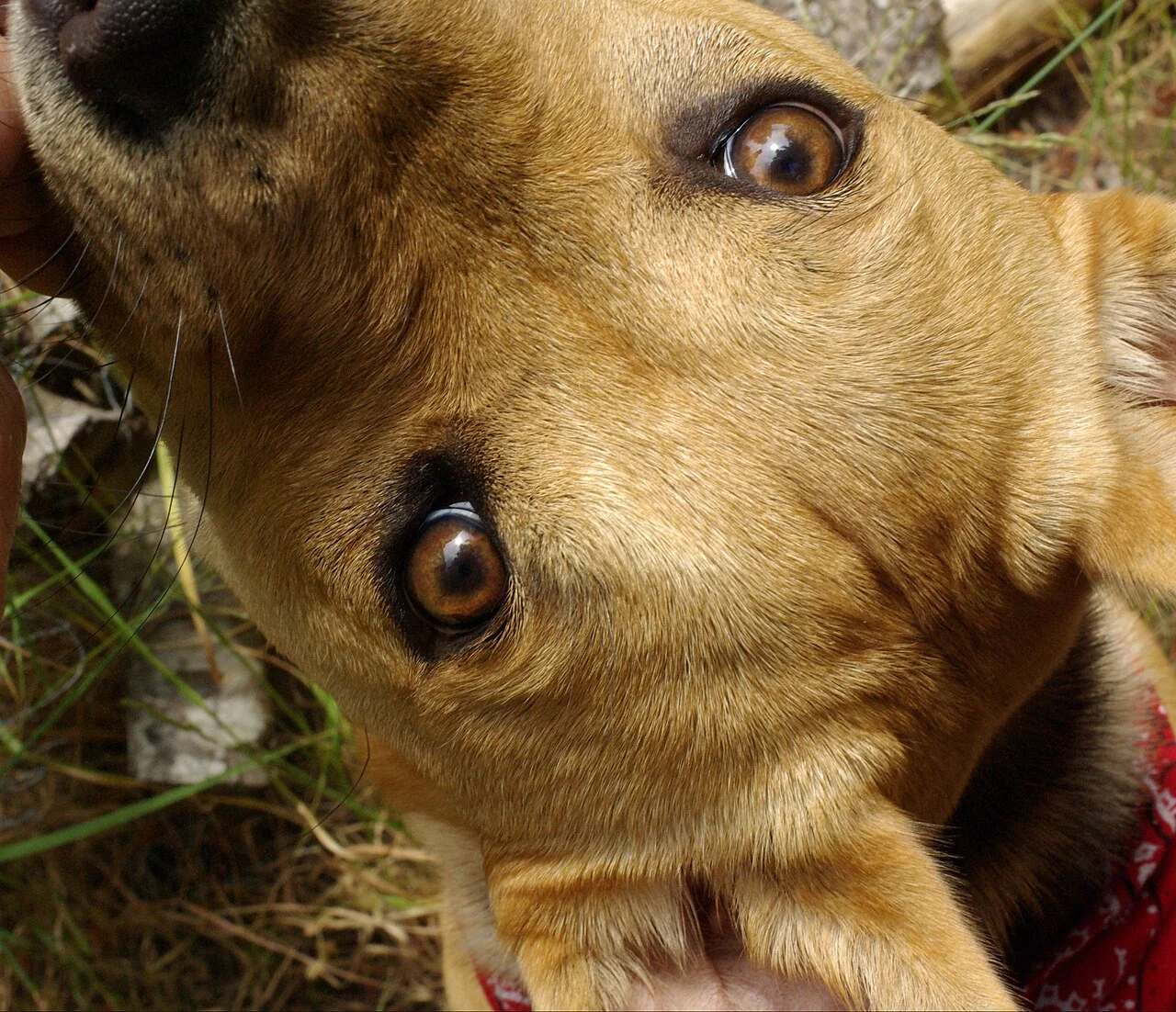
Young dog looking up at a human Mcitsci · CC BY-SA 3.0 · Web size optimized; source linked for the original.
Dogs read human gestures with impressive skill and form close bonds with people. Researchers have explored whether this reflects an ability to understand what others see or know. Many tests examine visual perspective-taking and responses that look like guilt. The available evidence shows dogs respond strongly to immediate cues such as body orientation, head turns, and tone of voice. Results frequently depend on experimental details, breed background, and the role of scent rather than clear proof of attributing mental states to others.
Testing Visual Perspective-Taking
One approach asks whether dogs understand what a human can and cannot see. In some setups a dog watches a treat hidden behind one of two barriers. A person either faces the hiding spot or turns away. Researchers check if the dog approaches the barrier visible only to itself more often when the human appears unable to see the action.
Studies included in a 2014 overview report that dogs often use immediate visual information such as head direction. Performance tends to change when experimenters adjust for body posture cues or block the dog’s view of the human’s eyes. Certain working breeds selected for cooperation with humans show stronger responses to these signals than more independent types. The evidence indicates dogs reliably avoid food that a person is clearly gazing at, though this may rely on direct observation rather than an abstract model of seeing.
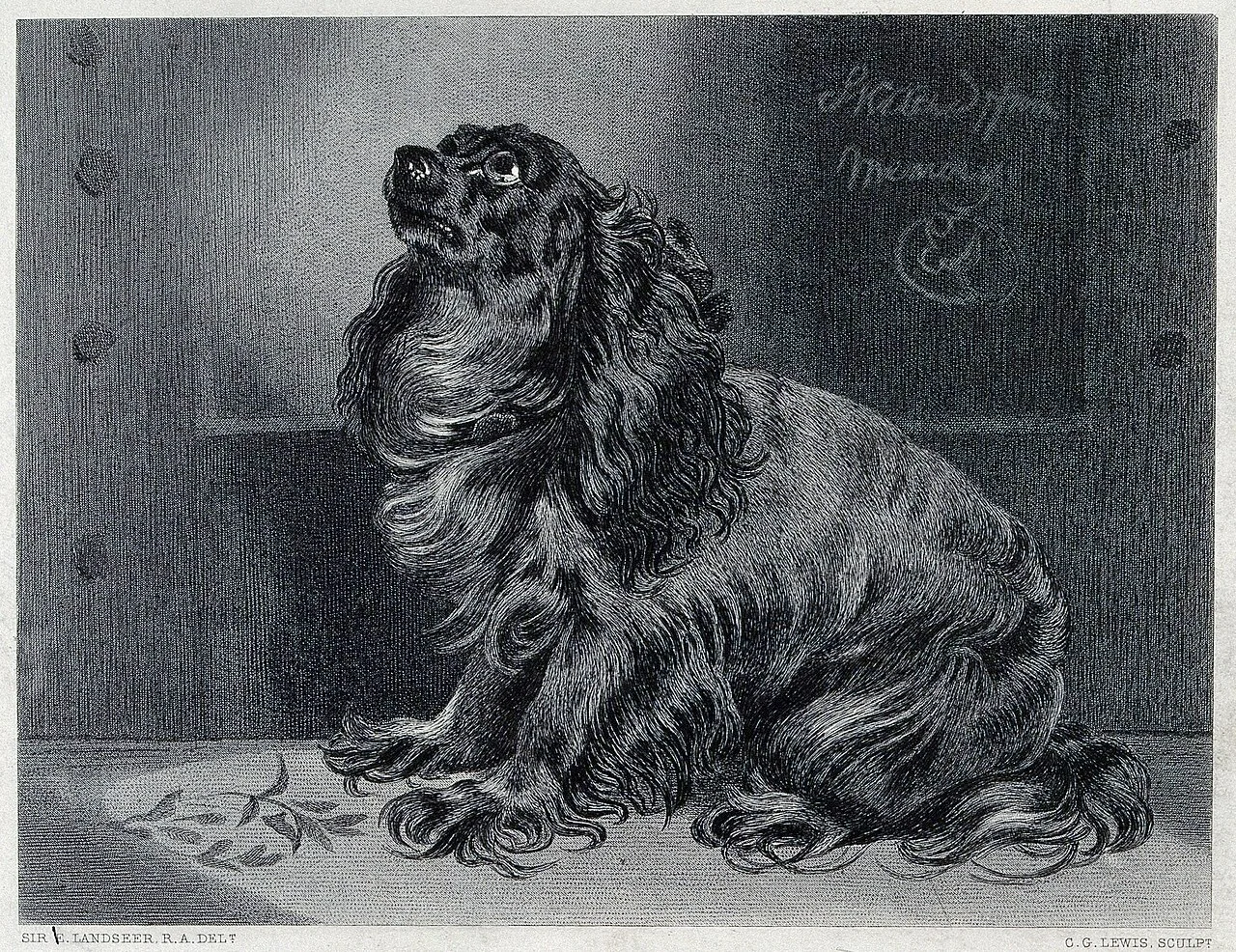
A pet dog sitting and looking up with an expectant gaze. Steel engraving by C. G. Lewis after E. H. Landseer. Source collection · CC BY 4.0. Web size optimized; original linked.
The So-Called Guilty Look
Many owners recognize the averted eyes, lowered head, and tucked tail that appear when a dog is scolded for eating something forbidden. Controlled observations suggest this posture occurs most strongly when the dog expects an angry reaction from the returning owner, whether or not it actually ate the treat.
In described tests, some dogs received a treat secretly while others did not. When owners were given incorrect information and behaved angrily, dogs showed more of the submissive signals. The pattern points to anticipation of punishment shaped by prior training rather than an internal sense of wrongdoing. Scent detection adds another layer: dogs have far more olfactory receptors than humans and can detect food odors on themselves, which may trigger familiar submissive behavior linked to past experience.
Domestication and Sensory Biology
Modern dogs descend from ancient wolves. Genetic and archaeological work summarized in the 2014 volume indicates multiple waves of domestication across Eurasia. These processes favored traits that make dogs responsive to human cues. The same overview notes that following a human point is nearly universal in dogs yet rare in wolves even when hand-raised.
A dog’s world is shaped by odor. When visual tests include strong scent trails, outcomes can shift. The evidence reminds readers that what appears as insight may sometimes be odor-tracking or learned response to posture and tone. Burial sites mentioned in the reviewed literature show early emotional bonds between people and dogs, yet direct fossil evidence of specific cognitive abilities is absent.
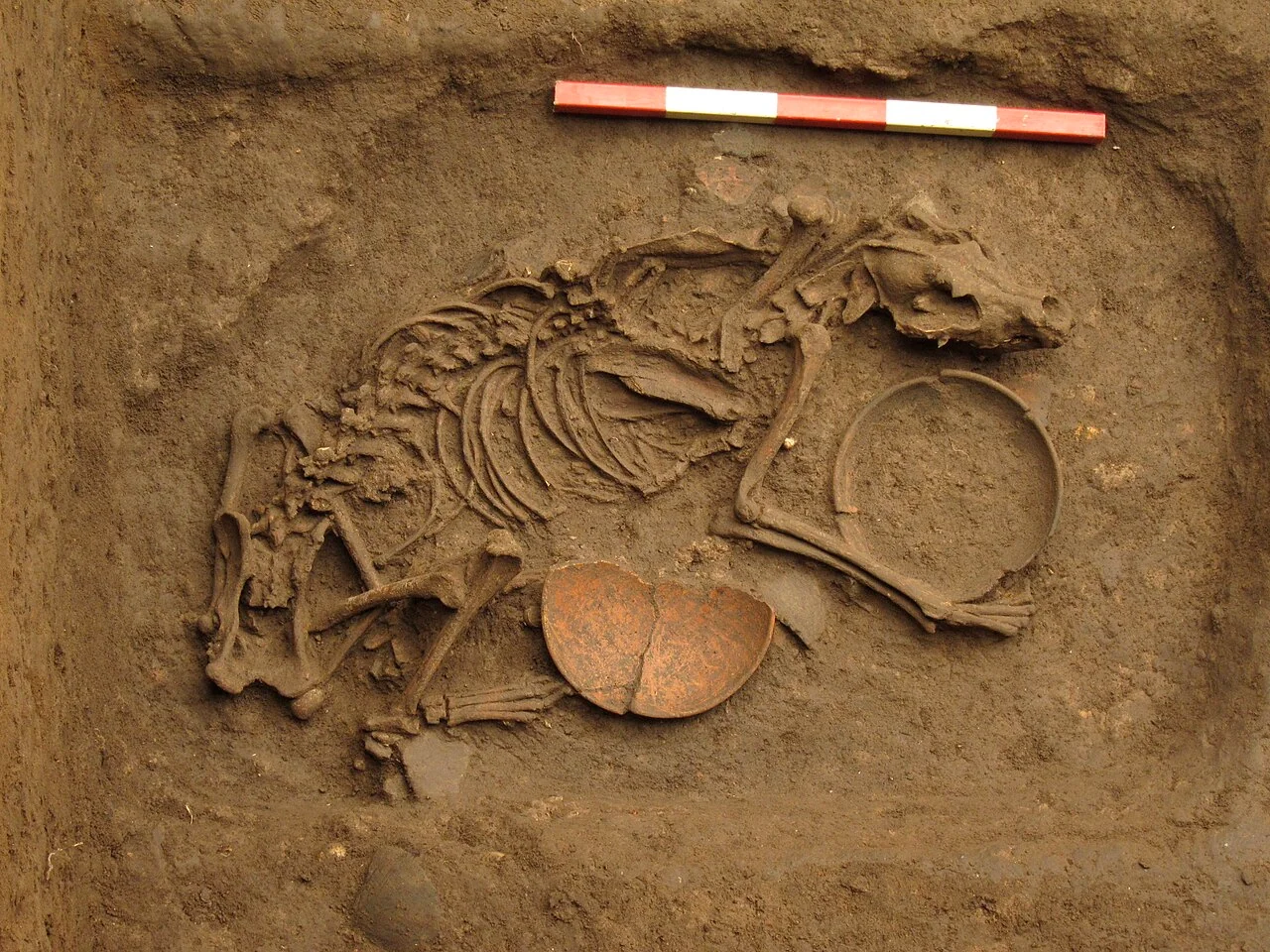
Overhead view of the burial of a dog from the site of Ban Non Wat, with scale along top of image. The dog is buried with two ceramic bowls and dates to the late Iron Age. (2010 photograph of historic artifact) Alison Kyra Carter · CC BY-SA 4.0. Web size optimized; original linked.
Evaluating Study Quality
Interpreting results requires attention to sample size, breed variety, and replication. Many early papers used small groups of similar dogs, which can limit how widely the findings apply. Larger and more varied samples sometimes produce smaller effect sizes.
Patterns that hold up across independent labs carry more weight. The reviewed collection highlights that dogs’ tendency to follow human gaze around food has been replicated in different locations. Claims of more complex mental-state attribution have received less consistent support. Owners trying simple hide-and-seek games at home can observe their dogs’ responses while remembering that familiar smells, routines, and learned associations often explain behavior before more advanced explanations are needed.
What the Evidence Supports
The gathered research shows dogs excel at reading immediate social cues such as head turns, gestures, and tone. They combine sight, sound, and especially smell in ways that humans rarely match. Evidence for dogs representing the unseen mental states of others stays limited.
Most findings point to sophisticated behavior-reading rather than full theory of mind. This distinction is useful for training and understanding everyday interactions. For any concerns about stress or fear-related postures, the literature directs owners toward veterinarians or qualified behavior support. Ongoing work in genetics, archaeology, and ethology continues to fill in how the dog-human partnership developed. The reviewed material underscores that the bond feels strong even without confirmed advanced cognitive attribution.
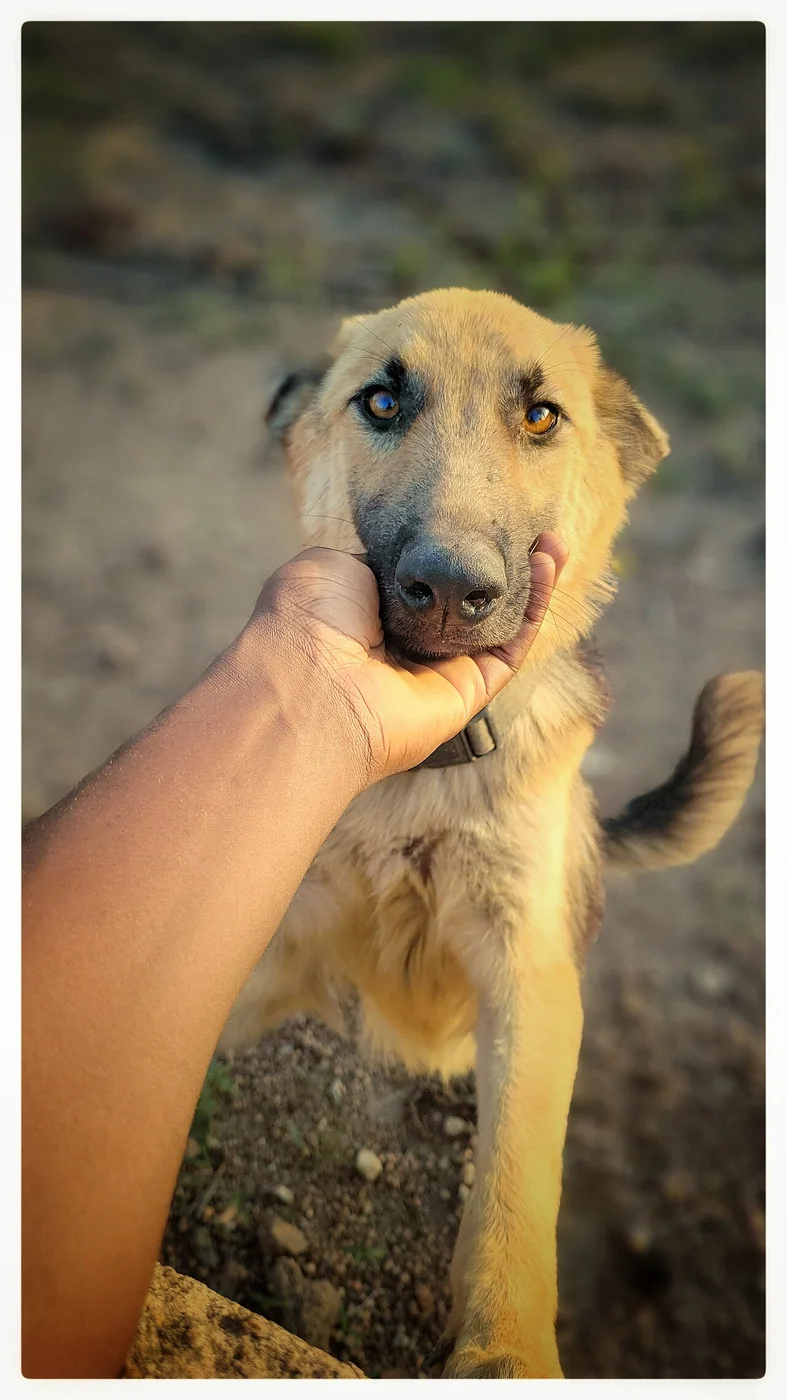
An intimate moment of a hand cradling a dog's face with different colored eyes, visually representing the close dog-human social bond supported by the evidence. Timiadekola · CC BY-SA 4.0. Web size optimized; original linked.
AI-assisted original writing. This feature was revised against source material and checked for unsupported claims. Follow the references below for evidence and its limits.
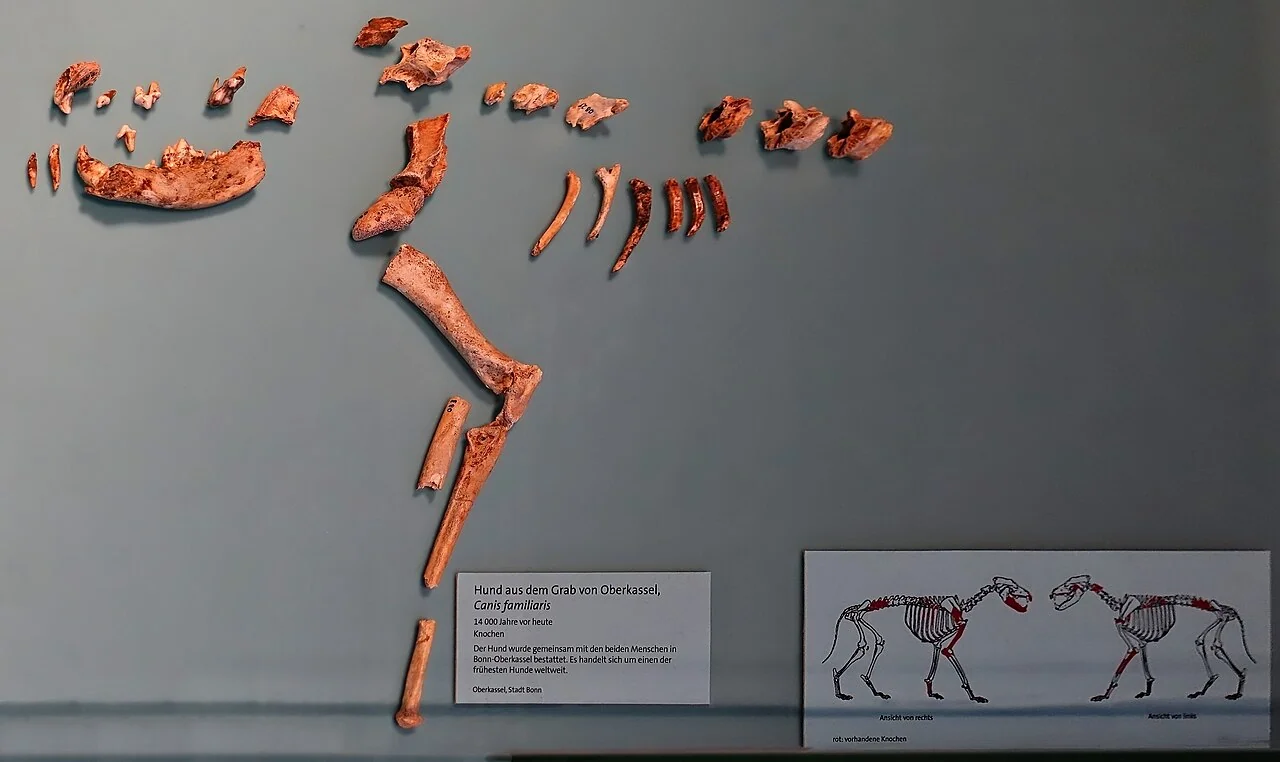
Archaeological finds from select European sites offer glimpses into possible relationships between people and dogs, while underscoring the challenges of interpreting ancient deposits.
Owner-led projects offer scale and real-world glimpses into canine minds, yet differences in tester identity and uncontrolled home settings can introduce systematic errors that large samples do not automatically cancel out.
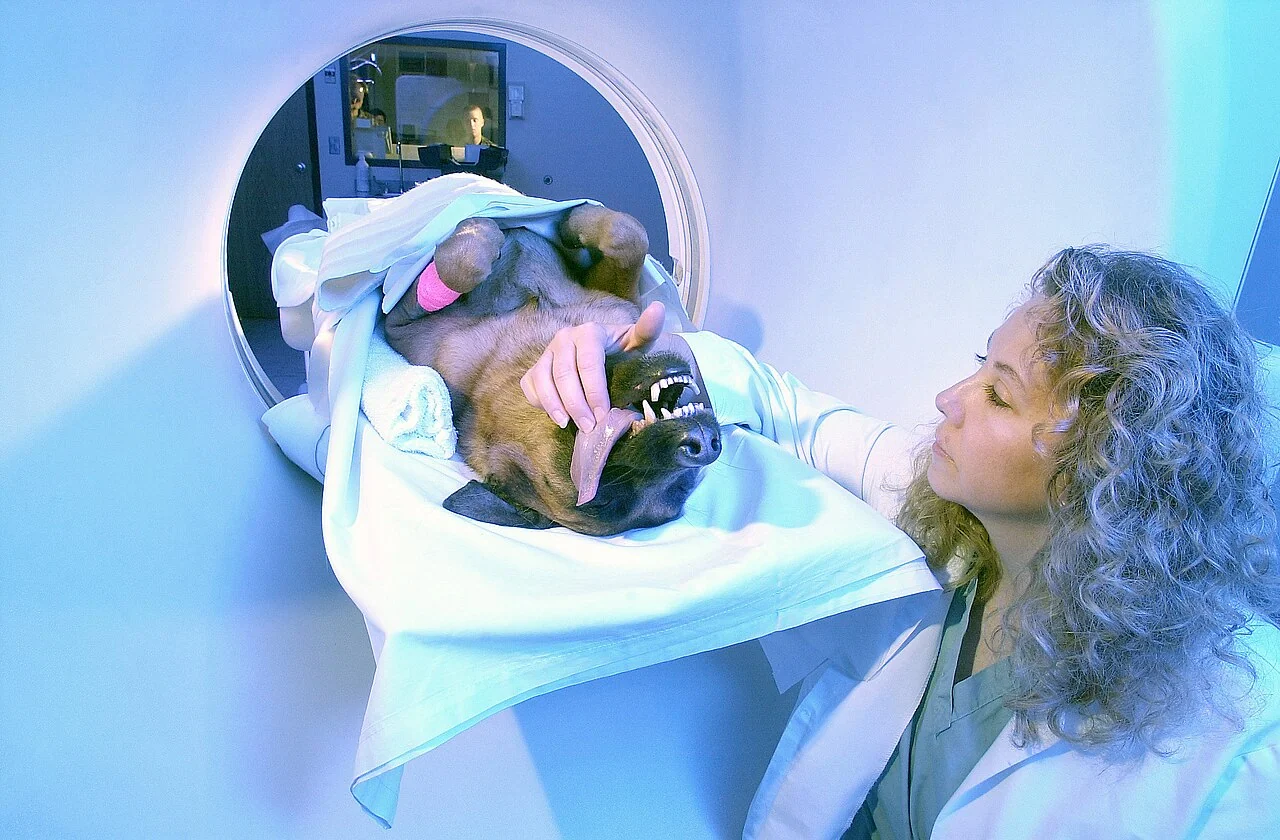
Penn State researchers once used MRI scans and computer simulations to map airflow inside a dog’s nasal passages, offering clues for designing better chemical sensors.
 Photograph