What Canine Experiments Really Show About 'Guilty Looks' and Uncertainty
Behavioral studies reveal that dogs display familiar submissive signals more in response to owner cues than to any understanding of past misbehavior, highlighting the gap between human interpretation and measurable canine cognition.
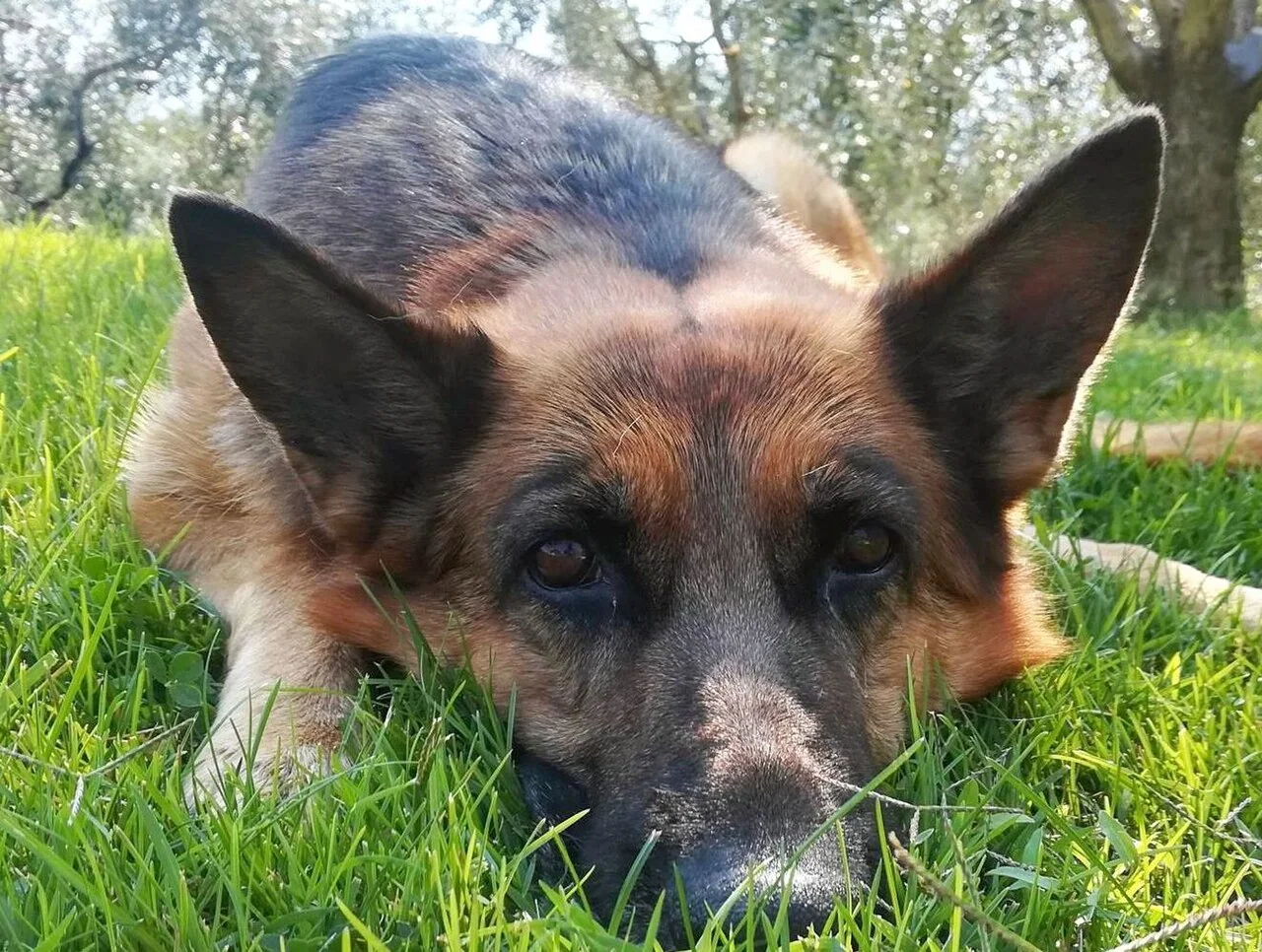
Guilty look of a German Shepherd PROPOLI87 · CC BY-SA 4.0 · Web size optimized; source linked for the original.
People often describe their dogs as looking guilty after raiding the trash or sneaking a snack. Those droopy eyes and tucked tails feel like clear signs of remorse. Yet two lines of research suggest this familiar scene may reveal more about our own hopes than about what is happening inside a dog's mind. Experiments on so-called guilty looks and on uncertainty monitoring show that observable behaviors are influenced heavily by immediate human signals rather than by any demonstrated capacity for regret or counterfactual thinking. The findings carry practical implications for training and for how we interpret our pets' actions without projecting complex human emotions onto them. While the studies cannot prove what dogs privately feel, they caution against assuming that familiar postures equal emotional regret.
The Setup of the 'Guilty Look' Experiment
Researchers worked with 14 pet dogs in a controlled setting. Owners gave each dog a command not to eat a treat and then left the room. In some trials the dog obeyed and left the treat untouched; in others the dog ate it. Upon returning, owners were sometimes told the dog had disobeyed and were instructed to scold the animal, while in other trials owners were told the dog had obeyed and greeted it warmly. The study recorded specific behaviors owners had previously labeled as signs of guilt, such as lowered posture, averted gaze, and lip-licking.
The results showed these behaviors appeared at roughly similar rates whether or not the dog had actually eaten the forbidden treat. What mattered far more was the owner's demeanor upon return. Scolding produced a clear increase in the so-called guilty behaviors, and this increase was even stronger when the dog had in fact obeyed the command. The pattern suggests the postures function as submissive or appeasement signals triggered by the owner's negative cues rather than as evidence that the dog understood it had broken a rule earlier.
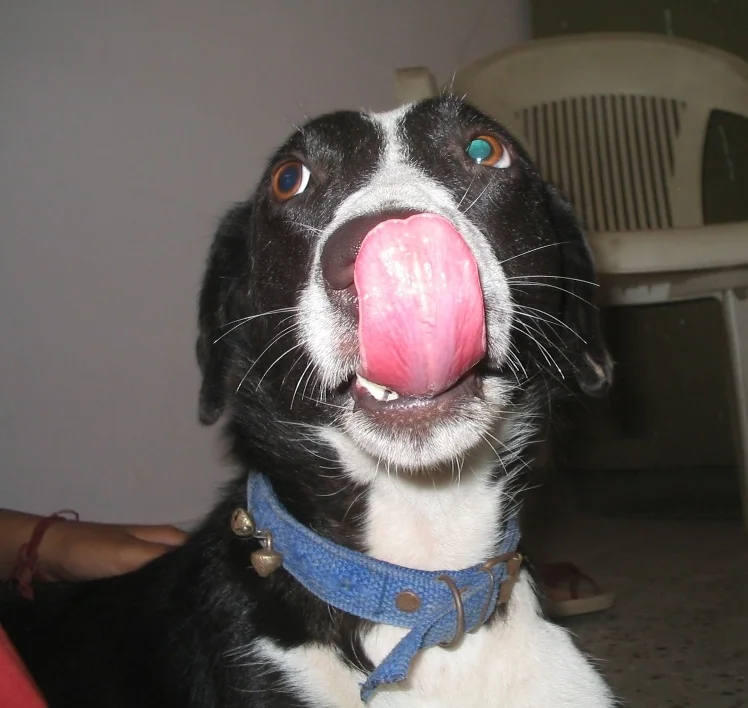
Dog exhibiting nose-licking and drooped ears, one of the submissive behaviors recorded in the 'guilty look' experiment when owners scolded. Gopal Aggarwal from INDIA · CC BY-SA 2.5. Web size optimized; original linked.
Why 'Guilt' May Be a Human Projection
The experiment was designed to test whether owners' interpretations of canine behavior reflect the dog's own appreciation of a misdeed. The data indicate the behaviors are better explained as responses to immediate social cues from the returning owner. When scolded, dogs showed more of the familiar look even if they had done nothing wrong, which undercuts the idea that the posture reliably signals internal guilt or regret.
This finding aligns with a broader caution against anthropomorphism. Labeling these signals as guilt assumes the dog can connect a past action with current disapproval in a way that involves self-reflection. The study instead frames the behaviors as learned or instinctive appeasement displays that help de-escalate tension with a larger social partner. For dog owners, recognizing this distinction can reduce miscommunication during training and prevent unnecessary scolding that may only reinforce anxiety.
Looking at Uncertainty Monitoring in Dogs
A separate line of work has explored whether dogs possess metacognitive abilities, meaning the capacity to monitor their own knowledge or uncertainty. In various perceptual and memory tasks, researchers tested if dogs would adjust their behavior, such as seeking help or opting out, when they were unsure of a correct response. Some experiments produced evidence that dogs do show patterns consistent with uncertainty monitoring under specific conditions.
However, the overall picture across reviewed studies remains mixed. Not every paradigm yielded consistent results, and alternative explanations based on simple associative learning often fit the data equally well. Importantly, these experiments did not test for regret or for the ability to imagine alternative past choices and feel emotion about them. Metacognition could be a cognitive building block for such experiences, but the current evidence stops short of demonstrating anything resembling human regret.
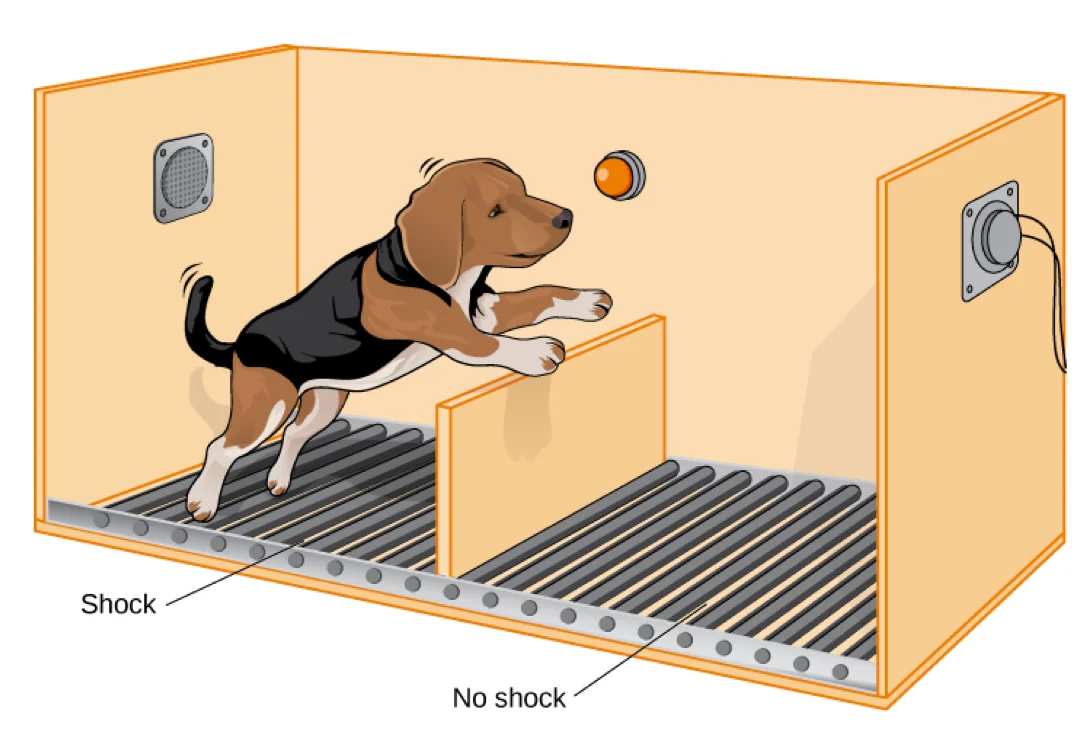
Seligman’s learned helplessness experiments with dogs used an apparatus that measured when the animals would move from a floor delivering shocks to one without. Rose M. Spielman, PhD · CC BY 4.0. Web size optimized; original linked.
Limits of Inferring Private Emotions
Both bodies of research underscore a shared methodological challenge: observable behavior alone cannot directly reveal private mental states. Small sample sizes in many of the component studies further limit how broadly the findings can be applied. The guilty-look experiment, for instance, used only 14 dogs in one specific treat-related scenario, while the metacognition review draws on a patchwork of paradigms that vary in rigor.
These constraints mean the studies offer useful clues but cannot settle larger questions about canine emotional lives. They do, however, provide a helpful corrective to overly confident claims on social media or in popular training books that attribute regret, guilt, or elaborate self-awareness to dogs. Readers might usefully ask: When my dog averts its gaze after I raise my voice, is it reflecting on yesterday's mischief or simply reacting to my tone right now?
Practical Takeaways and Gentle Humor
For everyday life with dogs, the evidence encourages owners to focus on clear, consistent cues and positive reinforcement rather than assuming a guilty look means the animal is replaying its misdeed. If a dog appears sheepish, it may simply be responding to our scowling face or raised voice, not wrestling with moral regret. This perspective can make training sessions less frustrating and more effective.
On a lighter note, it's tempting to imagine a dog staring at a chewed slipper and thinking, 'I really should have chosen the squeaky toy instead.' Yet the research reminds us that such inner monologues are likely our own invention, a charming but unsupported projection. Recognizing the gap between human storytelling and canine reality can deepen our appreciation for dogs as they actually are, complete with their impressive but still mysterious emotional world. Future work with larger samples and varied contexts may narrow that gap, but for now the most evidence-based approach is affectionate curiosity tempered by interpretive humility.
Seven-week-old Golden Yorkshire Terrier puppies showing submission and appeasement signals during play. Sciencia58 · CC BY-SA 4.0. Web size optimized; original linked.
AI-assisted original writing. This feature was revised against source material and checked for unsupported claims. Follow the references below for evidence and its limits.
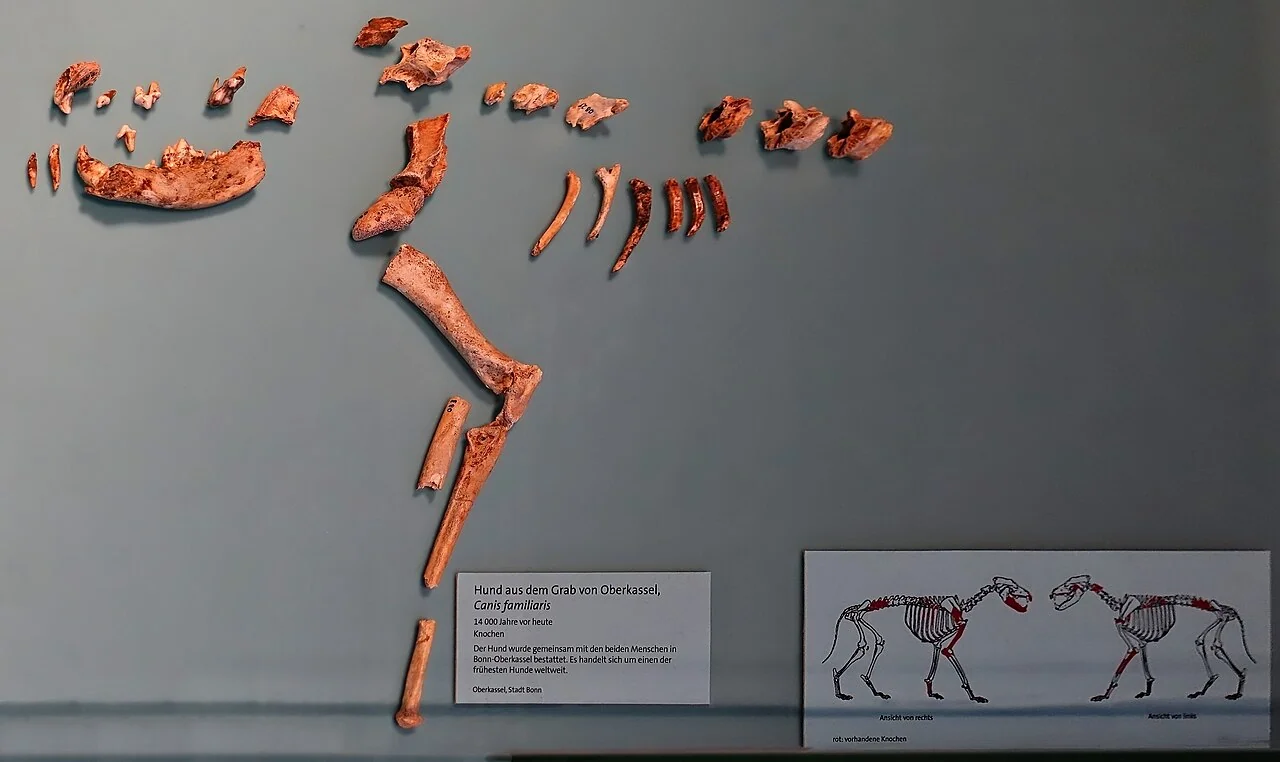
Archaeological finds from select European sites offer glimpses into possible relationships between people and dogs, while underscoring the challenges of interpreting ancient deposits.
Owner-led projects offer scale and real-world glimpses into canine minds, yet differences in tester identity and uncontrolled home settings can introduce systematic errors that large samples do not automatically cancel out.
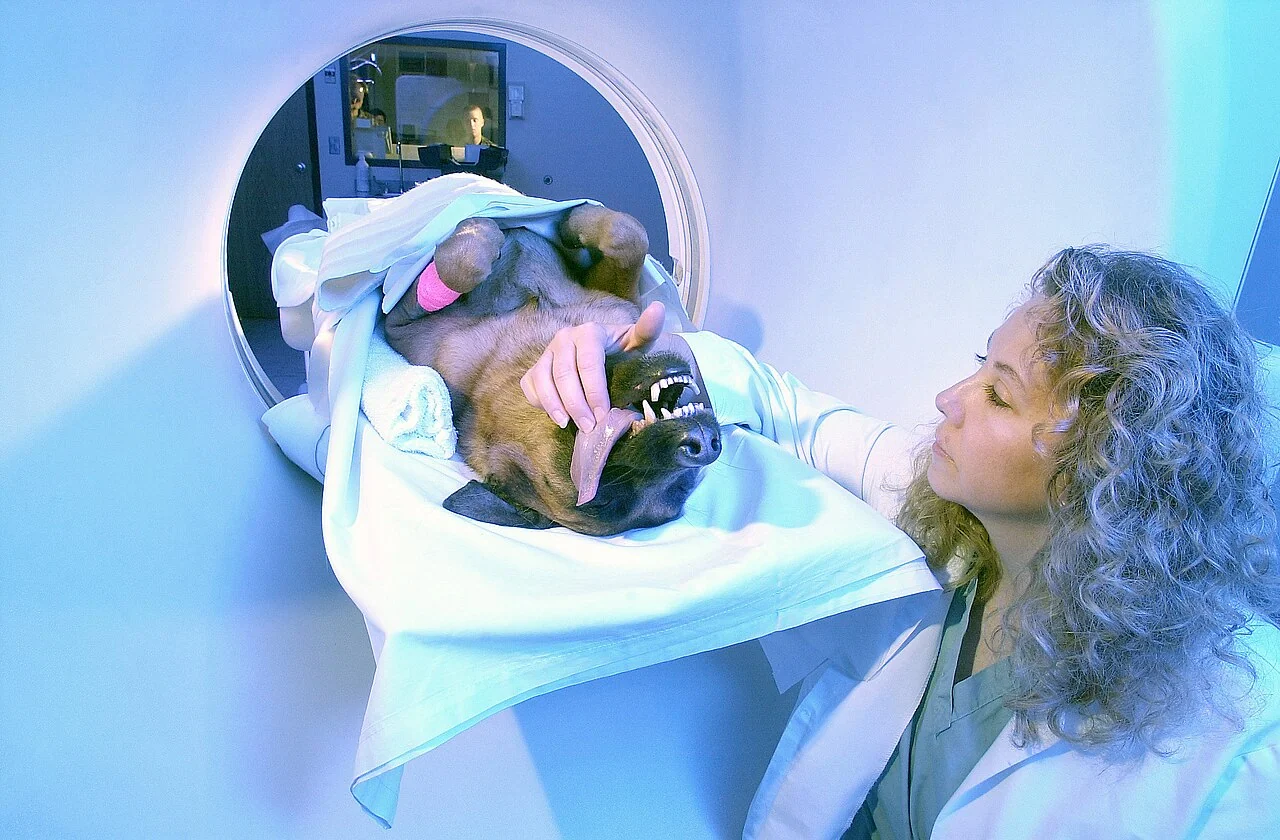
Penn State researchers once used MRI scans and computer simulations to map airflow inside a dog’s nasal passages, offering clues for designing better chemical sensors.

 Photograph