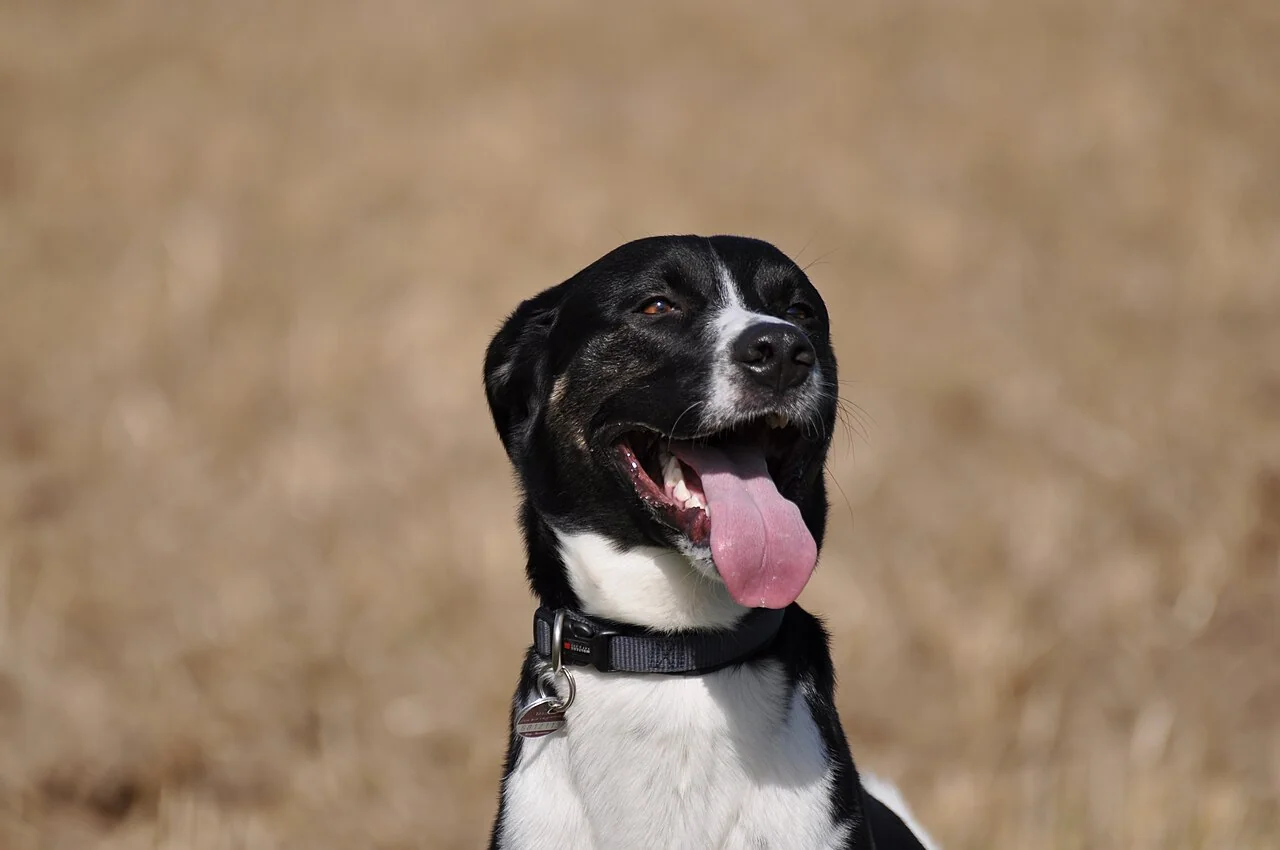
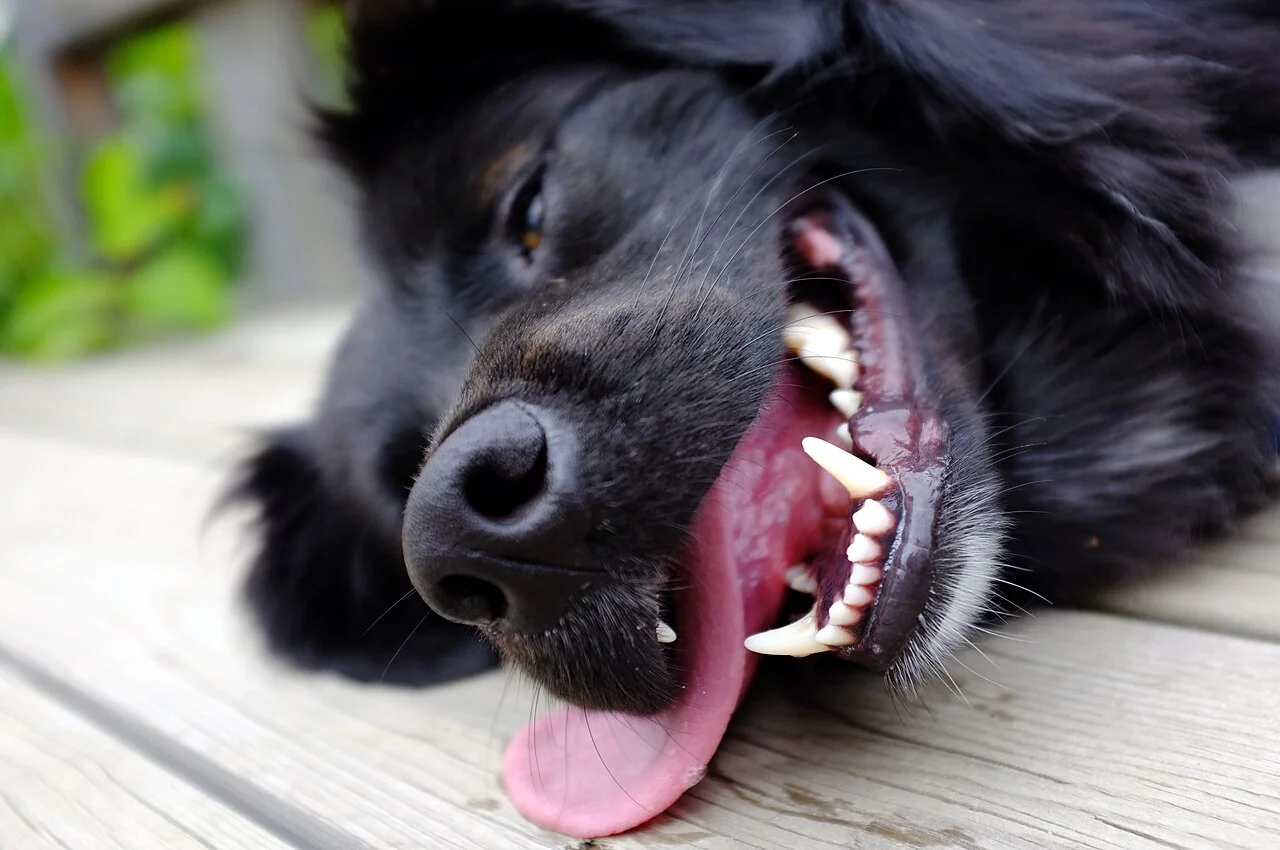
Panting black and white dog (2014) Raffael Herrmann · CC0 1.0 · Web size optimized; source linked for the original.
A dog flops down after a romp with its tongue out and sides heaving in quick breaths. This familiar sight reflects a finely tuned respiratory response shaped by specific muscle actions and airflow routes. Research on conscious dogs shows panting can raise breathing rates dramatically while keeping key blood gas levels stable. Understanding these patterns helps owners recognize normal function and notice when something may warrant a closer look.
How Panting Coordinates Muscles and Airflow
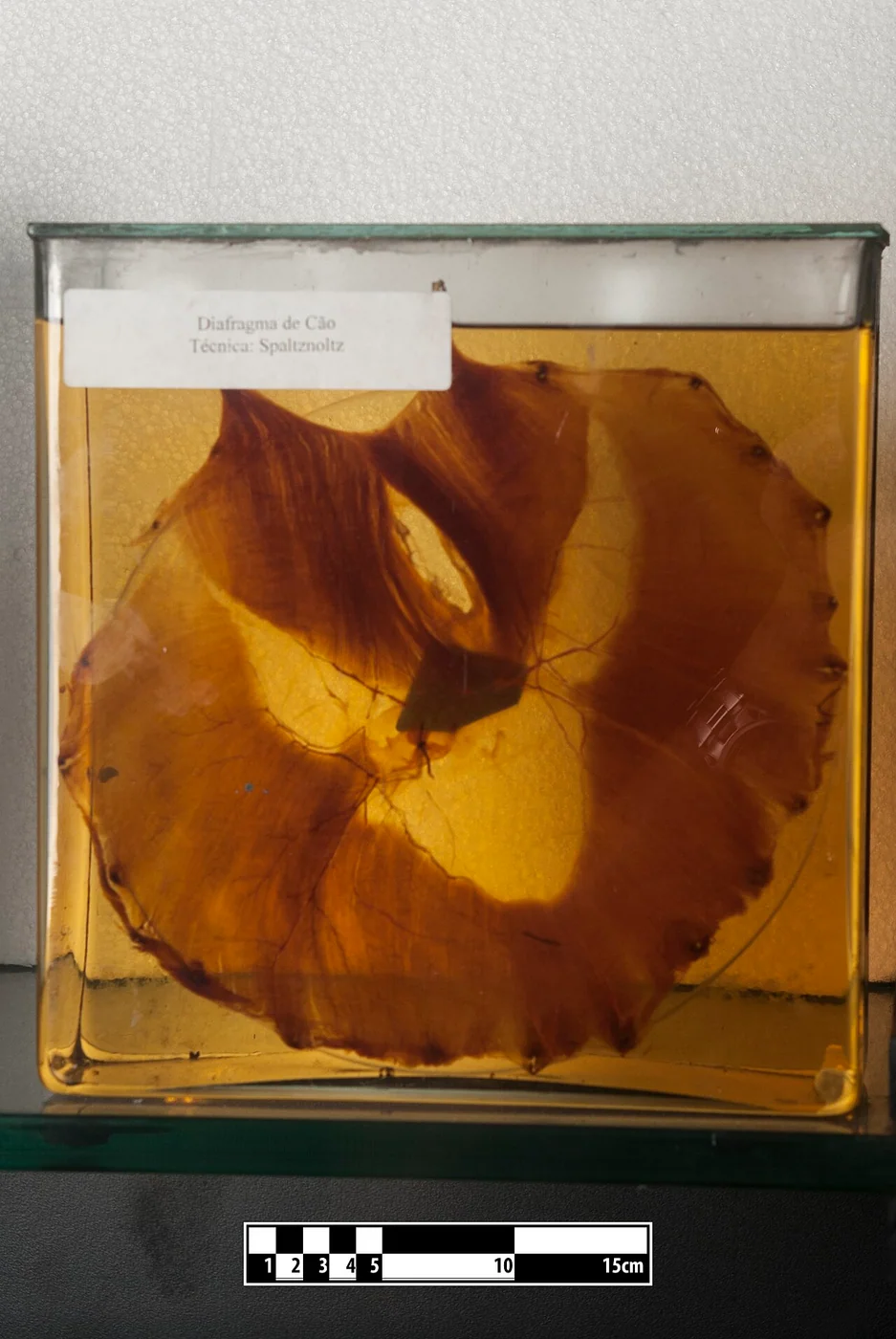
During panting, a dog's breathing rate can rise from around 17 breaths per minute at rest to roughly 193 breaths per minute. The costal and crural parts of the diaphragm activate at different times. Costal shortening lines up with inward airflow while peak crural shortening happens during outward airflow, nearly opposite in timing. This asynchrony may aid gas mixing in ways similar to certain ventilation techniques.
Air often follows defined routes. In heat-stressed dogs, most inhaled air enters through the nose and exits through the mouth, creating a one-way path across moist nasal surfaces. The soft palate moves in cycles to direct airflow, alternately opening or closing connections between the mouth and nasal areas. These movements coordinate with the tongue and epiglottis.
Tidal volume drops as frequency climbs, which increases ventilation in the upper airways while helping preserve effective alveolar ventilation. In one set of observations, effective alveolar ventilation stayed near 5.5 liters per minute even at frequencies around 313 breaths per minute.
Dog diaphragm. Canis lupus familiaris. Diaphanization specimen for visualization of anatomical structures (Museum of Veterinary Anatomy, FMVZ USP, 2017) Source collection · CC BY-SA 4.0. Web size optimized; original linked.
Keeping Gas Exchange Steady
Panting increases overall minute ventilation roughly fourfold in studied dogs without causing major disruption to blood carbon dioxide or oxygen levels under controlled conditions. In one group of conscious dogs, average partial pressure of carbon dioxide remained near 27 Torr and oxygen near 106 Torr while central body temperature held steady.
A substantial portion of the airflow serves as dead-space ventilation. This accounted for about 54 percent of alveolar ventilation in specific measurements. The pattern reflects a balance that prioritizes heat loss through evaporation over deep lung exchange.
Observations also noted incomplete gas mixing, shown by the steepness of carbon dioxide and oxygen traces during exhalation. This series inhomogeneity contributes to differences between end-tidal and arterial oxygen levels.
Airflow Patterns Under Different Conditions
Dogs switch among at least three airflow routes depending on surroundings and activity. These include breathing only through the nose, inhaling through the nose while exhaling through both nose and mouth, or moving air through both on inhale and exhale. The choice shifts as evaporative demand increases with higher temperatures or exercise.
The soft palate acts as the main switch for these paths during panting. Its cyclical motion helps regulate how much air passes over evaporative surfaces in the nose and mouth. This control lets dogs adjust heat dissipation without always committing to the same route.
Feeding temporarily interrupts the pattern. Dogs pause respiration during lapping or chewing and resume only after swallowing. This suggests the airway specializations for panting can limit certain mouth functions at the same time.
Dog panting with mouth open and tongue visible Nishi.LovesBees · CC BY-SA 4.0. Web size optimized; original linked.
Limits and Variations in Panting
The exact balance of cooling, gas exchange, and other functions varies with factors such as skull shape, though specific breed comparisons were not detailed in the reviewed studies. Controlled experiments used dogs averaging around 32 kilograms under particular heat or exercise loads, so results reflect those narrow setups.
At very high frequencies or body temperatures, some decline in carbon dioxide levels can occur despite the general design to limit it. The studies emphasize that panting primarily serves thermoregulation while trying to hold alveolar ventilation steady.
Environmental humidity and air movement affect how efficiently evaporation occurs, which in turn influences how vigorously a dog must pant. These variables were noted as modulating the airflow patterns observed.
Observing Your Dog's Breathing
Normal panting after activity looks different from rapid breathing at rest. Owners can watch for changes in pattern, such as effort that persists without clear heat or excitement as a cause. Context helps separate ordinary responses from those that might reflect other concerns.
The reviewed research highlights how precisely the system maintains blood gases under mild stress. Marked departures from a dog's usual resting behavior could signal the need for professional evaluation, though the studies themselves do not offer diagnostic guidance.
Supporting everyday function involves basic care such as access to water and avoiding conditions that push evaporative limits too far. These steps align with allowing the natural mechanisms to work without excess strain.
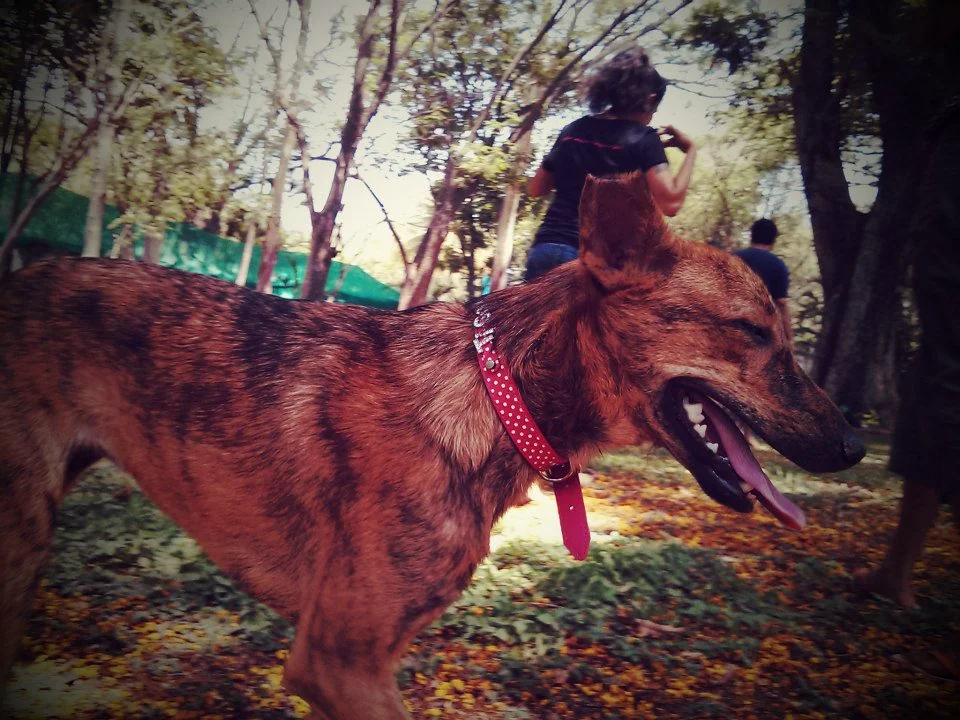
Dog shown panting after physical activity xlibber · CC BY 2.0. Web size optimized; original linked.
General education, not individual veterinary advice. Ask a veterinarian about your dog’s health and care.
AI-assisted original writing. This feature was revised against source material and checked for unsupported claims. Follow the references below for evidence and its limits.
Research shows canine cognition follows a clear arc of early gains, midlife peak, and later gentle decline, offering owners practical ways to support their pets at every age.
Protected command centers in the brain and spinal cord team up with far-reaching nerves that connect to muscles, skin, and organs, letting dogs react to scents, sounds, and sudden surprises.
 Reference image