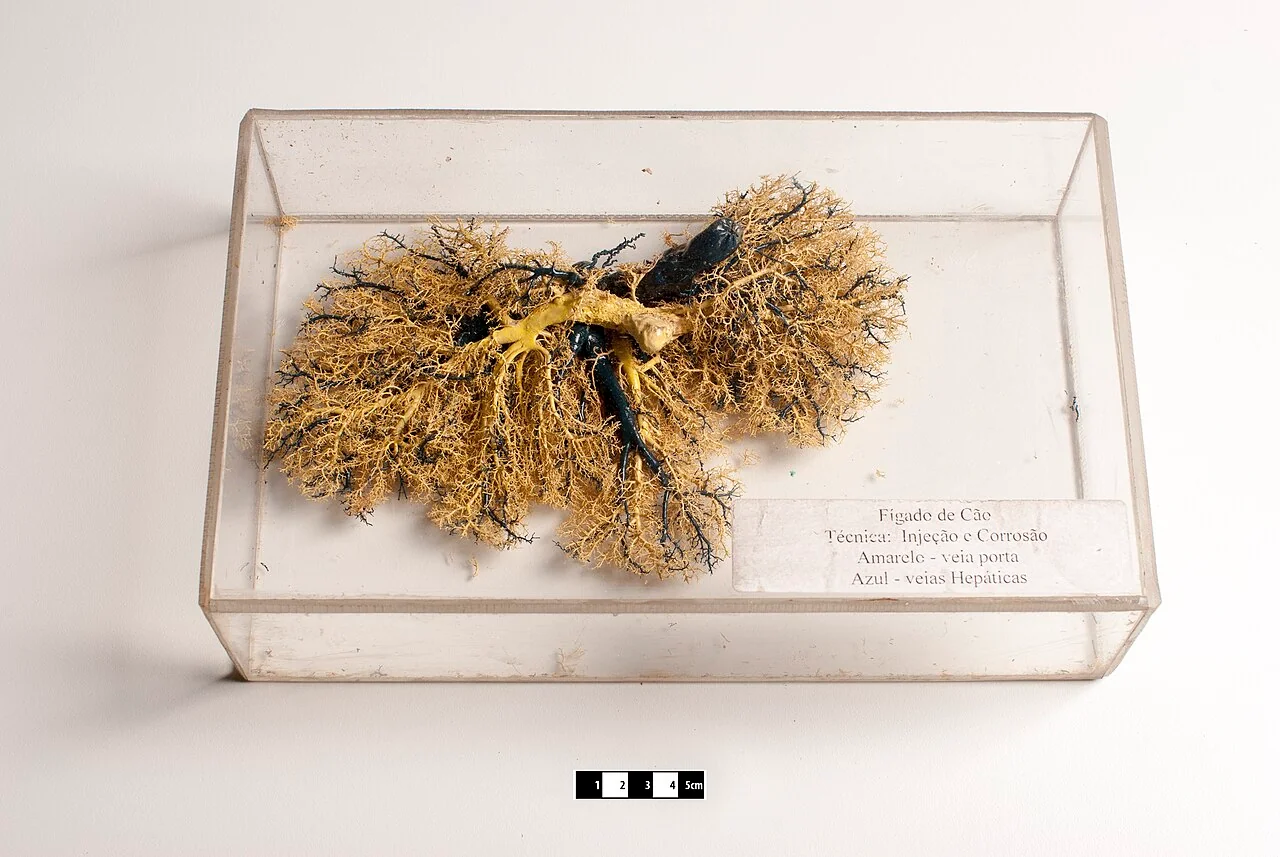
Dog liver. Canis lupus familiaris. Vinylite corrosion cast showing the vascular architecture of the liver. Wagner Souza e Silva · CC BY-SA 4.0 · Web size optimized; source linked for the original.
The liver in dogs manages a range of chemical processes that support energy balance and help clear unwanted substances. Research highlights the roles of glutathione in detoxification and cytochrome P450 enzymes in breaking down compounds. While these systems operate consistently in many ways, studies also reveal variability, particularly between breeds and in cases of liver disease. The available evidence comes from laboratory measurements in specific groups of dogs and cats, reminding us that individual outcomes can differ.
Glutathione's Role in Liver Detoxification
The liver serves as the main site for glutathione synthesis in mammals. It supplies up to 90 percent of the glutathione that circulates in the body. Glutathione aids detoxification by binding to reactive molecules and certain carcinogens, helping the body remove them.
Measurements show that healthy cats tend to have higher liver glutathione concentrations than healthy dogs when compared on the basis of tissue weight, protein content, or DNA. The ratio of reduced glutathione to its oxidized form also differs, with cats showing a lower value.
In dogs and cats already experiencing liver conditions, lower glutathione levels appear frequently. These include cases of necroinflammatory liver disease and extrahepatic bile duct obstruction. Cats with hepatic lipidosis also show this pattern.
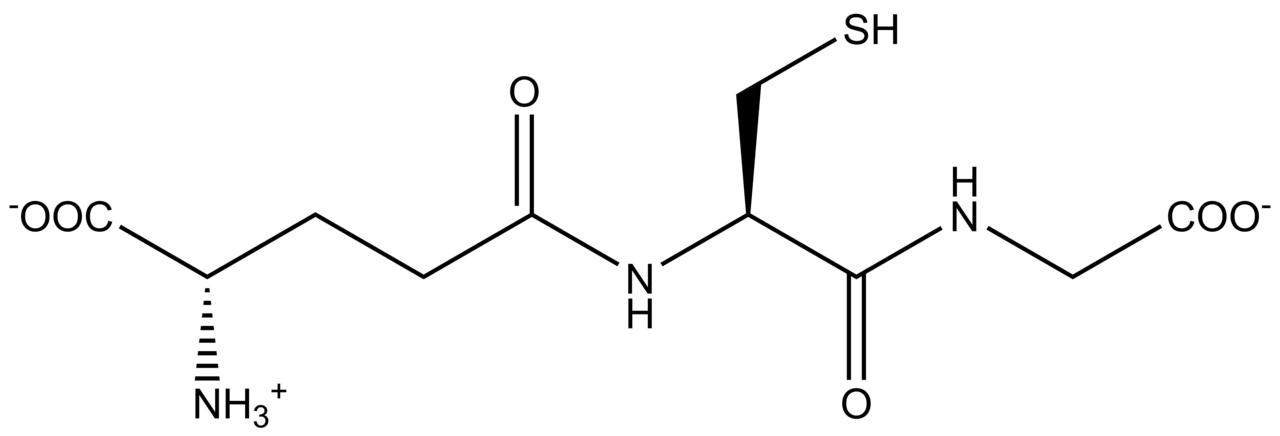
Chemical structure of Glutathione (GSH) in its Zwitterionic form at physiological pH. Jjexpat · CC BY-SA 4.0. Web size optimized; original linked.
Variability in Cytochrome P450 Enzymes
Cytochrome P450 enzymes in the dog liver participate in the initial steps of processing many substances. Quantitative analysis of liver microsomes found the highest average abundances for CYP2D15 and CYP3A12. Intermediate levels occurred with CYP1A2, CYP2B11, CYP2E1, and CYP2C21. Several other forms registered much lower amounts.
One enzyme, CYP2C41, appears only in a subset of dogs. Its gene was present in roughly 21 percent of the examined animals, and the corresponding protein was detected solely in those livers.
Breed-related differences stand out for CYP2B11, with research hounds and Beagles showing higher abundance and Greyhounds lower. Other measured enzymes did not display significant breed differences in the sampled groups.
Observations in Liver Disease
Dogs and cats with spontaneous liver disease often exhibit glutathione deficits. Possible contributing factors include limited availability of precursor molecules, disruptions in the transsulfuration pathway, reduced activity of synthetic enzymes, increased glutathione loss from cells, or heightened oxidative stress.
The exact sequence and interplay of these mechanisms remain complex. The patterns differ depending on whether glutathione is measured per gram of tissue, per milligram of protein, or per microgram of DNA.
Cats may face a higher likelihood of low glutathione in certain liver conditions compared with dogs, based on the clinical samples studied.
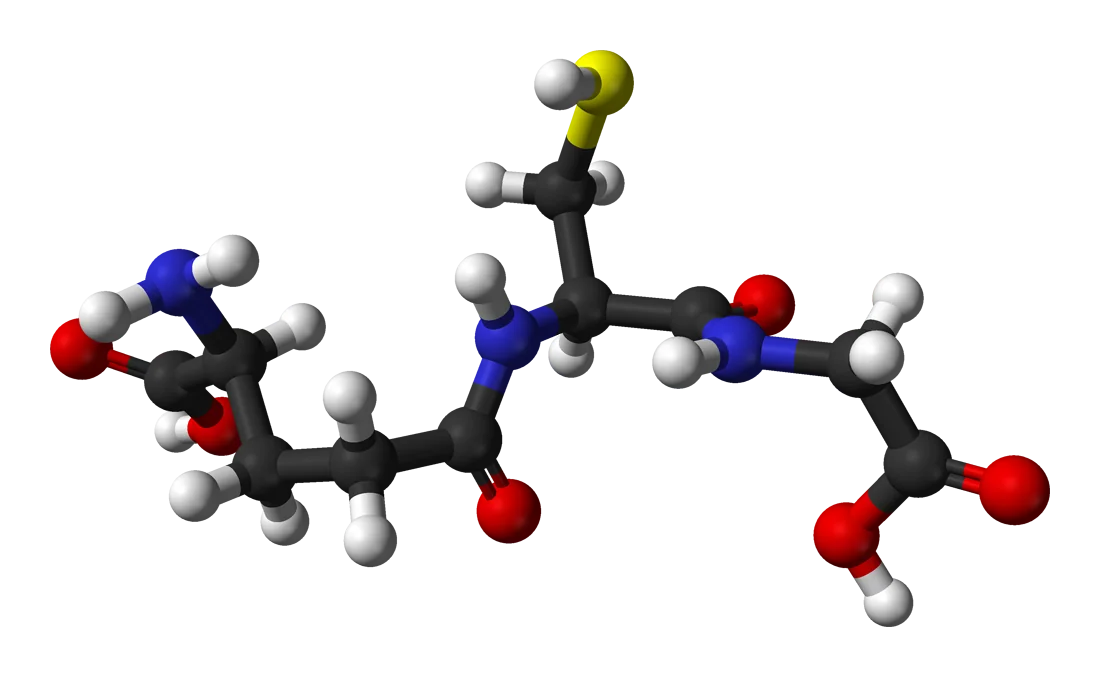
Ball-and-stick model of the glutathione molecule, C10H17N3O6S. X-ray crystallographic data from W. B. Wright (September 1958). "The crystal structure of glutathione". Acta Cryst. 11 (9): 632-642. DOI:10.1107/S0365110X58001699. Image generated in Accelrys DS Visualizer. Ben Mills · Public domain. Web size optimized; original linked.
Genetic and Individual Factors
Protein levels of CYP1A2 were undetectable in livers from dogs homozygous for a stop-codon mutation in the CYP1A2 gene. Measured enzyme abundances aligned with both genetic markers and the activity of selected marker enzymes.
The data came from 59 dogs spanning four breeds and mixed-breed animals. Earlier work had focused more narrowly on Beagles, so the newer results broaden the picture while still showing that genetic background and environment influence outcomes.
These measurements support the creation of models for predicting how drugs and other compounds are handled, yet they also indicate that breed should be considered when making such predictions.
Limitations and Practical Takeaways
The glutathione findings derive from observational data on dogs and cats that presented with clinical liver disease. The studies do not establish causation, only associations present at the time of sampling.
Enzyme abundance data were obtained from microsomes rather than whole liver tissue, and individual genetic as well as environmental variables add further layers of variation.
When liver concerns arise, blood tests and veterinary evaluation remain essential. The research underscores that hepatic systems have measurable differences across species, breeds, and health states, but it stops short of offering universal rules for every dog.
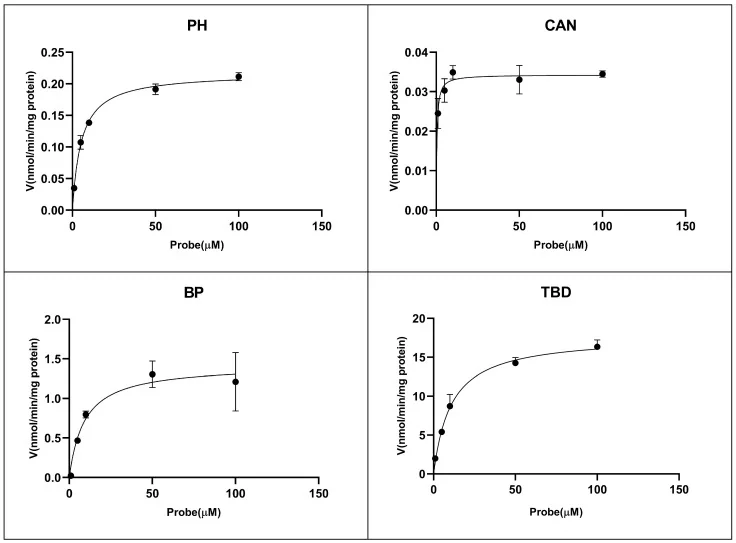
Enzymatic kinetics of phenacetin (PH) for CYP1A2, coumarin (CAN) for CYP2A6, bupropion (BP) for CYP2B6, tolbutamide (TBD) for CYP2C9, dextromethorphan (DEX) for CYP2D6, chlorzoxazone (CLN) for CYP2E1, and testosterone (TS) for CYP3A4 in dog liver microsomes. Data are presented as mean ± standard deviation (SD) (n = 3). Sun P, Cao Y, Qiu J, Kong J, Zhang S, Cao X. · CC BY 4.0. Web size optimized; original linked.
General education, not individual veterinary advice. Ask a veterinarian about your dog’s health and care.
AI-assisted original writing. This feature was revised against source material and checked for unsupported claims. Follow the references below for evidence and its limits.
Research shows canine cognition follows a clear arc of early gains, midlife peak, and later gentle decline, offering owners practical ways to support their pets at every age.
Protected command centers in the brain and spinal cord team up with far-reaching nerves that connect to muscles, skin, and organs, letting dogs react to scents, sounds, and sudden surprises.
 Reference image