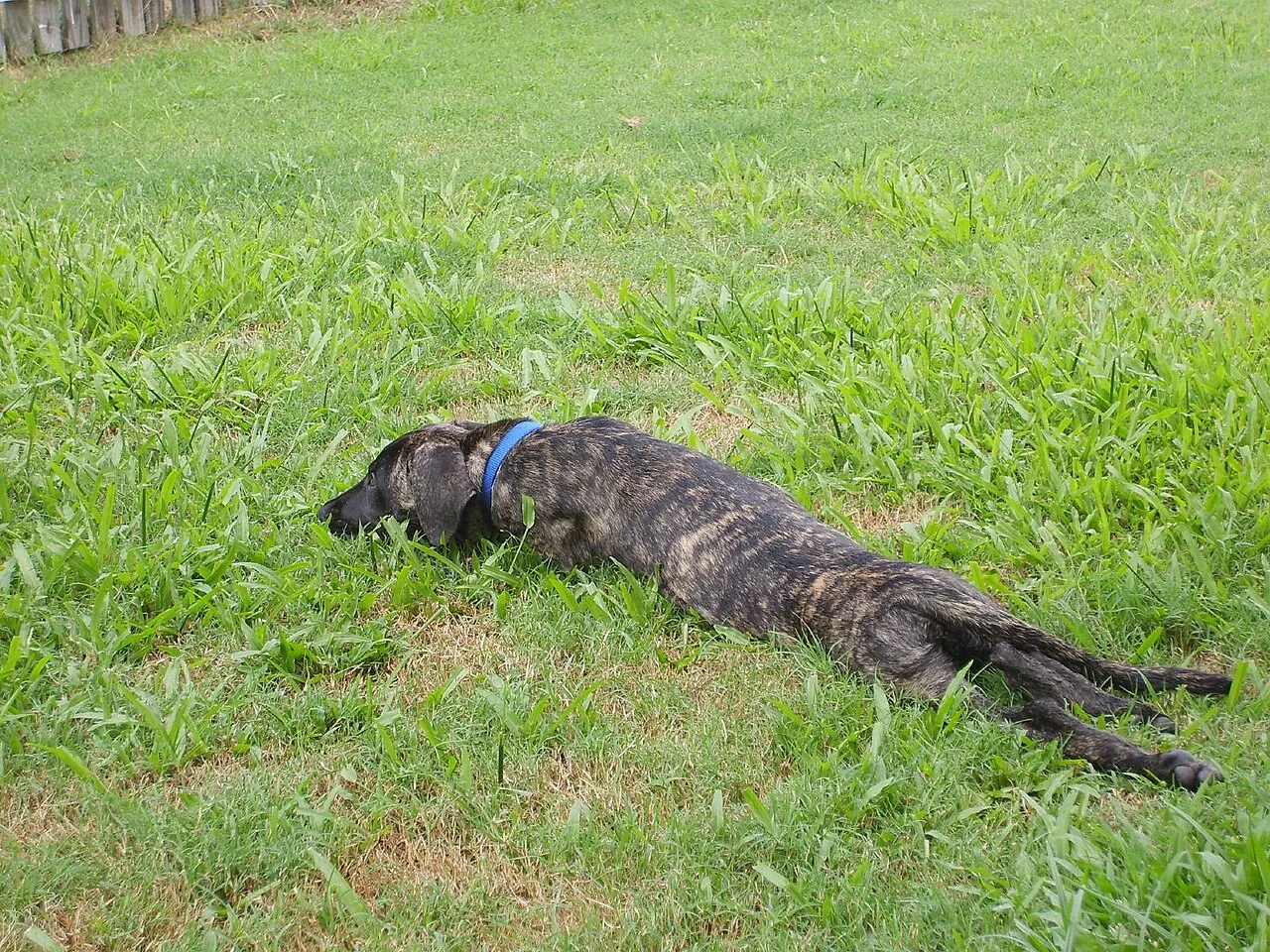
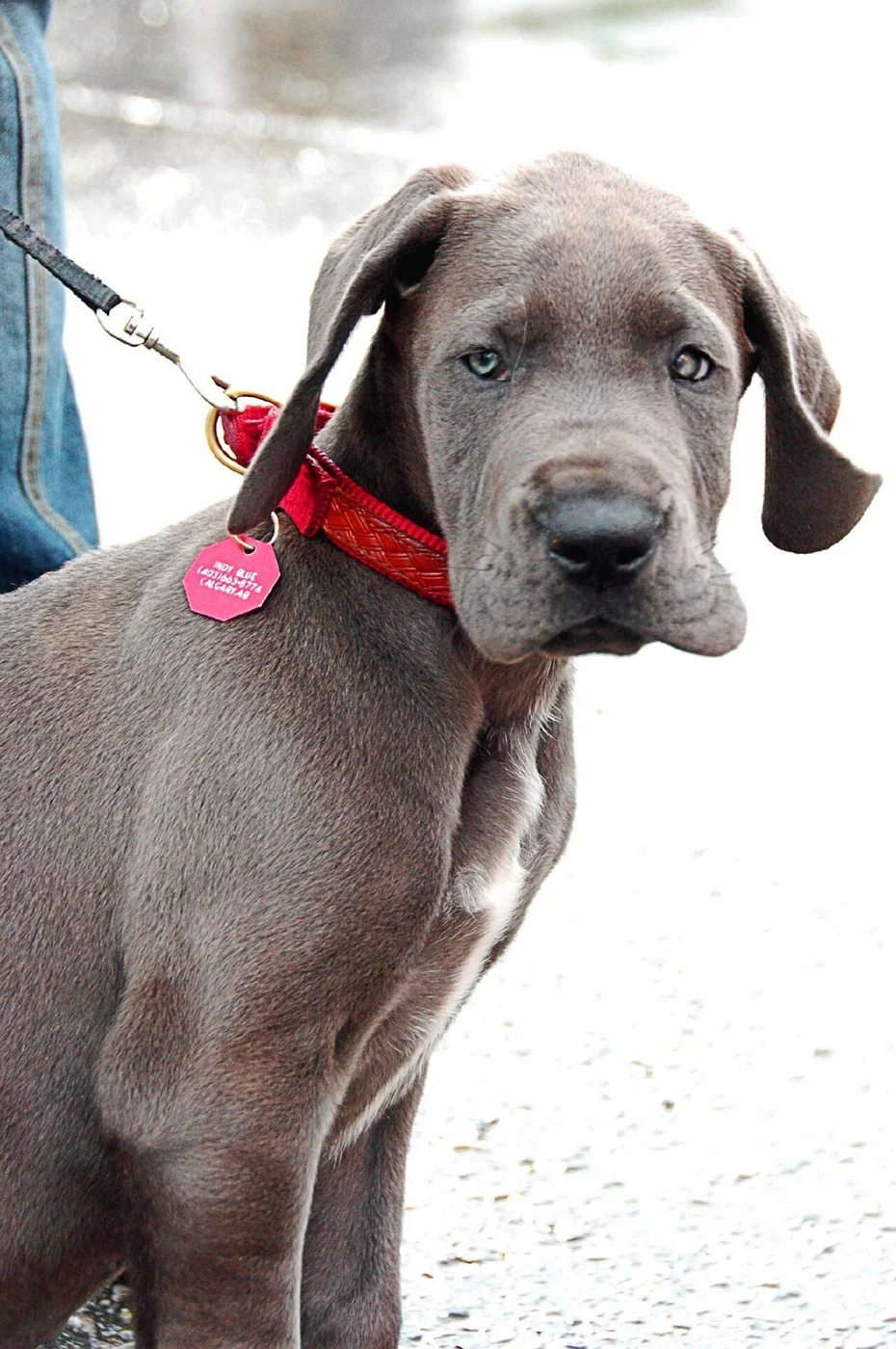
Brindle Great Dane puppy lying flat. Documentary photograph of a large-breed puppy during the period of rapid skeletal and muscular development discussed in the article. Rob and Stephanie Levy · CC BY 2.0 · Web size optimized; source linked for the original.
Puppies tumble and play with boundless energy, but beneath the surface their skeletons and muscles follow orderly developmental steps. Radiographic studies of various breeds document when growth plates close and muscle fibers mature. These timelines differ by size, offering owners a window to choose suitable activities that match the dog's current stage without overdoing impact.
Growth Plate Timelines in Beagles and Large Breeds
Growth plates, known as physes, are the soft cartilage zones near the ends of long bones that allow lengthening. In Beagles, the distal radial growth plate contributes about 65 percent to final radius length, while the proximal plate accounts for the rest. Most rapid growth occurs between 10 and 14 weeks of age, with no significant growth observed after 26 weeks.
Radiographic studies using biplanar imaging and tantalum markers tracked these changes in 20 Beagles. The images showed the plates narrowing until growth ended. In 54 puppies from large breeds including German Shepherds, Labrador Retrievers, and Boxers, the appearance of limb ossification centers varied by breed even at 6 to 8 weeks of age. Larger body weight correlated with more ossification centers present at those early checks.
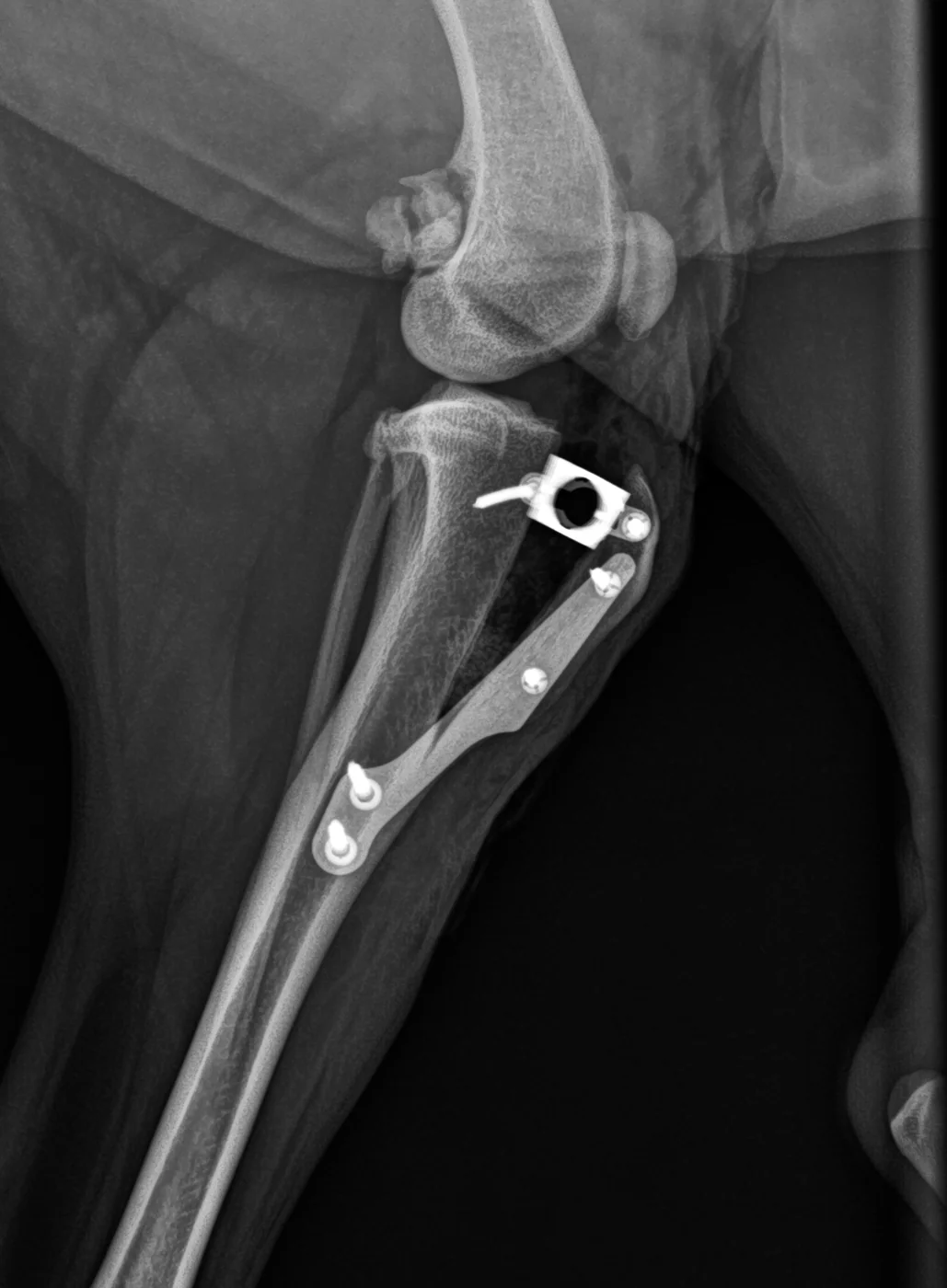
Postoperative mediolateral radiograph of the left stifle of a Labrador Retriever after tibial tuberosity advancement (TTA) for cranial cruciate ligament rupture. The tibial tuberosity has been advanced; a cage holds the osteotomy gap open and a plate secured with a fork and screws fixes the tuberosity to the tibia. Corak80 · CC BY-SA 4.0. Web size optimized; original linked.
Muscle Fiber Changes in the First 12 Weeks
In newborn puppies, 90 to 95 percent of fibers in sampled limb muscles are undifferentiated type IIC. These shift over time, with type I and IIA fibers appearing after two to four weeks and reaching adult-like proportions by 12 weeks of age.
A study of 16 healthy puppies from one day to 12 weeks old used histochemical staining on six limb muscles. Large type I fibers present at birth disappeared by four to five weeks. Mean fiber diameters for type I and IIA remained similar within each muscle during this period. The biceps femoris, lateral gastrocnemius, cranial tibial, and long head of triceps showed predominance of type IIA fibers, while the medial triceps and superficial digital flexor favored type I after four to five weeks.
Dietary Effects on Bone in Great Danes
Bone mineral content in Great Dane puppies reflects dietary calcium and phosphorus levels until about five to six months of age. Higher concentrations correlated with greater bone mineral content, lean mass differences, and body composition changes that were most pronounced early on.
In a longitudinal study of 32 Great Dane puppies fed diets with varying calcium and phosphorus in a fixed ratio, these differences increased until six months and then declined. By 12 months of age, no differences in body composition remained across the diet groups. The researchers noted that hormonal regulation appears to adjust mineral absorption and excretion after the initial rapid growth phase.
Great Dane puppy at 3 weeks old Brian Uhreen · CC BY 2.0. Web size optimized; original linked.
Tibial Plateau Angle Stability
The tibial plateau angle in large-breed dogs such as Labrador Retrievers and their crosses remains unchanged from 90 days of age through to physeal closure. Radiographic measurements become reliable around 85 to 90 days once the necessary bone landmarks are sufficiently visible.
A study took radiographs every two months starting at eight weeks in 30 large-breed dogs. Earlier images produced falsely low angle values, but from three months onward the angle held steady. This consistency provides a stable reference point during the growth period.
Supporting Development with Suitable Activity
The evidence shows that skeletal and muscular maturation follows a schedule influenced by breed and size, visible through radiographic changes and fiber-type shifts. Moderate activity matched to the dog's stage allows muscles to develop alongside bones, though the supplied studies do not directly test specific exercise types or long-term outcomes from different activity levels.
Owners can observe their individual puppy's energy and coordination, adjusting play and rest as the dog grows. Veterinary checkups that include orthopedic evaluations offer a way to track progress beyond general timelines. Each dog matures at its own pace within the patterns seen across the researched breeds.
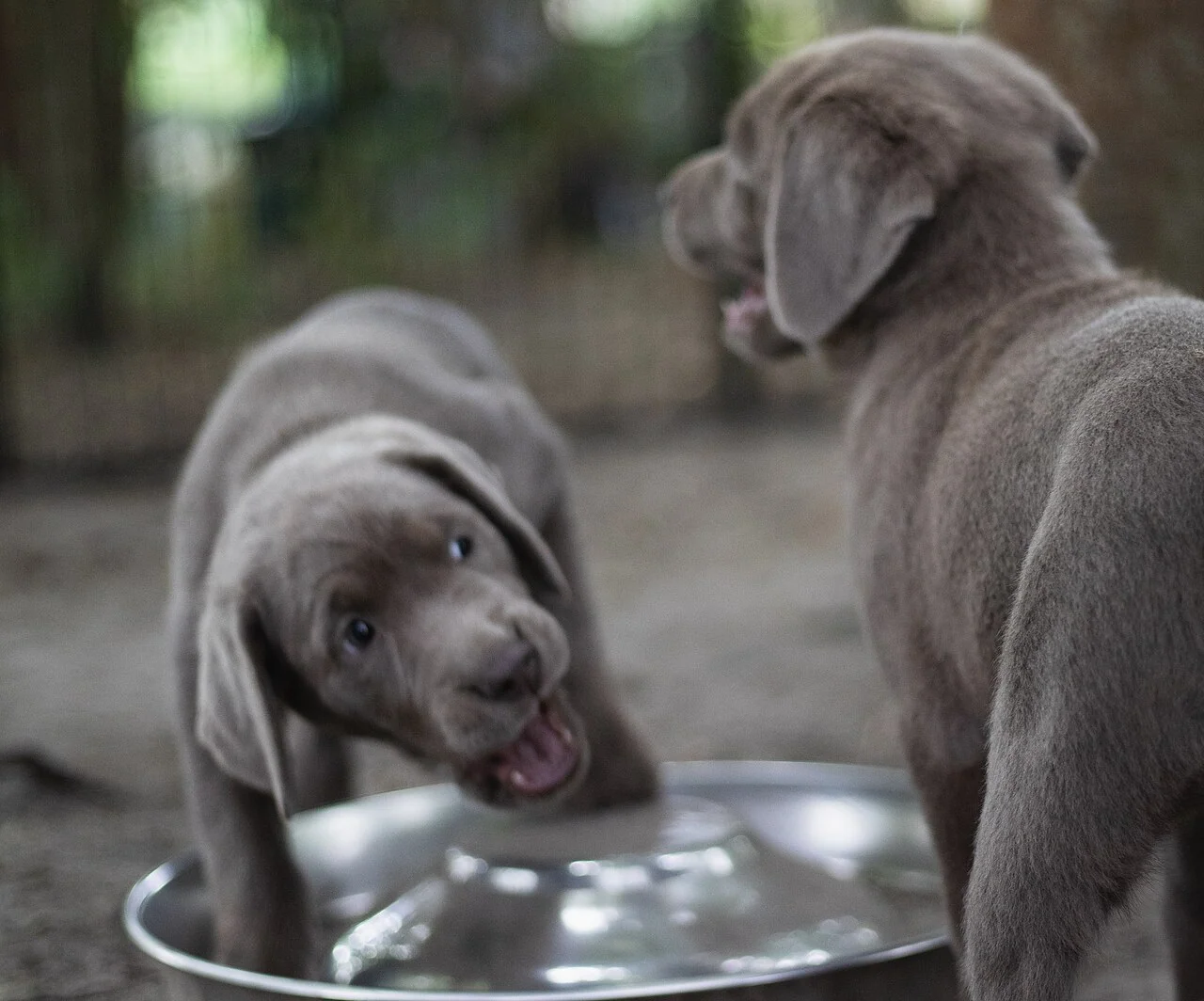
Playing grey Labrador puppies (modern documentary photograph) Ghilt · CC BY-SA 4.0. Web size optimized; original linked.
General education, not individual veterinary advice. Ask a veterinarian about your dog’s health and care.
AI-assisted original writing. This feature was revised against source material and checked for unsupported claims. Follow the references below for evidence and its limits.
Research shows canine cognition follows a clear arc of early gains, midlife peak, and later gentle decline, offering owners practical ways to support their pets at every age.
Protected command centers in the brain and spinal cord team up with far-reaching nerves that connect to muscles, skin, and organs, letting dogs react to scents, sounds, and sudden surprises.
 Reference image