Every time a dog runs across the yard or settles for a nap, an unseen network helps maintain the right amount of fluid inside its tissues. The canine lymphatic system collects extra fluid and proteins that slip out of blood capillaries, returns them to circulation, and screens for unwelcome material along the way. Evidence from veterinary sources shows this process prevents buildup that would otherwise cause swelling, known as edema. The system works steadily rather than in dramatic bursts, supporting comfort and basic immune readiness without drawing much notice until something goes wrong.
Fluid Collection and Return
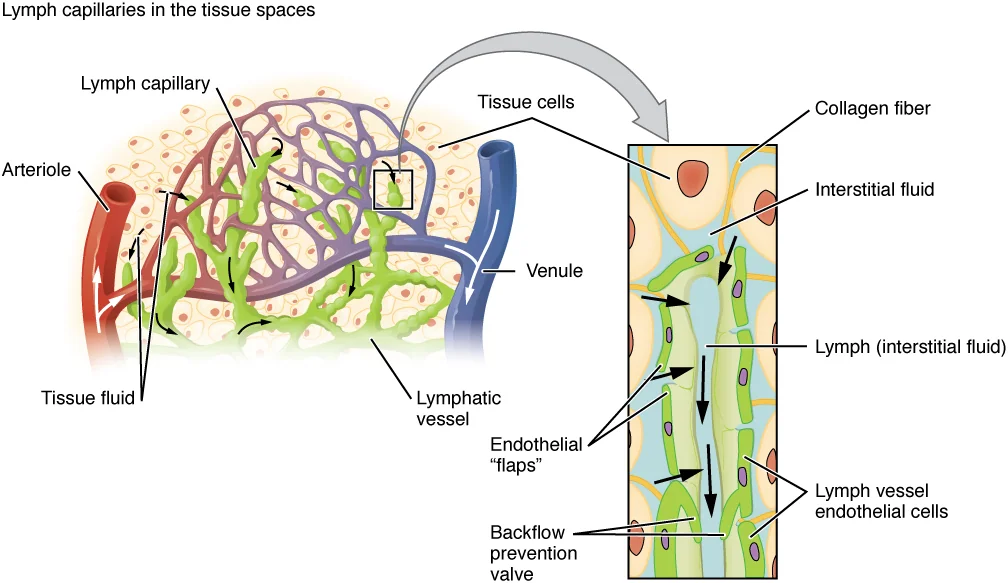
Lymphatic vessels begin as tiny blind-ended capillaries in the spaces between cells. These tubes pick up interstitial fluid that has filtered out of blood capillaries. In dogs this fluid often contains proteins too large to re-enter the blood vessels directly. The collected liquid, now called lymph, moves through larger vessels equipped with one-way valves that stop backward flow.
Muscular contractions during normal movement help push lymph forward. Breathing also contributes by changing pressure inside the chest. Veterinary resources note that this return mechanism is essential because, under the revised Starling principle, steady-state filtration occurs along most of the capillary length and lymphatics handle essentially all net fluid return to the bloodstream. Without this pickup, pressure in the tissues would rise and visible swelling could appear in limbs or other areas.
Concept diagram: Lymphatic capillaries collecting interstitial fluid from tissue spaces to form lymph. OpenStax College · CC BY 3.0. Web size optimized; original linked.
Lymph Nodes as Filtration Points
Lymph nodes lie along the lymphatic routes. These small structures slow the lymph so immune cells can examine it for bacteria, viruses or abnormal cells. Anatomical mapping of the canine lymphatic system shows nodes clustered in regions such as the neck, armpits, groin and behind the knees.
The nodes also remove excess proteins and debris from the fluid. If flow slows, nodes may enlarge temporarily while working. The same anatomical descriptions indicate that lymphatic tissue is well developed in the gut, where it samples material from meals. Detailed mapping of vessels serving skin, muscles, bones and joints underscores their role in regional fluid management.
How Edema Develops When Balance Is Lost
Edema forms when fluid leaves the capillaries faster than the lymphatic system can return it. Sources explain that under normal conditions the lymphatics have considerable reserve capacity and can increase flow substantially before swelling becomes noticeable. When this capacity is exceeded, protein-rich fluid accumulates in the tissues.
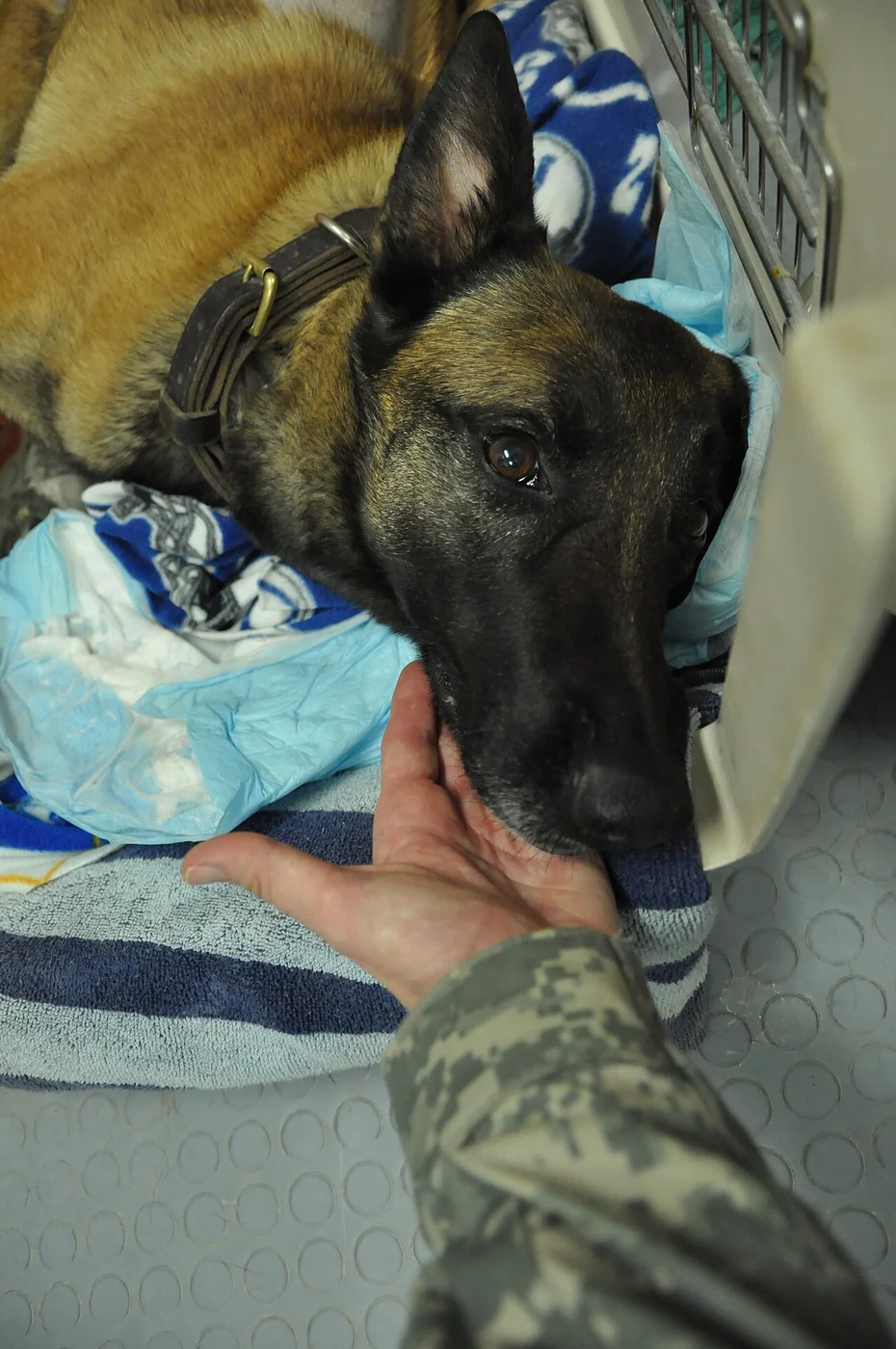
General anesthesia can increase interstitial fluid buildup by changing capillary permeability. Injury, inflammation or impaired vessel function can also tip the balance. The evidence states that failure of the lymphatics leads to lymphedema. In dogs, owners might first see puffiness in the face or limbs when the system is overwhelmed.
Documentary photo: Belgian Malinois recovering from iliopsoas abscess with marked hind-leg edema (U.S. Army Veterinary Services, 2012). L.A. Shively · Public domain. Web size optimized; original linked.
Anatomical Features in Dogs
Comprehensive anatomical studies detail the locations of canine lymph nodes, vessels and drainage pathways from organs and tissues. The popliteal nodes behind the stifle joint are prominent and often checked during examinations. The thoracic duct, the largest lymphatic vessel, collects lymph from the abdomen and hind limbs before emptying into veins near the heart.
Lymphatic tissue appears in the tonsils and along the intestines, forming part of an early warning network. These structures develop gradually in puppies. Breed and conformation can influence vessel routing, though the core drainage patterns remain consistent across dogs.
Everyday Ways to Support the System
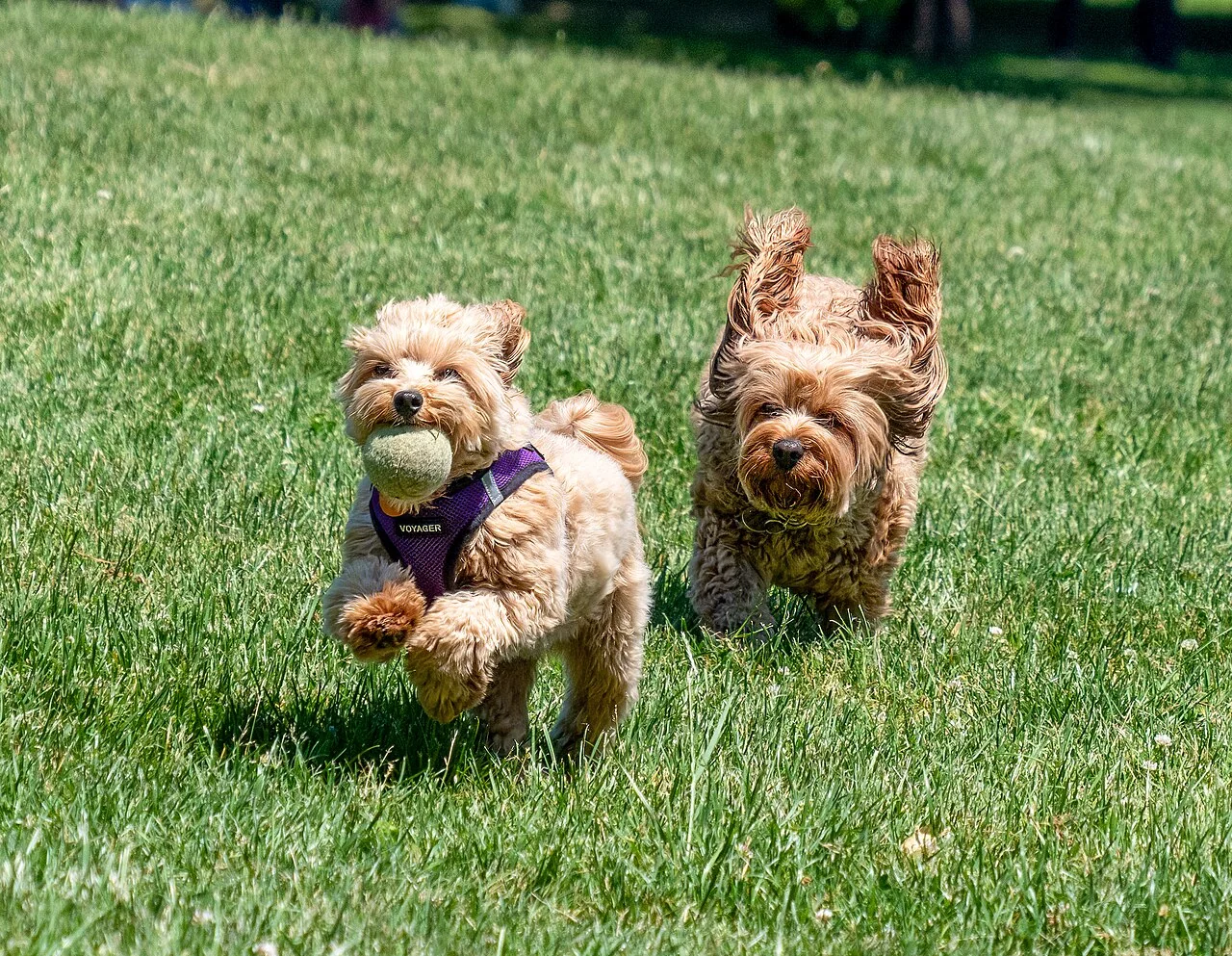
Regular activity encourages the muscle contractions that help move lymph. Maintaining a healthy body weight avoids extra strain on fluid-regulation pathways. Veterinary materials advise that any persistent swelling or lumps should be evaluated by a veterinarian rather than interpreted at home.
Routine wellness checks allow early detection of changes in lymph nodes or tissue appearance. Observations such as stiffness after rest or taut-looking limbs can prompt useful conversations with a clinician. The system’s work stays largely invisible until disrupted, which is why consistent veterinary care matters.
Documentary photo: Cavapoo and maltipoo running to retrieve a ball, demonstrating active movement that supports lymphatic flow. Rhododendrites · CC BY-SA 4.0. Web size optimized; original linked.
General education, not individual veterinary advice. Ask a veterinarian about your dog’s health and care.
AI-assisted original writing. This feature was revised against source material and checked for unsupported claims. Follow the references below for evidence and its limits.
Research shows canine cognition follows a clear arc of early gains, midlife peak, and later gentle decline, offering owners practical ways to support their pets at every age.
Protected command centers in the brain and spinal cord team up with far-reaching nerves that connect to muscles, skin, and organs, letting dogs react to scents, sounds, and sudden surprises.
 Reference image