Evidence from veterinary studies shows the rhythmic contractions and intestinal surfaces that turn meals into energy, with real variation by size, diet, and species.
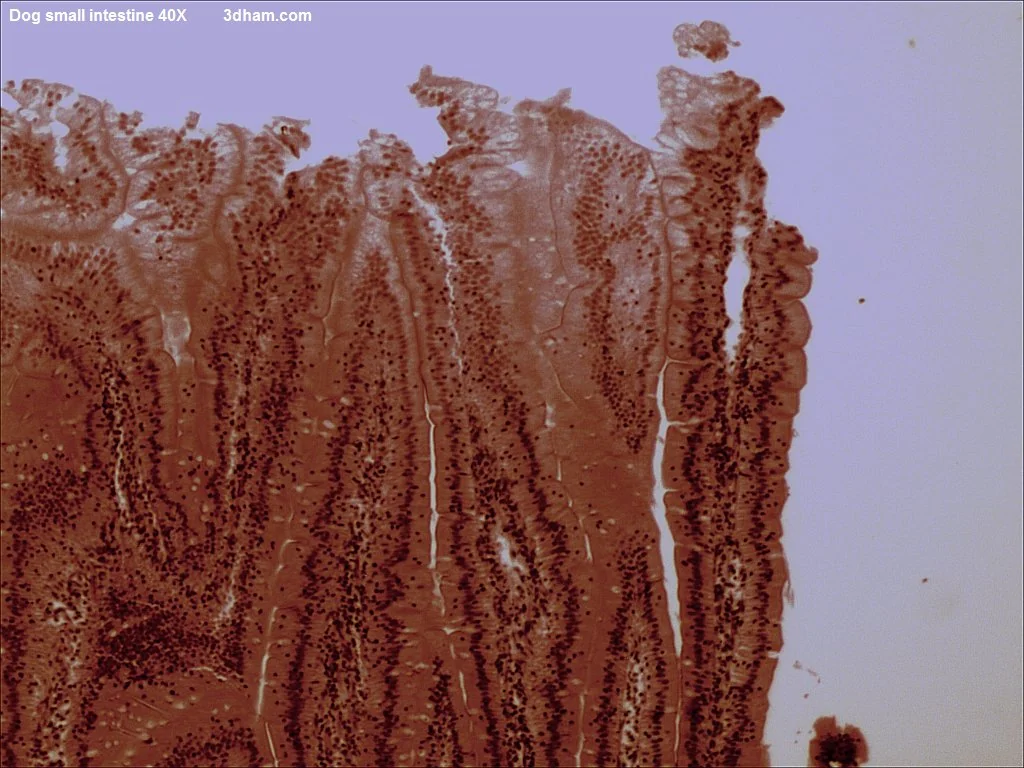
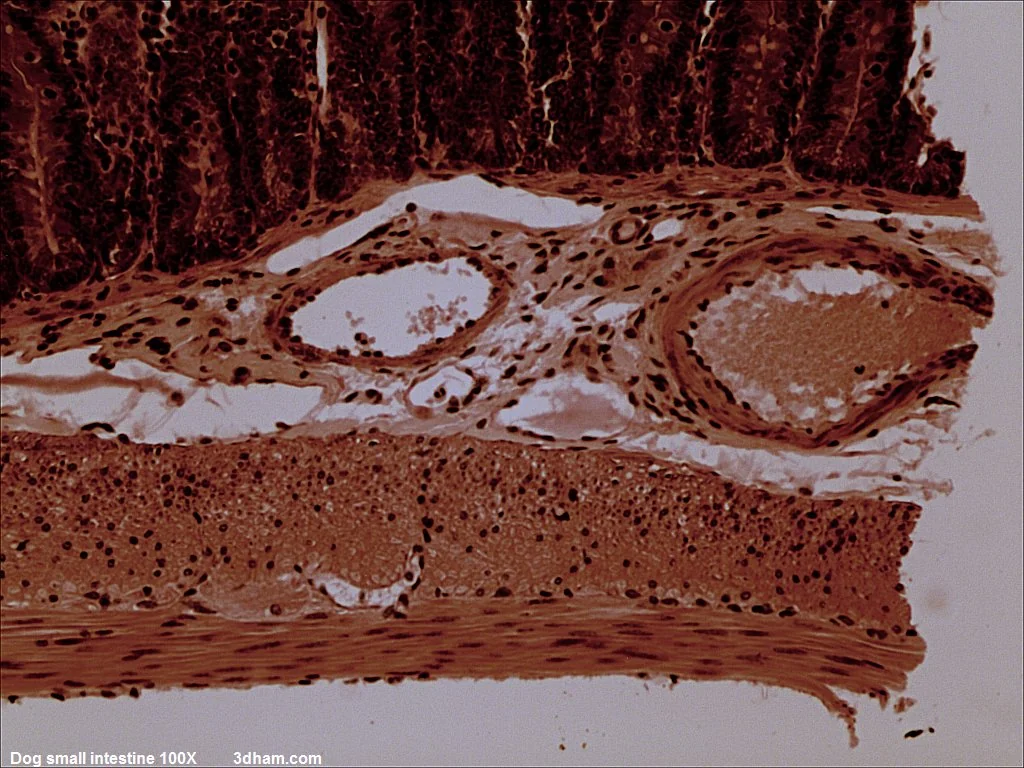
Microscopic image of dog small intestine histology at 40x magnification John Alan Elson · CC BY-SA 3.0 · Web size optimized; source linked for the original.
A dog’s digestive tract moves food along with muscular waves while its lining captures proteins, sugars, fats, and vitamins. Studies using wireless capsules and tissue samples from Beagles document the timing and capacity of these processes. The research highlights differences tied to age, diet, and body weight, reminding owners that everyday vitality depends on systems working within normal ranges. Veterinary observations emphasize that these mechanisms support health without replacing professional care.
Gastric and Intestinal Transit Times
Wireless motility capsules tracked how long food spends in different gut sections. In Beagles, mean gastric transit time measured 31 minutes before feeding and 829 minutes after feeding. Small intestinal transit averaged 795 minutes prefeeding and 830 minutes postfeeding.
Total gastrointestinal transit proved significantly shorter in dogs than in cats for both pre- and postfeeding periods. Researchers noted that dogs generally process meals faster than cats do.
Another study of various dogs found gastric emptying between 405 and 897 minutes and small bowel transit between 96 and 224 minutes. No positive link appeared between body weight and transit times. Instead, data showed a nonlinear inverse relationship: smaller dogs tended toward longer gastric and small intestinal transit times than larger ones.
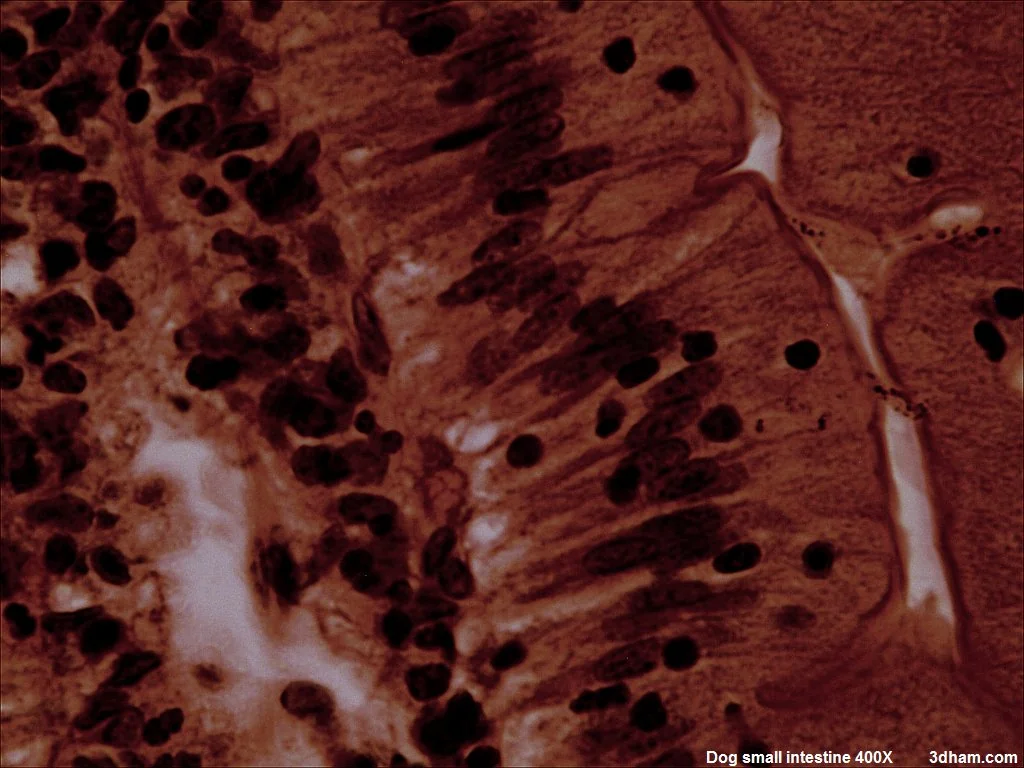
Microscopic image of dog small intestine histology at 400x magnification John Alan Elson · CC BY-SA 3.0. Web size optimized; original linked.
Postnatal Changes in Nutrient Transport
Carrier-mediated transport rates for glucose, galactose, and most amino acids decreased from birth to adulthood in Beagles. Transport rates for fructose and aspartate stayed steady across the same period.
Absorption of linoleic acid in the small intestine and octanoic acid in the proximal colon increased after weaning. Because the intestine grows, total absorption capacity for the whole small intestine remained constant for leucine and proline while increasing for glucose, galactose, fructose, aspartate, and proline.
These increases fell short of what would be expected from the rise in body weight alone. The findings come from in-vitro measurements on intact tissues and brush-border membrane vesicles taken from 110 Beagles ranging from neonatal to adult.
Fiber Effects on Intestinal Size and Uptake
Adult Beagles fed diets containing fermentable fibers such as beet pulp and oligofructose for six weeks developed small intestines with 28 percent more nominal surface area, 37 percent more mucosal mass, and 35 percent heavier intestines than those fed nonfermentable cellulose.
Capacity for carrier-mediated glucose uptake rose 95 percent in the fermentable-fiber group, with the difference more noticeable in the proximal intestine. The same diets produced measurable changes in proline transport as well.
These results, obtained through in-vitro transport measurements, indicate that fermentable fibers can increase both physical dimensions and nutrient absorption capacity in the canine small intestine.
Microscopic image of dog small intestine histology John Alan Elson · CC BY-SA 3.0. Web size optimized; original linked.
Specialization Along the Intestinal Tract
Different segments handle distinct nutrients. The evidence shows saturable absorption occurring for specific fatty acids in both small intestine and proximal colon, with capacity rising after weaning.
Rapid renewal of surface cells helps maintain function, though exact renewal intervals were not quantified in the supplied studies. The overall system extracts value from both animal and plant material, consistent with an omnivorous pattern.
What the Numbers Mean for Owners
Transit times vary by feeding status, individual size, and diet composition. Smaller dogs may retain food longer in the stomach and small intestine than larger ones, while fermentable fibers can enlarge absorptive surfaces and boost uptake of glucose and certain amino acids.
These adaptations appear normal rather than problematic when the dog remains otherwise healthy. The studies supply concrete measurements from controlled cohorts but do not cover every breed or age group.
Owners can support routine digestive function by offering consistent meals, fresh water, and appropriate exercise. Any noticeable change in appetite, stool quality, or energy warrants discussion with a veterinarian, who can interpret signs in the context of an individual animal.
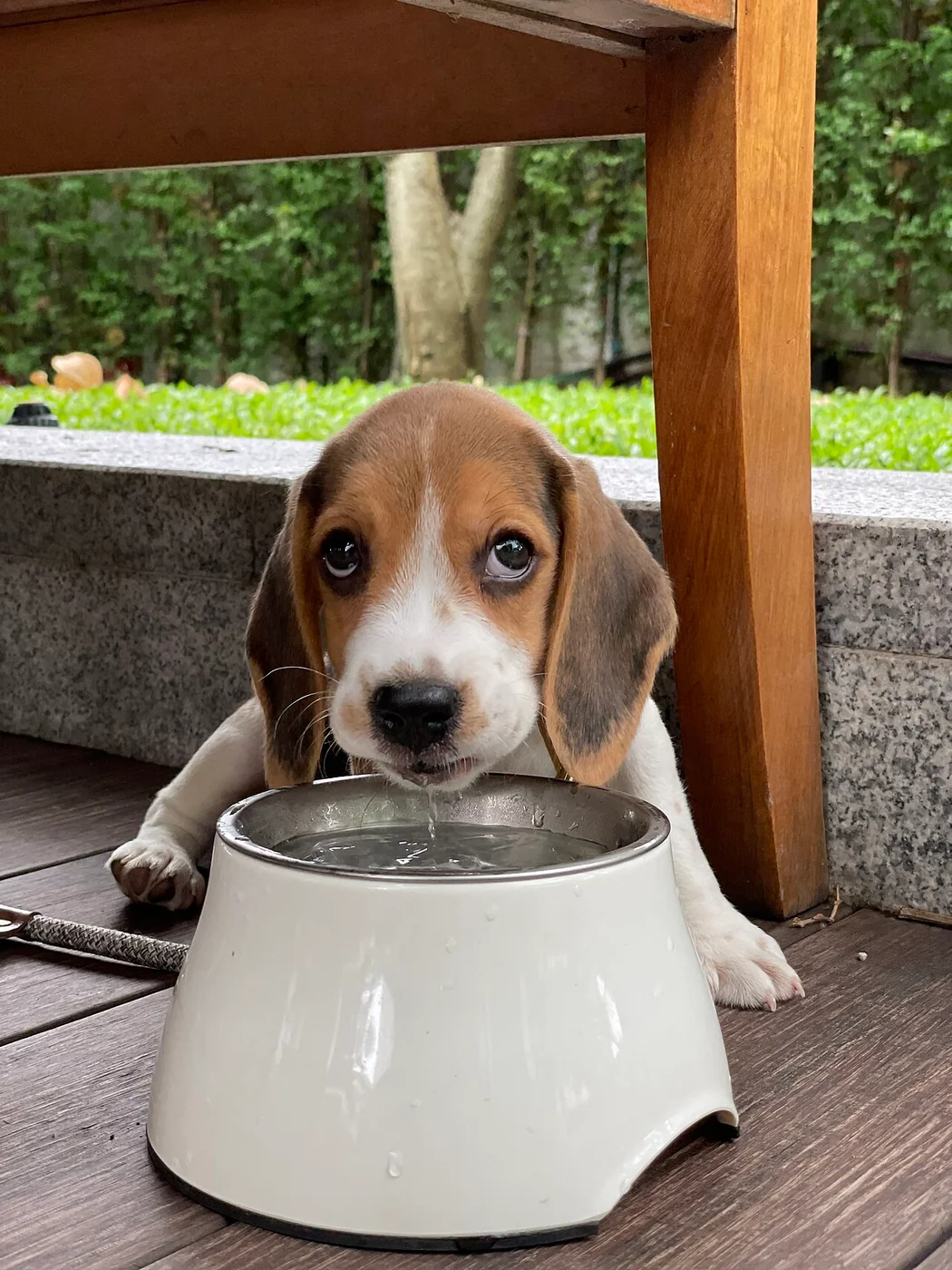
Beagle puppy drinking water from a bowl. Modern documentary photograph. Slyronit · CC BY-SA 4.0. Web size optimized; original linked.
General education, not individual veterinary advice. Ask a veterinarian about your dog’s health and care.
AI-assisted original writing. This feature was revised against source material and checked for unsupported claims. Follow the references below for evidence and its limits.
Research shows canine cognition follows a clear arc of early gains, midlife peak, and later gentle decline, offering owners practical ways to support their pets at every age.
Protected command centers in the brain and spinal cord team up with far-reaching nerves that connect to muscles, skin, and organs, letting dogs react to scents, sounds, and sudden surprises.
 Reference image